Thousands of illegal registration plates being detected daily by camera systems are now on trial on motorways in southeast England, a new BBC Panorama investigation found.
The findings expose a scale of number plate fraud that goes well beyond the traffic enforcement problem it is usually framed as. For insurers, brokers and fleet operators, the same plates undermining speed and emissions enforcement are also creating a distinct, harder-to-detect layer of motor insurance risk.
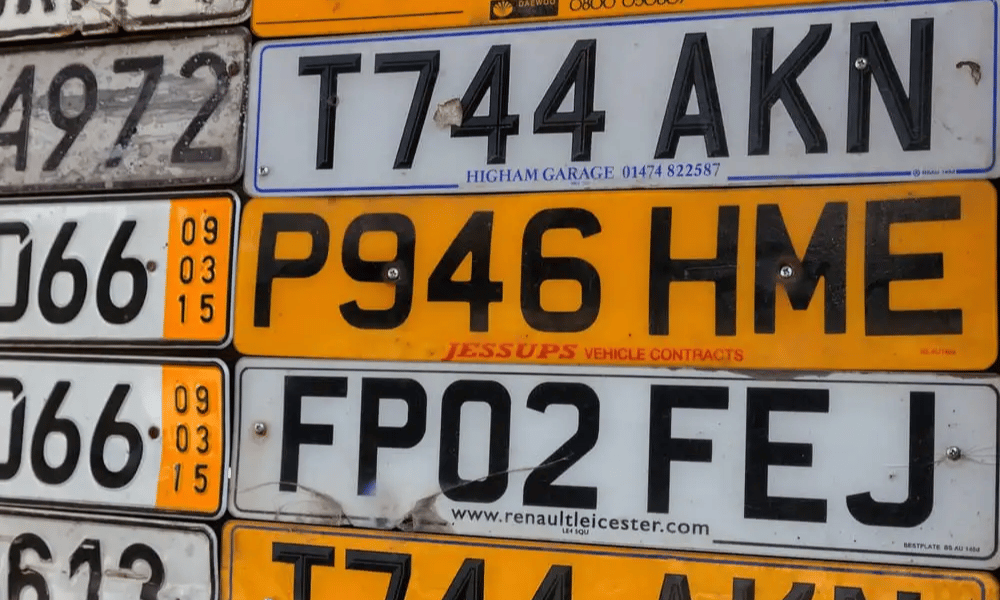
The investigation identified two distinct forms of illegal plate: cloned plates, which copy the registration of another, legitimate vehicle so that at least two cars on the road share the same identity, and ghost plates, which display a vehicle's genuine registration but use reflective or otherwise altered materials designed to make them unreadable to most automatic number plate recognition (ANPR) cameras.
At one test site near the Dartford Crossing, a new camera developed by MAV Systems, one of the UK's main ANPR technology providers, recorded an average of more than 1,000 ghost plates a day over several months. At a second site near the M25, detections have risen from roughly 1,000 to nearly 2,000 a day over almost two years, while a third site near the Eurotunnel at Folkestone flags more than 400 a day, according to the report.
Tony Porter, a former senior counter-terrorism officer who has previously advised government on surveillance cameras, told Panorama that cloned and ghost plates undermine police ability to track organised criminals and that the UK "tolerates a £10 number plate with no security mechanism on it" despite the country's ANPR network capturing around 100 million reads a day across 14,000 sites.
Panorama's own undercover filming found number plate suppliers willing to sell ghost plates with no ID or proof of vehicle ownership required, in breach of DVLA rules, and found that just two of the more than 34,000 registered plate suppliers in the UK have been prosecuted and removed from the DVLA register since 2020.
A related parliamentary inquiry by the All-Party Parliamentary Group for Transport Safety separately estimated that as many as one in 15 vehicles on UK roads could be using plates designed to evade ANPR detection, and found recorded cases of the underlying offence rose from 22,450 to 36,794 over the period it examined.
The insurance exposure created by illegal plates runs in two directions, and both are already documented in cases beyond this investigation.
The first is what happens to innocent, legitimately insured drivers whose registration has been cloned. Victims of plate cloning can find themselves receiving speeding or congestion charge fines for journeys they never made, and in more serious cases have had to demonstrate to their own insurer that they were not the vehicle involved in an incident their cloned plate was linked to.
Fleet operators have reported the same problem at scale for years: one fleet manager told an industry meeting she had identified six cloned vehicles within her own fleet, with fines and enforcement notices routed to the legitimate registered keeper rather than the criminal actually driving.
Advice commonly given to cloning victims includes notifying their insurer promptly once cloning is suspected, since an unresolved cloned-plate association on a policyholder's record can affect future premiums or claims handling if the fraudulent vehicle is later involved in an incident.
The second, more serious exposure is what happens when a vehicle using an illegal plate is actually involved in a collision. Cars fitted with ghost or cloned plates specifically to evade ANPR detection are disproportionately likely to also be uninsured or driven by disqualified drivers, precisely because both forms of evasion serve the same underlying purpose: avoiding detection and enforcement altogether.
Cain Byrne, the 20-year-old driver who killed 81-year-old Graham Slinn on a pedestrian crossing after fitting cloned plates to his car, was driving without a licence or insurance at the time. Where a driver responsible for an injury or fatality is uninsured, the compensation route for victims and their families runs not through the driver's own motor insurer, since none exists, but through the Motor Insurers' Bureau, a body funded by a levy on all UK motor insurance policyholders specifically to compensate victims of uninsured and untraced drivers.
Every illegal plate that successfully shields an uninsured driver from enforcement is, in that sense, a cost eventually absorbed collectively by the entire insured driving population rather than by the individual responsible.
For insurers, the practical implication is twofold. On the claims side, a rising volume of ghost and cloned plates makes it harder to reliably establish which vehicle was actually present at the scene of an incident using camera or ANPR evidence alone, a data source claims teams increasingly rely on to corroborate accident circumstances and detect fraud.
On the pricing side, the MIB-funded uninsured driver compensation system means that a genuine rise in undetectable, and therefore effectively unenforceable, uninsured driving has a direct, if diffuse, upward pressure on the levy funding that compensation, ultimately reflected in the cost of every UK motor policy.
Justin Madders, the minister responsible for UK vehicle registration, told Panorama that a national plan has now been established to understand how widespread the illegal plate problem actually is and to bring police forces together to share intelligence and trial new detection technologies.
Chief Constable Tim Forber, the UK's policing lead on ANPR, said forces want tighter licensing and regulation over who can issue a number plate, noting "not a week goes by where we don't see an example of someone on cloned plates involved in serious and organised crime."