Lizzie Morris was first offered terrorism insurance for her coffee shop in Fairford, a quiet Cotswolds town next to RAF Fairford, about a decade ago. It felt, she told Stars and Stripes, "like a really weird thing to be saying yes to." This year, when she renewed, a member of her book club had just foiled what British authorities now describe as a suspected Iran-backed plot against the base.
"Now I'm like, 'Oh, I'm really glad you've got it,'" Morris said. "We might not need it, and I wondered if they'd even offer it to us this year. We literally just did our renewal, I think, two weeks ago."
The incident occurred on September 27, 2026, when her book club member spotted masked men and vans blocking a road near the base's southeast perimeter. Her call to police led to the arrest of seven men in their twenties on suspicion of terrorism. A week later, the US Air Force withdrew twelve B-1 bombers operating from Fairford under Operation Epic Fury - the US campaign that launched strikes on Iranian missile sites threatening shipping in the Strait of Hormuz. President Trump cited "some threats" when discussing the departure.
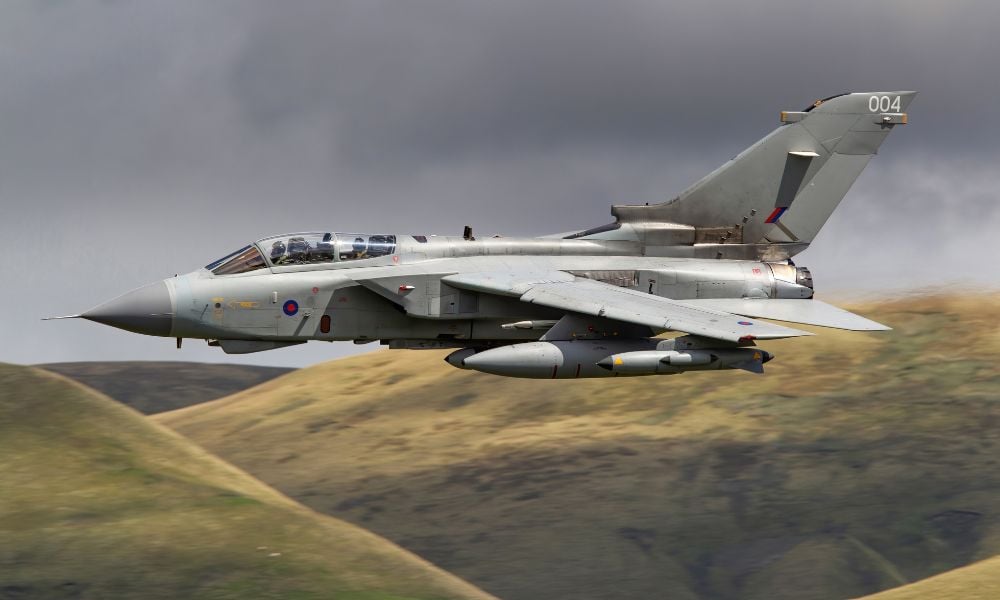
RAF Fairford had hosted US bombers throughout the US-Israel war with Iran this year, with British authorities confirming it permitted defensive strikes but not offensive operations. Tehran had earlier warned it regarded the base as a legitimate target. Residents had reassured themselves that Iranian missiles and drones lacked the range to reach Gloucestershire.
"We've been reminded that they don't need to launch a drone from Tehran to hit us," Cotswold District Council member Tristan Wilkinson told Stars and Stripes. "I think what RAF Fairford has done in the last 10 days is bring that home to us."
The suspected plot involved individuals already on UK soil - including a dual British-Iranian national and a British national subsequently arrested in London. That is the operative risk reality: state-directed proxies operating domestically, against infrastructure that is a publicly documented military target in an ongoing conflict.
First, how are terrorism premiums for businesses near military installations reflecting the changed risk environment? The Lizzie Morris story suggests terrorism cover exists and continues to be offered near RAF Fairford. But the terms at which that cover was written a decade ago - before the base became an active hub in a live Middle East conflict - may not reflect the current exposure.
Underwriters and brokers with clients near declared military targets should be reviewing whether existing terms remain appropriate.
Second, Pool Re - the government-backed terrorism reinsurance scheme that covers acts of terrorism but not acts of war - would face a direct attribution challenge if a plot of this kind succeeded. The distinction between a terrorist act directed by a foreign state and an act of war is not academic when a claim depends on it. That boundary is precisely where the Fairford incident sits: state-linked actors, operating in the UK, against a base conducting military operations. Brokers advising clients with Pool Re-backed cover near military infrastructure should understand what that boundary means for their clients' exposure.
Third, US investment plans reported in July by The Guardian included $500 million for a new hangar compound at Fairford as part of a $4 billion programme across UK bases. If that investment proceeds, the strategic value of the base as a target increases materially - and so does the economic exposure of surrounding businesses to any future incident.