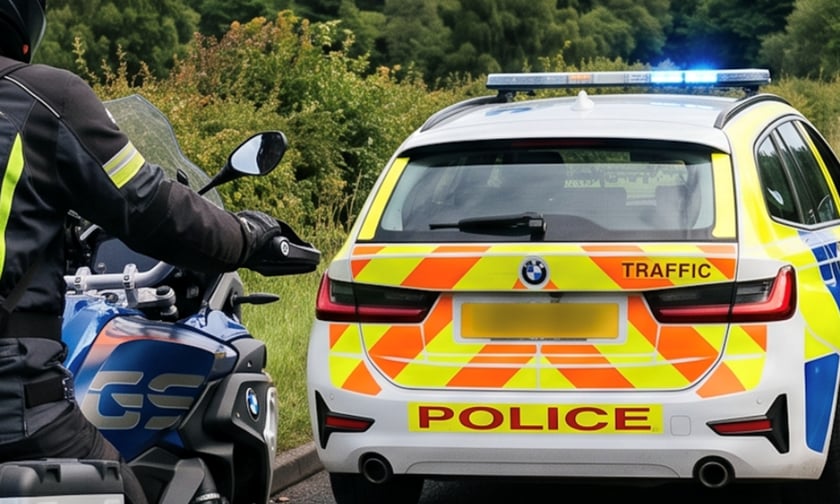
A police officer once watched by TV audiences policing other people's driving has been sacked for the very offence he was paid to catch – and for the UK's compulsory motor insurance system, the case is a useful reminder of where automated enforcement still can't reach.
PC Nicholas Lovatt, a serving officer with Derbyshire Constabulary since 2001 who appeared on Channel 5's Traffic Cops, was dismissed without notice following a misconduct hearing last week. A disciplinary panel, chaired by Chief Constable Simon Blatchly, found that Lovatt had ridden his own motorbike – which was declared off the road under a Statutory Off Road Notification (SORN) and had no valid MOT – 16 times between mid-September and late November 2025, all without insurance. He also rode a second motorbike, belonging to someone he knew personally, on six further occasions over the same period, despite that machine also carrying an expired MOT and SORN status.
Lovatt eventually insured his own bike on November 25 – the day before a colleague pulled him over. He told the stopping officer the motorbike had barely been used, a claim the panel rejected given the pattern of use uncovered. He admitted the underlying facts but contested that he had acted dishonestly, and denied gross misconduct.
The panel disagreed, concluding his conduct had breached standards of honesty and integrity and was "highly discreditable" for an officer who had spent much of his career enforcing road traffic law. Positive character references and the personal strain of a marriage breakdown were considered but found to carry limited weight against the scale of the offending.
For most readers, that's where the story ends: an officer loses his job, a cautionary tale about integrity. For insurers and brokers, though, the more interesting detail is a technical one.
Since 2011, Continuous Insurance Enforcement has required every vehicle on a keeper's record to carry live insurance unless it's been formally SORN'd, with the DVLA cross-checking its own vehicle register against the industry's Motor Insurance Database to flag anomalies automatically. It's this data-matching, not roadside stops, that catches the bulk of uninsured keepers.
A vehicle correctly declared SORN sits outside that net by design – it's assumed to be parked up, not on the road. That's the gap Lovatt's case falls into: both machines were on the system as off-road, so no automated letter or flag would ever have been triggered by database comparison alone. The offending only surfaced because a colleague physically stopped him. It's a reminder that CIE, for all its success in narrowing the uninsured-driving problem since 2011, still relies on old-fashioned roadside policing to catch riders and drivers who use a "SORN" vehicle on the road while it's technically parked on paper.
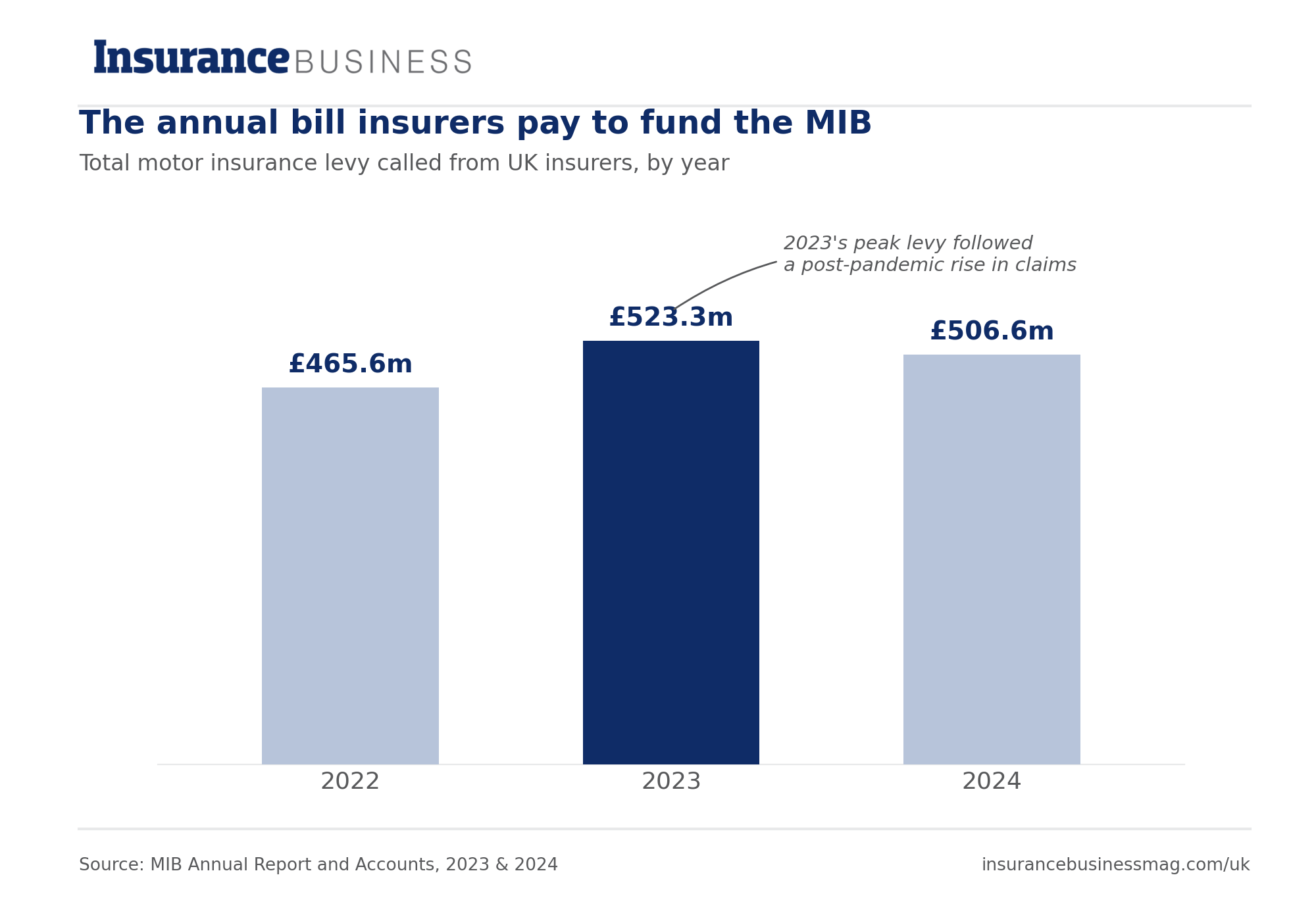
The scale involved in any single case like this is tiny, but the wider picture it sits within is not. The Motor Insurers' Bureau currently estimates that around 335,000 uninsured vehicles are on UK roads on any given day – a figure insurers ultimately underwrite through the compulsory MIB levy, since it's that fund which pays out when an insured driver is hit by someone with no cover at all. Insurance Business has previously reported that MIB data pointed to close to 160,000 uninsured vehicles seized nationally in a single year – a 17-year high – with the total economic cost of uninsured and hit-and-run driving put at up to £1 billion annually, a cost recovered through insurer levies and, in turn, premiums.
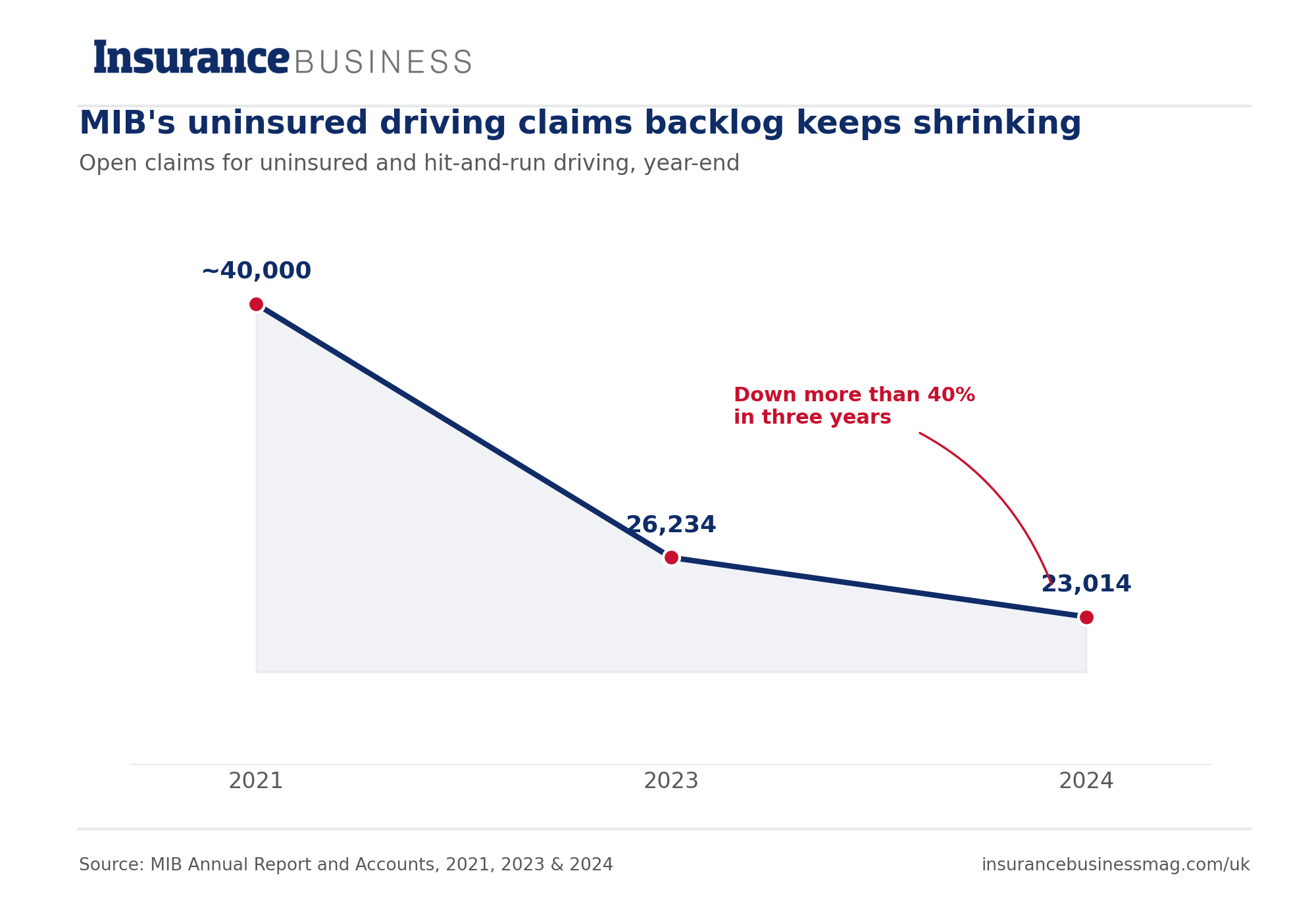
Police forces have leaned increasingly on ANPR and shared data with the MIB to run enforcement operations of the kind covered above, and those campaigns are largely built on catching vehicles that show up as insured-but-shouldn't-be, or uninsured-and-on-the-road. Lovatt's case is the mirror image: a vehicle correctly recorded as off the road, ridden anyway, invisible to the database, and only caught because a human officer happened to see it.
It's a small case, but it lands at an awkward moment for public confidence in enforcement generally. Blatchly himself made the point in the outcome document, warning that public trust would be seriously damaged if people knew a road traffic officer had repeatedly ridden into force headquarters uninsured and then downplayed it when questioned. For an industry that spends heavily – through the MIB levy, through underwriting losses, through ANPR partnerships with police – trying to close the compliance gap, it's worth noting that even a fully datafied system still needs someone at the roadside to catch the exceptions sitting just outside its reach.