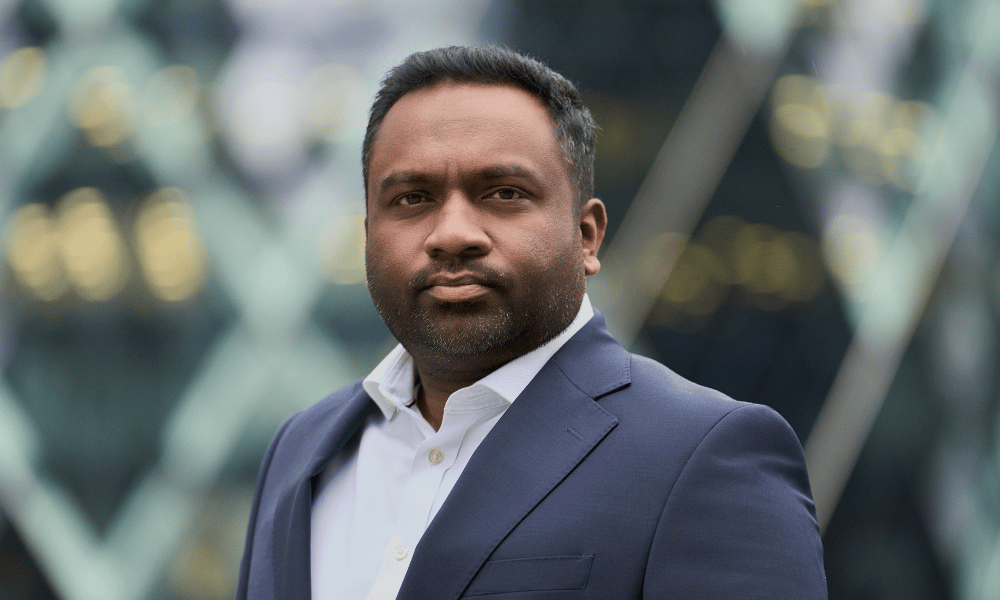
International insurance hasn't stopped being global, but it is increasingly being rebuilt market by market, according to Niraz Buhari (pictured), CEO of City & Commercial Insurance Group in London.
For UK brokers placing business abroad or advising clients with overseas operations, that shift changes where risks are structured and increases the importance of having the right expertise on the ground.
For the biggest risks, little has changed. Buhari said the City of London continues to play a major role in structuring and reinsuring the world's largest exposures.
"Easy 50, 60% of each larger insurance risk globally comes to this market," he said. Brokers placing major international programmes can still expect London to be the natural home for that business.
Further down the risk scale, though, brokers are increasingly finding that the placement conversation starts locally rather than in London. India is one example of a broader push towards retaining more insurance and reinsurance business domestically.
Indian reinsurance rules require foreign reinsurers operating through local branches to retain at least 50% of the Indian reinsurance business they underwrite within the country, which Buhari said has made it commercially less attractive to simply cede that premium back to London.
"That motivated the insurance companies in the UK either to set up a branch or a local presence in India," he said.
That hasn't meant UK insurers retreating from these markets. Instead, they are following the risk in, establishing local operations while still returning profits to their parent companies. For brokers with clients expanding into India and similar markets, the practical effect is that local presence is increasingly becoming part of the deal itself.
That local dependence doesn't disappear once a market has capacity in place. Even in an industry Buhari sized at roughly $7 trillion globally, he argued the fundamentals of getting a deal over the line haven't changed.
"It's still people," he said. "Because end of the day, you are literally selling a promise to the customer – if this happens, I pay you, I pay for your losses."
For brokers, that trust element keeps personal relationships central, particularly on larger risks: "For a larger risk you still need people to sit around the table and discuss and negotiate the premium." It also shapes what happens after placement.
Repair costs and liability exposures can vary dramatically between jurisdictions, and an insurer entering a market without sufficient local knowledge can easily misjudge the exposure, potentially leaving the broker explaining why a claim hasn't settled the way a client expected.
The importance of that regional expertise is reflected in what brokers themselves say they want. Almost nine in ten UK brokers now say they specifically want insurers with a strong regional presence, with access to local decision-makers increasingly influencing where business is placed.
It's a preference that isn't limited to the international end of the market, smaller UK regional brokers make much the same case for staying rooted in a single community rather than scaling nationally, on the grounds that proximity to a client is itself a competitive advantage.
Buhari said local recruitment is essential when insurers enter new markets, particularly for fraud prevention, cultural understanding and underwriting judgement.
"It's essential for this game, for this business," he said.
For brokers, it also matters how an insurer arrives in a new market, since that route shapes the kind of partner they end up dealing with locally. Buhari said building a presence from scratch isn't always the most practical option; acquisition allows an insurer to secure an established team, brand and distribution network rather than entering a territory cold. An insurer that arrives via acquisition brings established local relationships and market knowledge with it, a different proposition for a broker than one still building a team and reputation on the ground.
As more premium stays within domestic markets, that local distribution becomes the harder part of the equation. Having capital available is only useful if an insurer also has relationships capable of getting that capacity to clients, something Buhari expects to drive closer ties between capacity providers, brokers and MGAs, particularly across markets in Africa, Asia and the Middle East.
"You should be able to add value in the form of helping them to look for the distribution, technology, the whole suite," he said.
None of this makes international placement less global, it makes it more dependent on understanding how individual markets actually work. As regulation keeps more risk and premium closer to home, the brokers and insurers with the strongest local relationships may increasingly be the ones who can get a deal done.