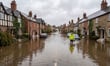
For years, insurers have complained that they can't see what homeowners have done to keep floodwater out. A new government-backed certificate is meant to change that.
The Department for Environment, Food & Rural Affairs (Defra) and Flood Re confirmed on Tuesday that pilots of Flood Performance Certificates (FPCs) will start before the end of the year in flood-prone parts of England. More trials will follow through 2027 and beyond.
The template is the Energy Performance Certificate, the familiar A-to-G energy rating attached to homes when they're sold or let. Rather than a single number, though, the pilots will test a "Flood Performance Rating" that splits a home's risk into separate parts: how exposed it is, how the building is put together, and how well it resists water getting in. The hazard data will come from the government's existing Check your long term flood risk service, which covers rivers and surface water.
For underwriters, the bit that matters is that the rating is supposed to move. If a homeowner fits flood barriers, self-closing air bricks or water-resistant flooring, the assessment should reflect it. If a home could be made more resilient, the certificate will say where.
Flood Re's longer-term ambition goes further. It wants app-based flood self-assessments to become a routine part of owning a home, with insurers eventually recognising the work people do.
Read next: Flood Re cuts premiums for lowest-income households as Band G and H costs spiral
Flood Re also confirmed on Tuesday that it is acquiring BeFloodReady, which it plans to develop into a national flood resilience platform, with an official launch at a Birmingham conference on April 22, 2027. Longer term, the platform is intended to support the development of FPCs, build skills and accreditation opportunities for resilience professionals and insurers, and give households access to trusted PFR providers.
Kelly Ostler-Coyle, Flood Re’s director of corporate affairs, said: “By bringing together organisations from across the resilience community, we can help more people take simple steps that reduce damage, speed up recovery and build greater confidence for the future.”
The clock behind all this is Flood Re's planned exit from the market in 2039, when household flood cover returns to fully risk-based pricing. FPCs were one of the headline measures in the reform package Flood Re and Defra set out in July, alongside promised premium discounts for households that hold one. Flood Re has said it wants certificates linked to a discounted premium structure by 2028.
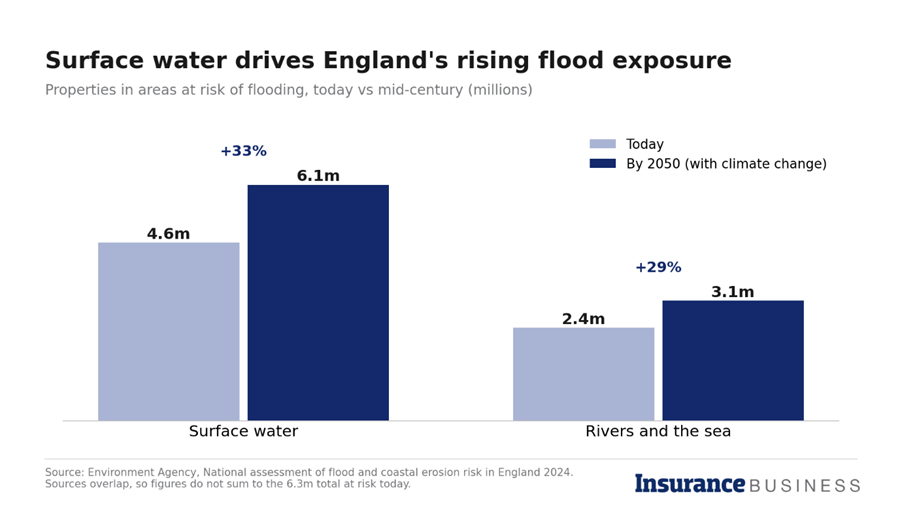
The scale of the exposure explains the urgency. The Environment Agency's national flood risk assessment puts around 6.3 million properties in England in areas at risk from rivers, the sea or surface water. With climate change, that could reach roughly 8 million, about one in four, by mid-century.
Jason Storah, chief executive of UK & Ireland general insurance at Aviva, made the same point. "By 2050 a quarter of homes are likely to be at risk from flooding," he said. "Improving flood resilience of homes is critical, not only for our customers, but also for insurers, developers and lenders alike."
The catch is that people have been slow to act, even when someone else pays. Flood Re's Build Back Better scheme, which funds resilience measures as part of a flood repair, has been taken up in only around a third of eligible cases. FPCs are partly a bet that a visible score will nudge behaviour where cash alone has not.
"Flood Performance Certificates are about turning awareness into action," said Perry Thomas, Flood Re's chief executive. "Over time, we want resilience improvements to be recognised and rewarded, helping create a future where access to affordable insurance increasingly reflects the actions people take to protect their homes."
Read next: Flood Re warns 2039 transition hinges on faster risk reduction
Storah also put his finger on a gap the industry keeps returning to. "Improving access to flood resilience is key to keeping insurance available and affordable to homes at risk of flooding, particularly as newer homes are not covered by the Flood Re scheme," he said.
Homes built since January 1, 2009, can't be ceded to Flood Re, so they are priced on their own risk from day one. Research published this summer found there is no verified record of flood mitigation across England's new-build stock, leaving insurers unable to tell a resilient new home from one that isn't. Flood Re has since proposed an FPC framework for new builds too.
The issue is a live one - last month a High Court ruling allowed up to 190 homes to go ahead on a floodplain site near Yatton in north Somerset, all of them outside Flood Re's reach.
Mortgage lenders are watching as closely as insurers. Robert Stevens, head of property risk at Nationwide, said FPCs "have the potential to become a really valuable tool for homeowners, lenders and insurers", adding that a standardised approach would help "people make more informed decisions about their homes".
Read next: Floodplain ruling leaves insurers with 190 homes Flood Re won't cover
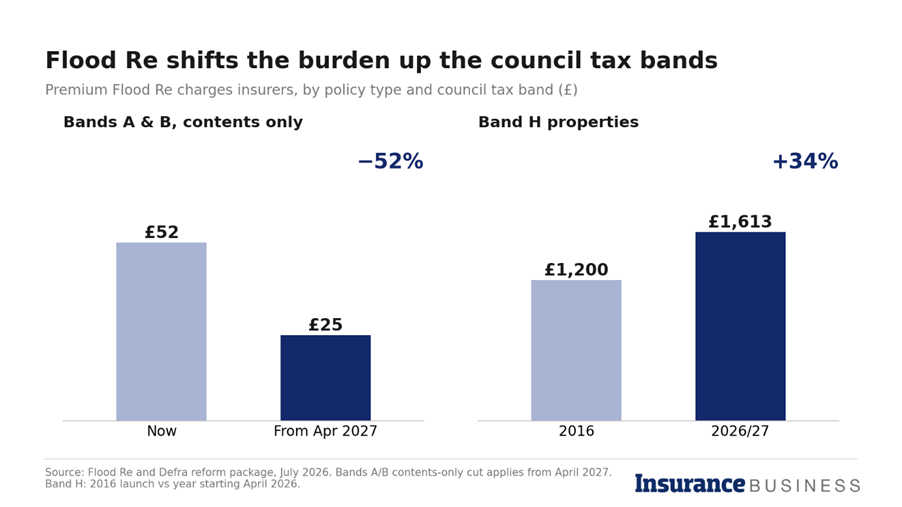
The certificates sit alongside changes already announced to target Flood Re's support at lower-income households. From April 2027, the premium Flood Re charges insurers for contents-only policies in Council Tax Bands A and B falls from £52 to £25, and insurers are expected to pass the saving on. To help fund the reforms, the annual levy on home insurers has risen from £135m to £160m.
Floods minister Emma Hardy pitched the certificates as a matter of basic information. "Flooding is devastating for families and communities, and we need all households to know about their own flood risk and what can be done to reduce it," she said.
The National Flood Forum, the charity that supports flooded communities, gave the pilots a cautious welcome. Its chief executive, Tracey Garrett, said the trials were a chance to make sure FPCs "work effectively for people who flood".
The announcement lands during the Environment Agency's Flood Action Week, which runs until October 18 and urges people to check their risk, draw up a flood plan and sign up for flood warnings. The agency says it has 260 mobile pumps, 17 of them ultra-high-volume, plus 25km of temporary barriers ready to deploy, and 600 staff on call around the clock.
Read next: Flood resilience gap in new builds leaves insurers blind
The pilots will answer the questions that decide whether FPCs become an underwriting tool or just another document in the conveyancing pack. Will insurers' own flood models give the rating any weight? Who pays for an assessment, and who carries out the checks? And will a certificate pass to the next owner when a home is sold?
For brokers placing cover on homes that sit outside Flood Re, or that will from 2039, a credible rating could make the difference between a quote and a decline. For now, the Flood Insurance Directory remains the main route for hard-to-place homes.