The 2026 Atlantic hurricane season has been one of the quietest on record, and the insurance market is already pricing that in, but the numbers beneath the calm tell a more complicated story.
Through October 14, the season’s Accumulated Cyclone Energy (ACE) stood at just 18, against a full-season average of 123, according to analysis from Matthew Bellamy, underwriting director at the Lloyd’s Market Association. ACE measures the combined intensity and duration of tropical cyclones, making it a more reliable indicator of potential loss severity than simple storm counts. Nine named storms formed in 2026 versus a historical average of 14.4, but the ACE gap is the more meaningful measure of how suppressed the season actually was. By mid-August it was running around 85% below normal, confirmed by multiple meteorological sources.
The driver was El Niño, which increases wind shear across the Atlantic while fueling activity in the Pacific. The eastern and central Pacific recorded an ACE of a record 328 with 22 tropical storms and nine major hurricanes, including three Category 5 storms. That activity carried limited direct exposure for US and Lloyd’s underwriters, but it illustrates where the season’s energy actually went.
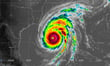
Hurricane Isaias became the season’s first and only hurricane on October 7, the latest first hurricane ever recorded in the Atlantic, according to NOAA, surpassing a record set on October 8, 1905. The only two Atlantic seasons on record to produce no hurricane at all were 1907 and 1914, a threshold Isaias narrowly prevented 2026 from matching. It made landfall near Destin, Florida on October 9 as a Category 2 storm with 105 mph winds, having peaked at Category 3 with 120 mph winds earlier that day. It was the first US hurricane landfall since Milton in October 2024.
The mechanism that drove it to Category 3 despite hostile wind shear and unfavorable conditions was record-warm Gulf water temperatures, a factor that modelers and researchers have been tracking with increasing concern for years. Isaias’ sustained winds increased by 40 mph in 24 hours, clearing the National Hurricane Center’s threshold for rapid intensification. Research published in Nature Communications in 2022 found that anthropogenic warming has significantly increased the probability of environments favorable for rapid intensification across multiple basins, meaning storms need not be frequent to be severe.
Isaias weakened before landfall but still generated insured losses estimated at US$1 billion to US$2 billion by Verisk, US$2 billion to US$3 billion by Cotality, and US$2.5 billion to US$4.5 billion by Moody’s RMS, with a best estimate of US$3.5 billion. Modeler estimates vary based on scope and methodology, but the range illustrates Bellamy’s core point for a season described as historically quiet: ACE tells you about seasonal energy, not about the loss potential of any individual storm that happens to make landfall in the right place.
The season’s quietness is not without consequences for the market that benefited from it. Lloyd’s half-year results, published in September 2026, showed a combined ratio of 90.8%, an improvement on 92.5% in H1 2025, but the headline was supported by a major claims ratio of 6.8% against a long-term average of 10.4%. Strip that out and the underlying combined ratio rose to 84.0% from 82.1%, reflecting the erosion of risk-adjusted rates already underway.
According to Bellamy’s analysis of the Lloyd’s H1 2026 results, the largest contributor to premium growth was reinsurance, which is also the class most exposed to Atlantic catastrophe risk. Property catastrophe reinsurance rates fell 16% at the July 2026 midyear renewal, according to JP Morgan citing Guy Carpenter data, accelerating from a 12% decline at January 1. Fitch expects pricing to soften further and terms to loosen at the 2027 renewals, as excess reinsurance supply continues to outpace demand growth.
The trajectory Bellamy identifies is clear: a quiet season accelerates rate softening in the class most exposed to Atlantic storms, which puts further upward pressure on the attritional loss ratio that is already deteriorating. Primary carriers face the same dynamic from the other direction. Reinsurance cost savings that look favorable now come with reduced pricing power on the underlying book.
The data in Lloyd’s own half-year results, and in the reinsurance renewal figures, gives Bellamy’s analysis specific content. Isaias demonstrated that a single storm in a quiet season can still generate a multi-billion-dollar loss, and the rate environment heading into 2027 means there is less margin to absorb the next one. “While insurers may draw a collective sigh of relief when the season is finished,” Bellamy writes in a Lloyd’s Market Association market commentary, “these trends point to gathering storm clouds for the insurance markets focused on hurricane risk.”