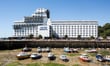
A fire believed to have been started deliberately forced the evacuation of around 280 people from the Grand Burstin Hotel in Folkestone in the early hours of Saturday morning.
Kent Fire and Rescue Service sent 26 fire engines to the seafront hotel at around 01:05 BST after the blaze took hold in the building's basement, and crews remained on site into the evening, monitoring and extinguishing remaining hotspots. Kent Police said the fire is being treated as suspicious and has appealed for witnesses.
One person was taken to hospital with minor injuries after South East Coast Ambulance Service assessed several people at the scene. Station manager Lawrence Pater said the "very severe" fire had raised concerns about the structural integrity of the building, and that the fire service was seeking advice from structural inspectors. Folkestone & Hythe District Council set up a welfare centre at Three Hills Sports Park, and nearby residents were advised to close windows and doors and avoid the area.
A spokesperson for Britannia Hotels Group, which owns the Grand Burstin, said the company was taking immediate action to ensure the safety and wellbeing of guests and staff, and was fully cooperating with the authorities.
The fire service's own stated concern about the building's structural integrity is the detail worth watching closely from an insurance perspective. Until structural engineers determine whether the hotel's basement, and the floors above it, remain sound, any property damage assessment and reinstatement estimate will stay provisional, which in turn affects how quickly a business interruption claim can move from initial notification to an agreed indemnity period.
Guests described the scale of what firefighters were dealing with: cars parked in the basement were destroyed and reportedly heard exploding as the fire took hold, thick black smoke was visible from street level, and an elderly couple staying on the hotel's sixth floor described feeling "lucky to be alive" after being brought down from their room.
Fire damage to hotels sits within a body of UK case law insurers and policyholders have already tested extensively. Insurance Business UK has previously reported on Orient-Express Hotels Ltd v Assicurazioni Generali SpA, a case cited in the Supreme Court's own FCA business interruption test case judgment, which turned on how a hotel's trends clause should be applied when calculating a payout following physical damage.
That precedent matters here because a hotel the scale of the Grand Burstin, large enough to require 26 fire engines and a mass evacuation, will likely generate a business interruption claim measured over months rather than weeks, and the eventual sum insured will turn heavily on how the policy's indemnity period and trends clause are applied against what would otherwise have been a normal trading period for the venue.
The suspected arson element adds a further layer insurers will need to work through alongside the physical damage assessment, since establishing whether the fire was started deliberately, and by whom, can affect subrogation and recovery options even where the underlying property and BI cover itself isn't in doubt.
This incident arrives against a backdrop of hospitality operators already absorbing higher insurance costs.
Insurance Business UK reported that UKHospitality's 2024 research found 84% of hospitality businesses experienced increased insurance costs year on year, with brokers advising that understanding a venue's specific operational profile. This includes which parts of a site actually generate its profit and whether a partial closure would allow other areas to keep trading -- matters more for structuring adequate BI cover than treating hospitality risk as a single generic category.
That same reporting noted the importance of assessing business interruption exposure specifically around potential loss of revenue from bookings and hospitality operations when only part of a large venue is affected, a question that will apply directly to the Grand Burstin depending on how much of the building the fire and subsequent structural assessment ultimately affects.
A fire of this scale at a major seafront hotel, with a suspected arson cause and an open structural question, is the kind of claim where the property damage and business interruption sides of a policy end up moving at different speeds. The physical repair timeline depends on what structural engineers find, while the income-loss side of the claim depends on how quickly the hotel can reopen any undamaged wings or floors, if at all, during that assessment.
For a hospitality sector already reporting rising premiums, a high-profile claim like this one is likely to feature in how insurers and brokers discuss coastal hotel risk, and specifically arson exposure in large, older seafront properties, at the next renewal cycle.