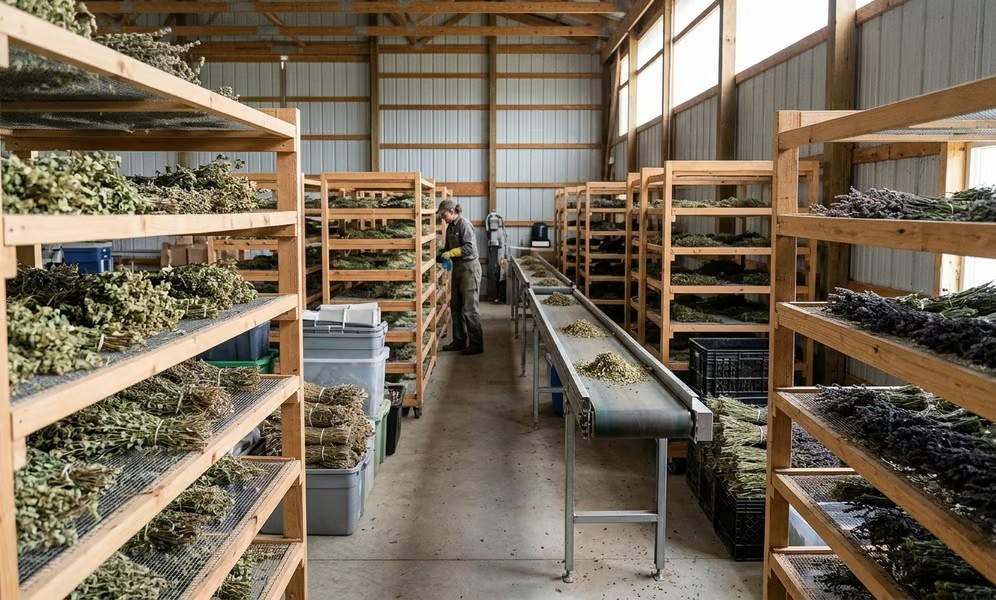
A Suffolk herb producer has been awarded at least £2.4 million from its insurance broker after a High Court ruling on a 2021 factory fire exposed a critical failure in business interruption advice, according to a report by The Grocer.
Camstar Herbs Limited, the largest producer of dried parsley outside China, brought a professional negligence claim against Advisory Insurance Brokers Limited, trading as Morgan Law Insurance Brokers, after fire destroyed the processing facility that handled approximately 60% of its harvested parsley in August 2021.
The London Circuit Commercial Court awarded Camstar the full £1,249,362.50 claimed in damages, along with £360,492 in interest and a £75,000 award following the company’s successful Part 36 offer. An interim payment of £700,000 towards legal costs brings the current total to approximately £2.38 million, The Grocer reported. Further sums may become payable once outstanding interest and costs are determined. The court refused the defendant permission to appeal.
The case turned on a broker recommendation made in 2018 to switch from a gross revenue business interruption policy to a gross profit (also known as insured profit) policy. The switch saved Camstar roughly £7,000 in annual premiums. It also removed cover for the payments the company continued making to its growers and harvesting contractor after the fire. Those costs were essential, the court heard, to maintaining the supply relationships on which its operations depended.
Judge Nigel Bird found that a reasonably competent broker would have understood the difference between the two policy types and would have explained the change in cover to the client. The recommendation letter contained no mention of the switch. No advice was given.
“After experiencing such a devastating fire, the last thing we expected was to discover that payments to some of our most important suppliers and harvesters weren’t covered by our insurance,” Edward Starke, chief executive and managing director of Camstar, told The Grocer. “These are relationships that are fundamental to our business, and we felt incredibly let down by the broker we had trusted to make sure we were properly protected.”
Under a gross revenue policy, purchase costs, including the payments to growers and harvesters, form part of the insured sum. Under a gross profit policy, those costs are stripped out of the calculation entirely. For a business like Camstar, whose model depends on maintaining long-term growing contracts across a harvesting season, the distinction determined whether more than £1.2 million in post-fire obligations would be covered.
The court rejected the broker’s argument that the payments could have been claimed as an increased cost of working, a clause that reimburses additional expenditure incurred solely to prevent or limit a reduction in turnover. The payments were not an extra cost. They were an estimate of what growers and the harvester would have earned had the fire not occurred.
The case adds to a pattern of BI negligence claims exposing a gap between the cover a client believes it holds and what is actually in place at the point of loss.
“This case should be a wake-up call for British manufacturers,” Oliver Pannell, partner in the insurance disputes team at Edwin Coe, told The Grocer. “A factory fire can stop production overnight, but it doesn’t mean a business can simply stop paying its suppliers and contractors. Those relationships may be essential to its survival.”
For brokers advising manufacturers and food producers with complex supply-chain obligations, the gross profit and gross revenue distinction in BI cover is a placement decision that cannot be treated as a minor technical variation, particularly where a policy switch is being recommended on cost grounds.
London law firm Edwin Coe represented Camstar in the claim. The judgment was handed down on October 27, 2026.