
The Insurance Business Hall of Fame
Jump to winners | Jump to methodology
Leaders who carried the industry forward
Nine insurance industry veterans who started on paper and telex share what has never changed
|
Meet the honorees of Insurance Business America’s Hall of Fame 2026. This year’s nine inductees are US insurance professionals with at least 35 years of industry experience. The 10th annual selection recognizes leaders from carriers, brokers, wholesalers, insurance technology, premium finance, and insurance defense law. Each has adapted to decades of change while remaining committed to the fundamentals of the business.
Jeanie Sheppard, senior vice president of commercial lines at Palmetto State Insurance Agency in Columbia, SC, began her insurance career with a note sent back through the pneumatic tube of a bank drive-through window. A customer offered the bank teller a job in insurance, and she took it. Bill Atlee, chief innovation officer at Wayne, PA-based iPipeline, founded the company in 1995, when internet download speeds ran at 30 kilobits per second.
Both now work in an industry run on cloud platforms, mobile devices, and real-time data. That journey – from paper files, telex, and dial-up to the digital tools insurance professionals take for granted – runs through every member of IBA’s 10th annual Hall of Fame.
Their careers have tracked the industry’s own growth. Insurance carriers and related activities employed about 2 million people in the US in January 1990, according to US Bureau of Labor Statistics data. By September 2026, that figure had risen to about 2.9 million (preliminary), according to the bureau.
Their stories are not about technology for its own sake. They are about professionals who adopted each new tool as it arrived while holding onto what made them successful in the first place: disciplined underwriting, trusted relationships, ethical judgment, and a commitment to the next generation.
|
Nominees needed at least 35 years in the industry. The independent advisory panel for the 2026 Hall of Fame was:
-
Caryn Siebert of Gallagher Bassett
-
David Lupica of Westchester, A Chubb Company
-
Jeffrey Lattmann of Brown & Brown
-
Jude DiBattista of Starr Insurance
For Siebert, vice president and national director, carrier engagement, at Gallagher Bassett and herself one of the 2024 Hall of Fame inductees, the class’s technology story stands out because it now looks so ordinary.
“It’s ironic that innovations introduced decades ago – from switching from telexes to faxes, from dot-matrix printers to laser printers, and from teleconferences to Skype – are now considered ‘old news’, having been superseded by instant messaging, smartphones, video town halls, and electronic records retention,” she says.
The shared quality, she adds, was staying power: “This year’s pool of inductees demonstrated that their accomplishments were consistent, repeatable, and long-lasting.” The inductees also led people through a changing workplace. Siebert noted that “success was achieved while effectively navigating across four generations simultaneously in the workplace, with the definition of ‘workplace’ changing significantly in their decades in the industry, especially post-COVID-19.”
Lattmann, executive managing director at Brown & Brown, says personal achievement alone was never enough. “If you’re in this industry for a long time and you want to get recognized, it’s not about … recognizing you as an individual … for what you’ve actually done yourself,” he says. “Whether it’s … top sales or … being a product expert, you have to have that, but you have to drive behavior.”
He also looked for nominees who kept reinventing their own work. At Brown & Brown, he says, the mantra is “challenging the status quo and making sure that whatever you’ve done yesterday doesn’t mean it’s the best for tomorrow.” Service beyond the firm counted too. Lattmann calls involvement in professional societies, guest lecturing, and other ways of giving back the “gold standard” for going above and beyond.

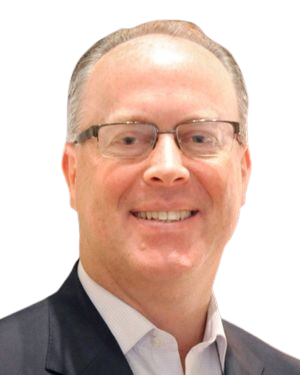
Jeffrey LattmannBrown & Brown
|
Marc Wolin, president and CEO of Seneca Insurance Company, a wholly owned subsidiary of Crum & Forster based in New York, has refereed high school and semi-pro football in the region for 44 years, officiating more than 1,000 games. In that time, he has never once won an argument with a coach.
“Do you know how many times I’ve convinced a coach that a call was right? Zero,” he says. “So you’re the explainer-in-chief, that’s what you really are.”
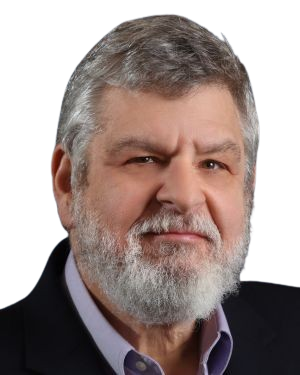
Marc WolinSeneca Insurance Company, a wholly owned subsidiary of Crum & Forster
The sideline taught him skills he uses every working day. “You learn how to … deal with a lot of information quickly. You learn to be very decisive. You really learn how to de-escalate,” he says. “You become a real expert in de-escalating and listening to people and getting to common ground.”
His son, an underwriter at Seneca who also officiates college football, once came to him about a broker complaining over a request for new loss runs, the claims history reports underwriters use to assess an account. Wolin reminded him of an officiating rule. “We respond to questions, not … comments. Yes, you need new loss runs, and you ignore the other stuff,” he says.
In a crisis, he follows the advice an NFL official once gave his son. “You have to think, and you slow it down, slow it down,” Wolin says.
An accidental entry into insurance
Wolin grew up in Brooklyn and spent weekends and summers working at his father’s liquor store in Queens. “You really get to see the public,” he says. He went into accounting knowing nothing about it and went on to qualify as a certified public accountant. “I never heard the term accounts receivable. I never heard the term ‘accounts payable,’” he says. He then scored straight hundreds in introductory accounting.
In 1979, he was a junior accountant at Coopers & Lybrand when a colleague refused to work on the Teachers Insurance audit, so Wolin was assigned instead. “You get one insurance client, and then you get another, and then you get another, and then you get another. Now all of a sudden you’re an insurance expert, and when you leave the firm, you tend to go into the industry,” he says.
A college course in the mathematics of finance paid off there. He had mastered present value formulas so well that he carried out actuarial reviews for life insurance clients, with the work checked by a fellow actuary.
“Everything we do … as a leader … it’s really a sum total of all the experiences you have in life where you can build on them,” he says. “Wherever you go, wherever you do, you can always learn stuff. Just add it to your bank.”
He later ran technical accounting at AIG and American Can and prepared Hank Greenberg’s testimony before the Financial Accounting Standards Board. At Primerica, he reported directly to Jamie Dimon. “So I was the head technical accounting geek. Kind of weird. Because I’m a Brooklyn street guy,” he says.
A turnaround built on hard work
“When I came to Seneca in ’89 … the place was a turnaround. We had $10 million of premium. We had no rating. We had a $13 million underwriting loss,” Wolin says. “We just worked it and worked it and worked it and worked it.”
Within a couple of years, Seneca earned a B++ rating, followed by an A- from AM Best. AM Best ratings measure an insurer’s financial strength, and A- sits in its “Excellent” band. Today, as a member of Crum & Forster Insurance Group, Seneca holds an A+ (Superior) rating, which AM Best affirmed in August 2026. He served as CFO and COO before becoming CEO in 2013. “I’ve never believed in a silver bullet,” he says. “I work 50, 55-hour weeks … I did that in 1979. I did that in 1985. I do that today.”
When 2026 Hall of Fame inductee Marc Wolin joined Seneca in 1989, the carrier had no financial strength rating. Today it holds an A+ from AM Best
|
The same consistency shapes how Seneca handles claims. “Property, we pay what we owe. That’s what we do. We don’t try to lowball,” he says. “It’s really the empathy and the street smarts, which is very critical for this business.”
He has seen the temptation to cut corners and resists it. “It’s an ethical challenge where … can I do this or be a little bit slippery here? But … it doesn’t pay. It never works out,” he says.
The tools change, the people don’t
Seneca has modernized alongside him. Its proprietary underwriting workbench, Seneca Express, clears, rates, and presents submissions so underwriters can quote quickly. The principles behind the business have stayed put.
The same shift is playing out across the industry. Underwriters now use automated software to assess risk, and the Bureau of Labor Statistics projects underwriter employment will fall 4 percent between 2025 and 2035, while still expecting about 6,800 openings each year, according to its occupational outlook.
“The products change, the tools change, the information changes … information’s a lot quicker,” he says. “But some of these … old-fashioned things are … the basic principles that are really wedded to … human behavior.”
He points to psychologist Daniel Goleman’s work on emotional intelligence as the model Seneca trains around. As Wolin describes them, the traits are drive, empathy, self-control, self-awareness, and relationship building. “These traits, I think, are always, always those types of traits that one needs to … do well, get along with people, build relationships … that’s eternal,” he says.
Leadership as service
Wolin has no time for the trappings of rank. “I refuse to ever have a mug or a sign that says ‘boss.’ I don’t want to be called boss,” he says.
He sees servant leadership as the hardest style to practice and the most effective. “As the leader, you’re really the servant,” he says. “You have to care more about your people than you care about yourself.”
That view came with time. “When you get old, you realize there’s a higher level to this. And it’s not about me,” he says.
Six predictors of success
Wolin has distilled what he looks for in people into six predictors of success at Seneca.
The six traits 2026 Hall of Fame inductee Marc Wolin, president and CEO of Seneca Insurance Company, sees as predictors of success at the company
|
The approach produces results. Seneca’s underwriter trainee program has produced 56 underwriters in five years who now write 33 percent of its business. The company has a highly diverse workforce that brings different backgrounds, experiences, and perspectives to the business. “These are just people who have all the right skills,” he says.
New hires notice his style. Wolin adds, “They say you speak to them. You don’t speak down.”
Choosing family and the front windshield
When Dimon left, he tried to persuade Wolin to follow him. Wolin stayed in insurance. He watched talented peers move from city to city to reach the top. “They take their kids around like their extra baggage,” he says. “Been married 39 years. I got four children, six grandchildren.”
He does not dwell on the paths he did not take. “I always look out the front windshield,” he says. “I never look out the back windshield.”
Q&A with Marc Wolin
What tough period made you a better leader?
We’ve had numerous existential challenges at Seneca. I’m a regular Brooklyn street guy, and if you know Brooklyn people, we can be pretty scrappy. Nothing really scares us, and a lot of leadership is just courage, so I’ve learned: just do what’s right. Your beacon is doing what’s right.
Were you always predisposed to lead?
When I was younger, we used to play combat, and I always said, “I want to be the general.” So I was eight years old and wanted to be the general. Leadership is a responsibility. It’s not an entitlement. The holy grail of leadership is to get people to do what you want them to do because they want to do it, not because you tell them.
Is your accounting background a help or a hindrance in insurance leadership?
Actually, it’s completely complementary. Accountants are very quantitative, and underwriters are very qualitative. We see the numbers; they see things behind the scenes in the selection of the risk and the quality of risk that you really don’t see, and when you put them together, you get the best of both worlds, a bit like chocolate and peanut butter.
Do you believe hard work can still take a newcomer to the top of insurance today?
I don’t think anything has ever changed in terms of success. You have got to understand the business and the underlying economics. You also have to understand the customer and get along with people. You have to be open-minded to ideas, and the most important thing is, you have to work hard
Who has helped you along the way?
Mentors are really, really important. You learn from smart people and some people who are really kind of not so capable, but you learn the good, and you learn the bad.
When Robert F. Tyson, Jr., founding partner of California-based Tyson & Mendes and an insurance defense lawyer since 1988, decided to publish his trial strategies, his partners objected.
“We defense lawyers typically take our trial skills to the grave. So when I told my partners I was going to publish a book to take back justice, they were not very happy,” he says. “The concern was I would be giving away all of our trial secrets to our competition. They were right, of course.”
He published anyway. “Sometimes you have to do something for the greater good, something to right a wrong,” he says.
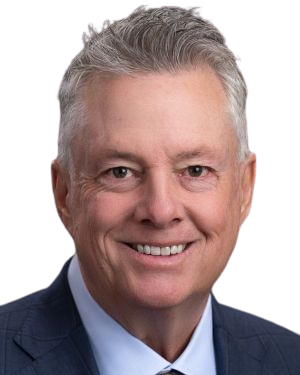
That streak runs back to his roots. “I am still a Staten Island boy, despite decades in La Jolla! I still have a bit of New York skepticism and a desire to outwork everyone,” he adds.
Naming the threat early
His first book was Nuclear Verdicts: Defending Justice for All, followed in 2025 by Nuclear Verdicts: The Apex – Break the Pattern, an analysis of 100 real nuclear verdicts. “The typical definition is a verdict in excess of $10 million,” Tyson says. “But I think a better measure is any verdict where the noneconomic damages, commonly called pain and suffering, is disproportionate to the economic damages.”
He saw the pattern through his clients before the term caught on. “I noticed the pattern as I started receiving feedback from insurance clients. They noticed we were getting incredible jury trial results as a firm, while other defense firms were getting killed by huge jury verdicts,” he says.
That feedback set the firm’s direction on social inflation, the rise in claims costs driven by litigation trends such as larger jury awards and the growth of nuclear verdicts. “Being in the service industry, we listened to their concerns and have continued to address social inflation in just about every way imaginable,” he says.
Independent research backs up that concern. The Swiss Re Institute found that social inflation increased US liability claims by 57 percent over the past decade and reached an annual peak of 7 percent in 2023, according to its September 2024 study.
The case that rewrote California damages
In 2011, Tyson won Howell v. Hamilton Meats & Provisions before the California Supreme Court. The decision limits recoverable past medical expenses to the amounts actually paid, rather than the higher amounts billed.
“Like many states, prior to persuading the California Supreme Court in Howell, courts permitted plaintiffs to obtain damages for amounts that were never actually paid, due to agreements between a plaintiff’s treating physicians and their health insurance,” he says. “As a result, plaintiffs were afforded a windfall, because damages were assessed based on inflated billed amounts, rather than what was actually paid.”
Tyson said the ruling has saved the insurance industry over $100 billion in the last 15 years.
|
From a home office to a national firm
Tyson started the firm from his house. His wife worked as a legal secretary, and his mother helped at night. Tyson & Mendes now has close to 300 lawyers in 27 offices across 22 states, according to the firm.
“I wanted to have the best insurance defense firm in America. Of course joining forces with Pat Mendes as soon as I could helped,” he says. “Very few insurance defense firms are set up to be the best. It takes a conscious effort, time, and most importantly, money.” He added: “Not many defense firms are willing to make less money on a regular basis to be the best. We are, and we challenge and support our folks to get better every single day.”
That commitment was tested twice. Through the Great Recession and the pandemic, Tyson and Mendes committed to laying off no one. “It cost a lot financially and caused Pat and me a lot of stress. Most of our competitors laid people off. But we are a people business,” he says. “Sometimes there is value in just doing the right thing, even when you are scared of losing everything!”
Taking a trial lawyer’s instinct to scale
The firm’s newer ventures turn decades of trial judgment into tools. Schaefer City Technologies screens claims files for early signs of a nuclear verdict.
“We worked with data scientists and insurance experts to build an algorithm that detects Nuclear Verdicts lurking in claims files by examining both structured and unstructured data,” Tyson says. “Our product attaches FNOL all the way through litigation. As you might imagine, the earlier the better.” FNOL is first notice of loss, the point at which a claim is first reported.
“Once a claim is flagged as having a high Nuclear Verdict risk score, claims teams, management, and counsel can effectively triage and pivot strategy,” he says.
He has also challenged how defense work is paid for. The firm’s TM HALO operates on a contingency-only basis. “Our real competition, plaintiff lawyers, only get paid if they win,” he says. “We will parachute in to try your biggest cases and only pay us if you win.”
Be a good human
The principle underneath it all is human, not technical. His guiding rule, “Be a Good Human,” rests on how juries think. “Juries like good human beings. In fact, juries trust the lawyers they like,” Tyson says. “We get defense verdicts all the time, because psychology works for the defense just as it does for plaintiffs’ lawyers.”
He now serves on the Villanova University Board of Trustees. “Villanova prioritizes creative problem-solving and investment in community. I aim to be a creative problem-solver still, and to continually reinvest in my community,” he adds.
Q&A with Robert F. Tyson, Jr.
How did competitors react to your nuclear verdicts book?
Change is hard, and that is why the response from competitors has been mixed. Most defense lawyers who have read the book have been extremely gracious, expressing their thanks with kind notes and accolades. But asking experienced defense lawyers to change the way they try lawsuits, in a cutthroat competitive business, isn’t always well received. Thus, the continuing rise in Nuclear Verdicts. I will add that plaintiff lawyers hate books because our methods work.
What do you believe the insurance industry still misunderstands about juries?
The insurance industry still fails to acknowledge that juries are humans. The defense makes decisions based on business reasons the jury will never even know about, while the plaintiffs’ bar makes decisions based on what will persuade the 12 people in the jury box. Juries are not crazy; they are your neighbors and friends. Please focus on them when going into a jury trial, not all the behind-the-scenes insurance and business issues.
After more than 85 industry events in three years, what do claims professionals ask you the most?
Claims professionals want to know how they can get their defense counsel to actually use The Apex, our research- and data-based defense methodology we created for the defense industry. We tend to not get as much pushback from claims teams about using these strategies. Their common sense and experience tell them our methods work. I have a slide I use in some of my presentations titled, “If I Were King for a Day,” that tells claims professionals what questions I would ask their defense counsel. The biggest issue in our industry remains collaboration. It is why we started Apex Defense Consulting.
What does Tyson & Mendes’ Apex Defense Consulting offer that carriers can’t get from their panel counsel?
We offer three primary categories of services through Apex Defense Consulting: education, collaboration, and consulting. To be frank, none of these services are offered by traditional panel counsel. We are all set up to handle a case. Not to help on a portfolio of cases or help an entire defense panel. For example, we routinely perform post-verdict analyses on cases that went nuclear, so carriers and counsel are prepared the next time. When the plaintiffs’ bar is as collaborative as they are, the defense needs the additional support we provide, even on cases where Tyson & Mendes is not counsel of record.
What should a defense lawyer or claims adjuster starting in 2026 learn that Robert F. Tyson, Jr. didn’t need to know in 1988?
The world has changed and will continue to change. The only thing constant really is change, and understanding how to be open to change and harness it to improve is critical. The next big change is AI, and that change is beyond anything that has come before it in scope and impact. New defense lawyers and claims adjusters need to look five years down the road and focus on what it is going to take to win then, not just now.
What does Hall of Fame recognition mean to you?
The insurance industry has afforded me the opportunity to make my dream come true, to be a trial lawyer. It can be a tough business at times over 37 years, but I will never forget that our clients have made all of this success and professional fulfillment possible. To be recognized by these same people means so much to me, because it tells me all my work trying to help and change this industry has made an impact. I am so grateful to this industry.
When Chris Houska, vice chairman of RT Specialty National Casualty and in insurance since 1987, started out, he took a mentor’s advice and spent his first years on an underwriting desk at Chubb.
“I had originally gone into underwriting on the advice of my mentor, Alison Renner, who told me that if I learned to think like an underwriter, I would become a better broker. She was absolutely right,” Houska says.
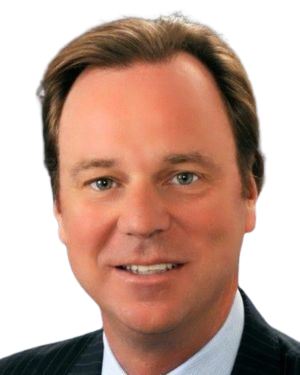
He moved to wholesale brokerage in 1989, drawn by the opportunities he saw on that side of the business. The years on the underwriting desk paid off. “As a broker, I understood what underwriters were concerned about and could anticipate their questions before they asked them,” he says. “Rather than simply asking an underwriter for help, I could explain the risk, address the loss history, describe what had changed, and make a case for why the pricing was appropriate.”
Treating the house as a product
When Houska moved from Chicago to California in 1990, he brought a product liability background with him. “I came to see residential construction, especially homebuilding, as California’s version of product liability: the house was the product,” he says.
Builders were facing severe insurance challenges because of extensive claim litigation. Houska worked with carriers to restructure coverage for a class they had seen as unprofitable, putting defense costs inside policy limits, raising deductibles and rates, and applying certain exclusions.
“Those changes created a structure in which carriers could participate and make money while contractors could obtain coverage,” he says. He also went to London to develop solutions for subcontractors and was among the early developers of project wrap-up policies, in which one policy covers everyone working on a construction project.
Building Sterling West from the ground up
Houska was running the West Coast office of A.J. Renner when the business evolved into Sterling West under his ownership. He built it around people others had overlooked.
“I looked for young, hardworking people, including graduates from the Air Force Academy and people at other firms who had not yet been given an opportunity,” he says. “I believed we could grow by teaching them the business as I knew it.”
He juggled several roles at once, which he described as “broker, owner, and friend to the producers,” and never saw it as a hardship. “We built the business from essentially zero EBITDA into a highly profitable enterprise in just five years, positioning it for a successful sale,” he says. EBITDA, or earnings before interest, taxes, depreciation, and amortization, is a common measure of a firm’s operating profit.
People with something to prove
In 2010, Houska became a founding member of RT Specialty alongside Pat Ryan and Tim Turner. “Tim Turner and I have always looked for people who have something to prove. You can see it in their attitude and in how strongly they want to succeed,” he says. “This is a competitive business. A broker must be able to handle rejection, work well with people, and be likable.”
Several of those Air Force Academy hires had played football before completing their service commitment, and they became important success stories at his original company. “One of the things I’m most proud of is the number of people I’ve had the opportunity to develop who have gone on to become leaders themselves,” he says.
Handing over the practice
Now vice chairman, a role he holds through 2027, Houska is focused on passing on how to handle difficult conversations with brokers and markets and still close the deal.
“I also want my successor to protect the ‘RT Way’: advocating for clients every day and pushing hard for the best outcome, while recognizing the line between strong advocacy and pushing too far,” he says. “Our carriers are long-term relationships, and maintaining that balance has been an important part of our growth.”
Q&A with Chris Houska
Why did you help found RT Specialty in 2010, and how close is the firm to that original vision?
The vision was to build a complete sales culture that put sales and clients first. That was already in my DNA, and Tim Turner, now CEO, Ryan Specialty and chairman, RT Specialty, and I shared the same outlook. Combining my two California offices with Tim’s Chicago office, along with several early acquisitions, created a strong foundation. At the time, we also wanted to be fully independent rather than operate as a captive broker. With Pat Ryan’s (founder and executive chairman of Ryan Specialty) experience, we believed we could build toward our vision of becoming the largest wholesale broker in the country. The firm’s position today shows how closely that original vision has been achieved. Because the founding members knew and trusted one another, we could make decisions quickly and keep politics out of the process.
What has been your approach to casualty market cycles, and how does today’s market compare?
I have always believed that the market is the market. Whether it is soft or hard, brokers should operate within the conditions in front of them. The casualty market is going through a transition, but it resembles conditions I worked in for most of my career. The fundamentals do not change: block and tackle every day, follow up on quotes, and spend more time in front of clients. A soft market is often where you find out who the truly great brokers are, because it requires discipline, persistence, and differentiation.
How do you see social inflation and nuclear verdicts changing how casualty risks are placed?
Social inflation and nuclear verdicts are growing concerns, but their impact also depends on the capital entering the market. Legacy carriers and brokers may react more strongly because they can see past loss history and current trends developing across their books. New capacity and new capital, however, may enter through entities without legacy losses and may respond differently. That can help level the playing field. Retail brokers should understand that placement decisions are being shaped not only by the severity trend, but also by the loss history and capital position of the market, considering the risk.
What will define the wholesale casualty market over the next two to three years?
The next few years will be defined by brokers getting back to the street, working smarter and harder, and refusing to make excuses. Experienced brokers will need to recommit to the fundamentals, while younger brokers should watch how senior brokers adapt when the market changes. The best brokers always adapt and continue to compete at an elevated level. I also expect wholesale brokers to keep developing new products and exclusive solutions. The larger brokers will continue to create products while respecting their carrier relationships.
What does Hall of Fame recognition mean to you?
I have never been on social media or worked for accolades. I simply woke up every day and tried to create value for myself and for the team around me. After 40 years, it feels good to have that contribution recognized. What matters most is the number of friends I have made in the business and the people I have helped along the way, including people who began in entry-level roles and went on to build successful careers as brokers. I never looked for recognition, but this honor is a meaningful finishing touch to a career and a journey that has been a great life experience.
Jeanie Sheppard has worked in insurance since 1983. She rose from assistant customer service representative and led her agency’s modernization, introducing a new agency management system, remote-ready workstations, and internet-based phones. Outside the agency, she teaches night classes to aspiring entrepreneurs.
Bill Atlee began his insurance career in 1988 as a life insurance agent. Buried in paper as an independent agent, he founded iPipeline in 1995, starting with a downloadable library of more than 300,000 insurance forms and going on to build the iGO e-App, an electronic application with e-signature and straight-through processing. When Roper Technologies agreed to buy the company for $1.625 billion in August 2019, its network linked about 150 carriers, 1,350 distributors, and more than 500,000 agents, according to Roper’s announcement.
Carol Blaine, an Ohio-based client executive at The Institutes, has spent 40 years in insurance, with roles at Nationwide, AIG, and JCPenney. At American Commerce Insurance, she moved a legacy in-house IT function to an outsourced provider, cutting costs by 20 percent, and at Century Surety she introduced the company’s first human resources information system. She also helped launch risk management and insurance degree programs at Kent State University and Ohio Dominican University. “As her student, I was constantly in awe of the depth and breadth of knowledge she has of the insurance industry,” says Erin Fullenkamp, corporate account manager at The Institutes.
Peter Zaffino, in insurance since 1991, became executive chair of the board of New York-based AIG on June 1, 2026, after five years as chief executive officer (AIG Form 8-K, April 27, 2026). His Hall of Fame submission credits him with reversing years of significant underwriting losses through disciplined underwriting. In 2025, AIG’s General Insurance business reported underwriting income of $2.3 billion and a combined ratio of 90.1 percent, meaning it paid out less in claims and expenses than it earned in premiums (AIG fourth-quarter 2025 results).
Ron Lockton, chairman and CEO of Lockton Companies in Kansas City, MO, has worked in insurance since 1989 and joined the firm his father, Jack Lockton, founded. His Hall of Fame submission credits him with protecting its independent ownership model. In its June 2025 results, Lockton described itself as the world’s largest independent and privately held insurance brokerage, with more than 13,100 associates and global revenue of $4 billion (Lockton, June 2025).
Manny Vidal, founder and CEO of Premium Finance Group in Coral Gables, FL, has worked in insurance since 1985. A former Citigroup vice president, he built a life insurance premium finance platform at John Hancock before founding his family-run firm, which structures loans so they can be repaid after 10 years, giving clients a defined exit rather than open-ended financing risk.
The tools will keep changing. Since the 2026 inductees started out, insurance has moved from paper files and fax machines to cloud platforms and real-time data, and newer technologies are already following.
The experience to use those tools well sits largely at the senior end of the workforce. In 2025, the median age of the nearly 3 million people working in US insurance carriers and related activities was 44, compared with 42.1 for all workers, and about one in four were 55 or older, according to Bureau of Labor Statistics data.
Share of the nearly 3 million people working in US insurance, by age, 2025
Source: US Bureau of Labor Statistics, Current Population Survey, 2025 annual averages (11-month average excluding October) |
Wolin, who remembers working life before computers, puts each new wave in perspective. “I remember 8-tracks. No one’s ever even heard of that … And I remember … before the computers,” he says. “Now we have the computers … So some things change. But some things … never change.”
The panel’s view is that new technology will matter most where it comes with investment in people. “The embracing of technology along with training … educating … our younger professionals is going to be an important aspect as we move forward,” Lattmann says.
His advice to the next generation is to stretch further than feels comfortable. “Find a way to go well beyond what you think you’re capable of,” he says. “Not everything’s going to be successful, right? But you have to be out there to actually try to be innovative, try to be creative.”
Siebert sees the same lesson in this year’s class. “Leadership is measured by the impact you leave on others,” she says. “Be curious, stay engaged, invest in people, and look for opportunities to make the industry better than you found it.”

Caryn SiebertGallagher Bassett
The 2026 inductees came from very different corners of the industry, but they share a handful of habits. Many adopted new tools early, but they used them to sharpen judgment rather than replace it. Online forms, underwriting workbenches, and claims analytics all served the same aim: better decisions made faster.
They built through steady effort, not shortcuts. Turnarounds, new firms, and practices doubling in size came from decades of consistent work. They invested in people when it was hardest. That meant trainee programs, university degree courses, night classes, and protecting jobs through recessions. And they shared what they knew, publishing playbooks, teaching the next generation, and leaving the industry stronger than they found it.
The Insurance Business Hall of Fame
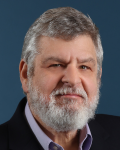
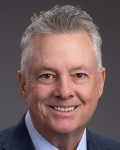
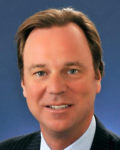
- Bill Atlee
Chief Innovation Officer
iPipeline - Carol Blaine
Education Consultant and Client Executive
The Institutes Agent & Broker Group - Jeanie Sheppard
Senior Vice President, Commercial Lines
Palmetto State Insurance Agency - Manny Vidal
Founder and Chief Executive Officer
Premium Finance Group - Peter Zaffino
Executive Chairman
AIG - Ron Lockton
Chairman and Chief Executive Officer
Lockton
Insights
-
 Caryn Siebert
Vice President and Director of Carrier Engagement
Gallagher Bassett Services -
 Jeffrey Lattmann
Executive Managing Director and National Executive Liability and Cyber Practice Leader, Brown & Brown
FAQs
What is Hall of Fame 2026?
The Hall of Fame 2026 is Insurance Business America’s annual recognition of US insurance professionals with at least 35 years in the industry. This 10th annual selection has nine inductees and follows the 2025 Hall of Fame class of industry veterans.
Who are the 2026 inductees?
Bill Atlee (iPipeline), Carol Blaine (The Institutes), Chris Houska (RT Specialty), Ron Lockton (Lockton Companies), Jeanie Sheppard (Palmetto State Insurance Agency), Robert F. Tyson, Jr. (Tyson & Mendes), Manny Vidal (Premium Finance Group), Marc Wolin (Seneca Insurance Company, a wholly owned subsidiary of Crum & Forster), and Peter Zaffino (AIG).
How were the inductees selected?
An independent advisory panel of industry leaders and previous honorees reviewed nominations submitted in June. It weighed each nominee’s service to the profession, leadership, mentoring of future leaders, contribution to industry associations, and innovation.
What is life insurance premium financing?
Premium financing is an arrangement in which a client borrows from a lender to pay the premiums on a large life insurance policy, usually with the policy as collateral. It lets wealthy individuals and businesses keep their capital invested while securing substantial coverage.
How have insurance careers changed since the 1980s?
The tools have changed most, as paper files, telex, and fax gave way to cloud platforms and automated underwriting software. The fundamentals have held. The 2026 inductees credit judgment, relationships, and investing in people for their success, and experience still runs deep: the median age of people working in US insurance was 44 in 2025, according to the US Bureau of Labor Statistics.
What do this year’s inductees suggest about the future of insurance careers?
Their careers suggest that technology will keep changing the tools of the job, but success will still depend on judgment, relationships, and a willingness to develop others. Professionals who combine new tools with those fundamentals are likely to be best placed.
Methodology
Starting in June, Insurance Business America invited insurance professionals from across the country to nominate standout industry veterans for the 10th annual Hall of Fame. This year’s class was selected by an independent advisory panel of industry leaders and previous Hall of Fame honorees, including:



Nominees had to have been in the industry for at least 35 years. The panel considered each nominee’s history of distinguished service to the insurance profession, the leadership and inspiration they provided to others in the sector, their role in guiding future generations of entrepreneurs and business leaders, their contributions to the leadership and direction of industry associations, and any visionary strategies and innovations that have made an outstanding contribution to the industry as a whole.