Roughly half of large US employers plan to raise deductibles or increase other out-of-pocket costs for workers in 2026, according to a Mercer survey of 711 companies; a reflex response to what Segal has identified as the steepest projected health benefit cost increase in 15 years.
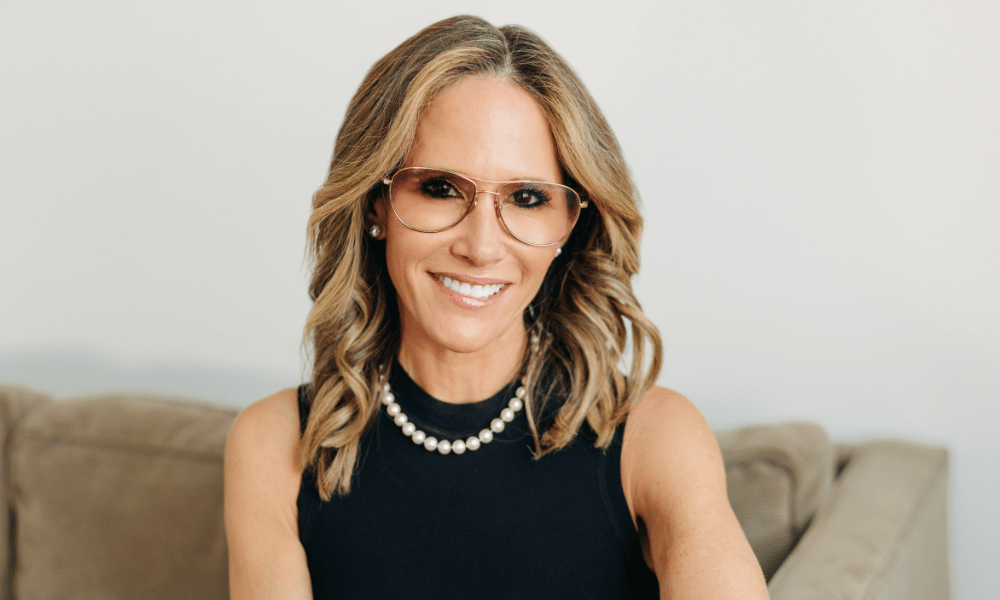
For Alison Myers, President Corporate Benefits & Specialty Health at Venbrook Insurance Services in Los Angeles, that near-universal instinct is actively making the problem worse.
"Deductibles and copays are small tools for small problems," Myers said in an interview with Insurance Business Benefits US. "When you hit a $500,000 high-cost claim, the deductible and the copays don't matter. A member is going to pay up to $6,000, and from $6,000 to $500,000 is dark matter, and there's nothing an employer can do."
READ MORE: Employers chase cost cuts, leaving benefits brokers at a crossroads
Myers, who has spent more than 20 years advising large employers on group health strategy, frames the current cost crisis as the product of two forces colliding simultaneously: general healthcare inflation - a doctor's visit that once cost $100 now costs $150 - and a concentration problem in which roughly 1 percent of a covered workforce is responsible for more than 30 percent of total claims.
Most employers, guided by their brokers, are focused on the wrong end of that equation. Raising deductibles reduces plan costs for the 95 percent of employees who are not driving those high-cost claims, while leaving the underlying driver entirely untouched.
"What many brokers do is make the mistake of thinking that raising the deductible is going to reduce costs," Myers said. "And it will - but it's reducing costs for 95% of your workforce that's not making up your high-cost claims. You're hurting a big portion of your workforce for a small portion of the population that's raising your claims."
Myers uses what she calls a 20/60/20 risk concentration distribution model to reframe where broker attention and plan design should be directed.
Picture a workforce as a bell curve. On the left, the healthiest 20 percent (typically employees in their mid-to-late twenties) who barely use the plan. On the right, the 20 percent of high-cost claimants: cancer diagnoses, brain aneurysms, premature births, car accidents.
"That is not risk you can control," Myers said of the right-side cohort. "You cannot control cancer. You can't control a brain aneurysm." Plan design guardrails can help manage those claims once they occur, but they cannot prevent them.
The middle 60 percent which Myers calls "emerging risk" is where she says the leverage lies. These are employees whose conditions are developing but not yet catastrophic: manageable chronic issues that, with the right engagement and plan design, need not graduate into the high-cost tier.
"If we want to reduce healthcare costs across this country, we've got to focus on emerging risk so that that emerging risk population doesn't shift into the high-cost claims," she said. "If you can hold that 60% in the middle, we can start getting our arms around our healthcare costs. That's the secret sauce."
Myers trains other brokers on the framework, pushing them toward year-round engagement and proactive plan design rather than renewal-cycle firefighting.
READ MORE: Do benefits brokers need a new playbook on employer health costs?
Myers points to what she calls the "generation cliff" - a steady increase in the number of Medicare-eligible employees continuing to work full-time, a trend that has accelerated since the COVID-19 pandemic. People are living longer and working longer but not living healthier. That shifts the chronic-disease risk pool upward and widens the gap between the left and right sides of the bell curve.
Higher deductibles, in that context, make things materially worse. By separating employees from affordable preventive care - managing high blood pressure, maintaining diabetes treatment, keeping up with screenings - cost-shifting measures accelerate the very progression from emerging risk to high-cost claimant that benefits consultants should be working to prevent.
The logic extends directly to the debate around glucagon-like peptide-1 (GLP-1) drugs. Mercer's National Survey of Employer-Sponsored Health Plans found that six percent of large employers dropped GLP-1 coverage for weight loss in 2026, with another five percent planning to drop it in 2027 or actively considering doing so.
Myers sees that trend as a near-identical error to raising deductibles — short-term cost avoidance that does nothing to address the underlying condition.
"It doesn't change the fact that the disease or the chronic illness still exists," she said. "Dropping GLP-1s doesn't change where the cost is going to show up. Those drugs are reducing cholesterol, they're reducing diabetes, they're reducing weight. The short-sightedness of the expense without allowing the GLP-1s to do what they're doing means we never get to grab that data and see a decrease in type 2 diabetes, a decrease in heart conditions, a decrease in cholesterol and statins."
The deeper shift Myers is pushing for is cultural. She requires the CFO to be at the table for large employer benefit conversations, not just the HR director - because when benefits are discussed solely as an HR line item, the strategic and financial dimensions of what she describes as a company's second-largest expense remain unaddressed.
"When you have the CEO protecting the vision and the mission, and the CFO protecting the bottom line, now we're having a strategic conversation," she said. "The shift in mindset for employers is that your benefits are not a liability, they're an asset. You're actually investing in the asset of your people."
That mindset shift, Myers says, is also redefining what brokers and benefits advisors actually do. The consultant's job does not end at open enrollment, it begins there. Reconciling carrier bills against payroll deductions (where she says systematic overcharges are the norm, not the exception), driving employee education, directing workers to the right care setting, and holding year-round strategic conversations with the C-suite: these are the activities that separate what Myers calls a holistic advisor from a broker who negotiates a 20 percent renewal down to 15 and walks away.
"I could save an employee two of their paychecks by guiding them to urgent care instead of the emergency room," she said. "Think about the power of that. When it's just risk protection, you're not having that mindset of the people, the lives you can change."
The label matters too. Myers challenges the term "health insurance" itself, arguing that framing benefits as a promise to pay when something goes wrong is partly why the US system remains locked in an acute-care rather than a preventive-care model.
"Healthcare is not a promise to pay if something goes wrong," she said. "It's a promise to be preventive. Calling it insurance almost diminishes the power of the system."
For benefits brokers navigating January renewals in a year when Mercer projects total health benefit costs will rise 6.5 percent on average in 2026 (the highest increase since 2010) even after planned cost-reduction measures, Myers says that the employers reacting with deductible hikes are applying a single outdated playbook to a problem that demands a fundamentally different approach.
She believes that the brokers who thrive will be those who get ahead of renewals, bring the right people into the room, and build programs designed for the 60 percent in the middle, before those employees become the cost crisis everyone is trying to avoid.