The US group benefits industry has a talent problem, and most firms are making it worse. Competing for the same pool of experienced insurance professionals has created a revolving door that drains resources and stalls growth.
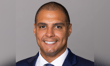
Candice Slowik, Senior Vice President and Division Director of Employee Benefits (whose focus is operations and organizational development) at RCM&D in Baltimore, Maryland, decided there was a better way, having observed the industry for almost twenty years including early tenures at Sunlife (as it’s now styled) and Silberstein.
"We're competing for the exact same experienced professionals," Slowik told Insurance Business Benefits US. "At some point we just have to take responsibility for developing the next generation of talent ourselves."
That shift in thinking, from talent acquisition to talent development, has become the defining philosophy in the Employee Benefits division of RCM&D, the benefits brokerage and advisory firm that acquired Employee Benefit Services of Maryland (EBS) in 2023 with a team including Slowik and her co-division director Ben Bohonowicz, who recently spoke with IBB about the cost-containment challenges in self-funded plans.
Its approach to talent development is deliberate, people-first, and, by Slowik's account, producing some of the best sales and retention years the firm has ever seen.
The model is straightforward in concept, harder in execution. Rather than hiring insurance professionals away from competitors, the division recruits people with no insurance background at all and builds them from the ground up.
"We have brought people in deliberately that had no insurance experience that we've kind of molded," Slowik said. "We're not just hiring to fill vacancies. We want to build the next generation of professionals."
The advantages are twofold. New hires arrive without ingrained habits from previous firms, eliminating what Slowik calls the "unlearning" cost. They also bring fresh perspectives from prior careers that can sharpen how the firm approaches client service and communication.
One pattern they have seen is a cluster of former teachers hired roughly seven years ago that are now among the division’s top performers - a result so consistent that those from education are now among Slowik’s priorities.
"We told recruiters: if you see a resume that comes across your desk and it's someone who's an educator, we want to talk to them almost right away," she said.
Education is a word that surfaces repeatedly across the group benefits industry - whether it's brokers educating plan sponsors, HR teams communicating benefits to employees, or advisors walking clients through complex regulatory changes under the Affordable Care Act (ACA) or the Employee Retirement Income Security Act (ERISA). People trained to teach carry a skill set that transfers directly.
The Employee Benefits division’s hiring criteria have shifted accordingly. Technical insurance knowledge, once a near-prerequisite, is now considered teachable.
"You can't teach accountability and the curiosity and a genuine willingness to learn," Slowik said. "It's harder to teach that than the technical side of insurance."
Slowik is clear though that a single wrong hire affects the entire team and the client experience, forcing colleagues to compensate and creating performance drag that compounds over time. Careful, intentional hiring is, in her framing, a risk-mitigation strategy as much as a talent strategy.
Getting the right people through the door is one challenge. Keeping them is another. Slowik's approach to retention is similarly unsparing about what does and does not work.
"You can't manufacture culture through a mission statement or an annual employee appreciation event or a pizza party," she said. "You have to create it through everyday experiences in working somewhere."
That means employees are never surprised by feedback, trust in management is treated as foundational, and psychological safety to speak up is built into how Slowik and her colleague Ben Bohonowicz operate day to day. But Slowik is equally emphatic that culture and performance standards must coexist.
"You can have all the employee appreciation events in the world, but if people don't trust their managers or feel supported in their work, you don't have a strong culture. You have a calendar full of activities that mean nothing,” she said.
The Employee Benefits team operates as a fully remote workforce, a structure that requires its own deliberate architecture. It runs on what Slowik describes as a results-oriented work environment: employees are evaluated on the quality and outcomes of their work, not on hours logged at a desk.
Employees set their own schedules and work locations, but what holds the model together is accountability and, critically, a service delivery structure that makes collaboration unavoidable.
"Our model works like an assembly line," Slowik explained. "During a renewal cycle, we have a client manager, client coordinators, client care specialists, our HRIS team - every single one of them, at some point, is working on the renewal and passing it to the next person to complete a task."
The process-driven structure means team members are in daily contact by operational necessity, not cultural programming. Slowik credits the model design itself - not team-building exercises - as the reason remote collaboration works.
The results-oriented framework also shapes how the division thinks about management. If a manager feels compelled to monitor an employee or install tracking software, Slowik's view is clear: that is a signal the person is probably not the right fit, not a problem to be solved with surveillance. Freed from day-to-day personnel issues, she and Ben can focus on growth and strategic initiatives.
"We're growing like crazy," she said. "We're having some of the best sales years we've ever had and retention years."
Slowik's closing message is aimed at the broader group benefits industry, not just her own firm.
"We confuse experience with potential a lot of the time, and that's what's creating some of this talent crisis," she said. "We're so focused on finding candidates who've already done the exact job we're hiring for that we overlook people who could be incredibly successful with the right training and support."
She says that if the industry is serious about building a sustainable workforce, it has to invest in developing talent, not just competing for it.
For benefits brokers and advisors watching an aging workforce and an insufficient pipeline to replace it, that may be the most practical piece of advice going into 2027.