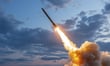
Australian insurers and their global reinsurers are absorbing a multi-line stress test as the Middle East conflict and the near-closure of the Strait of Hormuz push marine war-risk premiums to their highest levels in decades, prompt a US government reinsurance backstop, and lift trade credit insurer Coface’s global insolvency forecast. The same conflict driving marine repricing is the one Coface expects to feed through to trade credit claims, linking two lines that are usually assessed separately. Direct routing exposure for Australian trade remains contained.
The additional war-risk premium for tankers crossing the Persian Gulf reached about 2.5% of a vessel’s hull and machinery value per seven-day period earlier in March 2026, before easing to close to 1% by late March as some vessels resumed transits, according to S&P Global. Even at the lower level, that sat up to eight times higher than the pre-war range of roughly 0.1% to 0.15%. Broker Howden Re reported voyage costs for a US$100 million vessel rising to between US$250,000 and US$375,000 per journey and characterised the combined effect of Red Sea disruption in 2024-25 and Hormuz in 2026 as a permanent structural repricing that sets a new baseline for marine war risk rather than a temporary spike.
The US moved to backstop the market. On March 6, 2026, the DFC announced a facility to insure losses of up to about US$20 billion on a rolling basis, focused initially on hull and machinery and cargo, with Chubb as lead underwriter. The facility was later expanded to US$40 billion, with the government assuming half and seven US insurers backing the remainder.
The Lloyd’s Market Association pushed back on reports that cover had been withdrawn, stating that war insurance remained available across the Lloyd’s and London market, that P&I liability cover was non-cancellable, and that a survey found 88% of responding marine war participants retained appetite for hull war risks and more than 90% for cargo. The association attributed reduced traffic to crew and vessel safety rather than any lack of cover.
Read next: The man who built a career on small bets is placing a big one on Santa Monica
Analysis has framed the episode as a correlated, multi-line event. Moody’s, cited by Insurance Business, identified marine as a primary channel to insurers, noting around 1,000 vessels trapped in the Gulf with a value at or above US$25 billion and insured exposure estimated as high as US$40 billion. The Actuaries Institute described sharp premium increases across marine, aviation, trade credit, and political violence lines and estimated a prolonged conflict could cut global growth by one to two percentage points.
Direct Australian shipping exposure is limited, as iron ore, coal, and LNG exports to Asia do not rely on the Strait; the effect is transmitted indirectly through higher insurance costs, longer routing, and energy inputs, according to Bellrock. The domestic market carrying much of this commercial risk is sizeable: the Australian Prudential Regulation Authority (APRA) recorded AU$22.97 billion in intermediated general insurance premium invoiced for the half-year to December 2025, within which marine and aviation sit among the commercial classes exposed to war and cargo repricing. Australian Treasury modelling cited by MinterEllison indicated a prolonged conflict could reduce the national economy by AU$16.5 billion by 2027, and the firm noted most standard commercial policies carry broad war exclusions, directing exposed businesses toward political risk and marine war-risk products.
Read next: Specialty insurers absorb Middle East war losses, report says
Coface’s June 2026 Risk Review downgraded eight countries and made more than 45 sector rating changes and projected global corporate insolvencies to rise 6% in 2026, more than double its January estimate, with Australia at the lower end at 2% to 3%. Domestic data offers context: the Australian Securities and Investments Commission (ASIC) recorded 14,722 companies entering external administration for the first time in 2024–25, up 33.2% on the prior year. However, early 2025-26 figures suggested the pace of increase was moderating, with first-quarter appointments down 2.1% from the same period a year earlier.
Jean-Christophe Caffet, chief economist at Coface, said: “The lull in hostilities in the Middle East is good news, but it cannot conceal the key issue: the disruptions that are already under way will drag on business activity, income and employment.”