Capacity is abundant, pricing is falling and terms are negotiable across almost every commercial line in Australia. For brokers outside the capital cities, none of that has fixed the thing they actually complain about - which is that nobody comes to see them and the phone stops being answered at 5pm Sydney or Melbourne time.
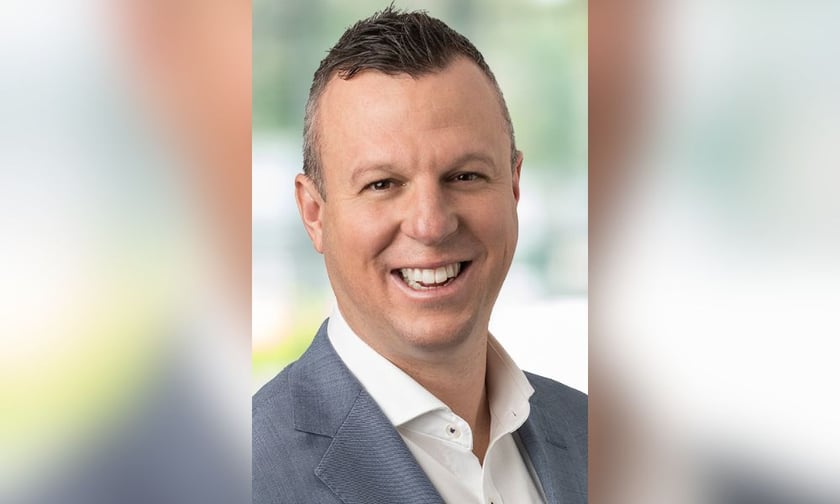
Jarrod O'Connor (pictured), southern region branch manager and head of accident and health at Arch Insurance Australia in Melbourne, covers Victoria, Tasmania, South Australia and Western Australia. When asked what regional brokers say they are not getting from the market, he did not reach for price or coverage.
"Due to the abundance of capacity in the market across every line, regional brokers are getting the coverage and pricing they want - no problems there, as you'd expect in a soft market," O'Connor said. "But it's the end-to-end service and the face-to-face engagement that they're telling us they're missing in regional areas."
In a hard market, service complaints and pricing complaints often arrive as one grievance. In a soft one, the pricing complaint disappears leaving the service issue more exposed for all to see.
The evidence suggests brokers were never primarily buying on price. In the 2026 Insurance Business Brokers on Insurers report, brokers ranked claims turnaround (4.49) and new business turnaround (4.45) ahead of overall service level (4.44) - the first time in the survey's four-year history that turnaround times have taken both top positions. Commission structure came last for the third consecutive year.
The abstraction in most service promises is what makes them worthless. O'Connor's is testable, because it comes with a clock attached.
His commitment is that senior leaders - not just business development managers - answer phones outside eastern seaboard working hours and check email after the Melbourne office has emptied.
"Especially at end of month when Western Australians are trying to bind their policies at the end of their day," O'Connor said.
WA sits two hours behind the eastern states for most of the year and three hours behind once daylight saving starts in October. A Perth broker trying to bind at 4pm local time on the last day of the month is calling an eastern seaboard underwriter at 7pm. The policy either incepts or it does not, and the broker either has an answer or has to tell the client to wait until tomorrow - which, at month end, may be next month.
This is not a regional-versus-metropolitan problem so much as a headquarters problem. Almost every insurer and underwriting agency in the Australian market runs its senior underwriting authority out of Sydney or Melbourne. Every referral, every non-standard risk and every late binding decision has to travel east and come back.
The market conditions make this the year the distinction bites.
Marsh's Global Insurance Market Index recorded a 13% decline in Pacific insurance rates in the second quarter of 2026, the steepest of any region and part of a sustained run of composite rate decreases. EBM Insurance & Risk's Insurance Market Trends and Outlook report described the Australian commercial market as remaining in soft territory through the first half of 2026, with pricing easing across property, financial lines, liability and cyber.
When capacity is plentiful and terms are broadly negotiable, coverage and price can stop functioning as the main differentiators. What can remain is whether the underwriter picks up the phone.
That matters more than usual right now because the service environment is already under strain. Australians lodged a record 119,949 complaints with the Australian Financial Complaints Authority (AFCA) in 2025-26 - the highest annual volume recorded and the third consecutive year above 100,000 - with delay in claim handling, service quality and claim rejection the three most complained-about issues. Those complaints land on the broker's desk before they reach AFCA.
Client-side data points the same way. Vero's 2026 SME Insurance Index, now in its fifteenth year and drawing on 1,500 Australian businesses, found broker satisfaction stabilised at 69%, with 80% of businesses having used a broker in the past year and 42% having stayed with the same one for more than three years. Those relationships are durable, but they are built on responsiveness rather than rate.
O'Connor sets the benchmark in geographic terms.
"Our goal is to make sure that whether you're in South Australia or Tasmania, we're going to be servicing you the same as we service people with an office next door to us in Melbourne," he said.
Whether Arch delivers that is a question for the brokers in Launceston and Bunbury. Most service commitments in this market are aspirational statements no broker could easily test if they wanted to. This one can be tested with a single phone call at 8pm Sydney time.
For brokers outside the capitals, that suggests a practical exercise this renewal season: not asking the market what it can do on rate, which the market will happily discount, but asking which of your underwriters can be reached after the eastern seaboard goes home and then finding out.