NRMA Insurance has named 23 community groups across the Northern Rivers region of New South Wales as the first recipients under the community stream of its Help Fund program, directing grants toward emergency communications infrastructure, disaster preparedness, and local capability in a region the Actuaries Institute has identified as having one of the highest proportions of households facing extreme home insurance affordability pressure in Australia.
The announcement comes as NRMA Insurance has broadened its climate-resilience grant activity beyond the Northern Rivers. A second round of $500,000 in nationally open Climate-Smart Innovation Grants opened August 14, targeting Australian innovators and organisations developing climate-resilience solutions. NRMA Insurance executive manager community impact and customer advocate Jennifer Cobley said the program’s scope is widening deliberately. “This year we’ve expanded the program to support both emerging founders and established climate resilience organisations. We want to help accelerate solutions with the potential to create meaningful, lasting impact for Australian communities,” Cobley said.
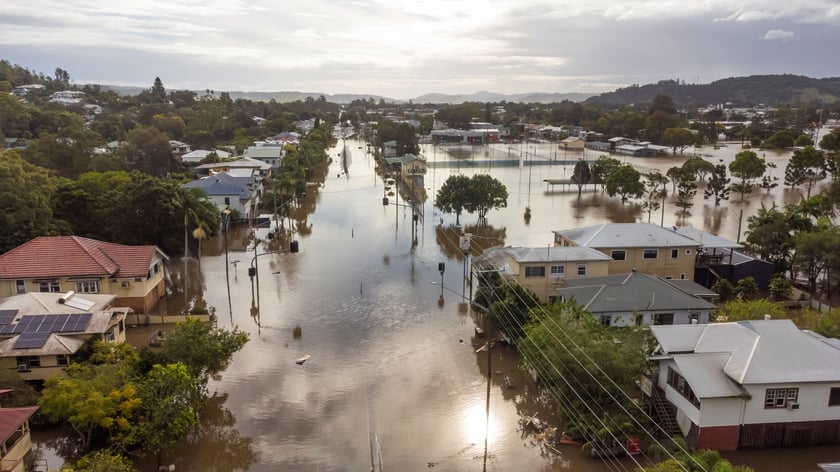
The geography of this announcement is not incidental. The Actuaries Institute’s August 2024 report, Home Insurance Affordability and Home Loans at Risk, found that 15% of Australian households – approximately 1.6 million – were experiencing home insurance affordability stress in the year to March 2024, up from 12% the previous year, following a 9% rise in median insurance premiums. The report specifically identified NSW’s Northern Rivers among the regions with the largest proportion of households experiencing extreme affordability pressure. It found that half the population in these areas faced home insurance premiums exceeding a month’s income because of their high flood and cyclone risk.
Of the 242,000 homes at the highest flood risk nationally, 77% lack flood cover, and 70% of those households sit in below-median income areas, according to figures cited by Assistant Treasurer Dr. Daniel Mulino at the Insurance Council of Australia (ICA) Annual Conference in October 2025. For brokers advising clients in the Northern Rivers, those figures describe the operating environment directly – a region where risk is acute, penetration is low, and premiums for those who do hold cover are under sustained upward pressure.
The community grants were structured in two tiers: Establishment Grants of up to $3,000 and Resilience Action Grants of up to $10,000. Recipients were selected through a process co-designed with the Northern Rivers Community Resilience Alliance and Monash University and administered by the Northern Rivers Community Foundation (NRCF), which has distributed more than $13 million across 698 projects to 360 community organisations across the region’s seven local government areas since its establishment in 2003.
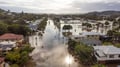
A dominant theme across funded projects was communications infrastructure – satellite systems, solar-powered emergency radio networks, radio repeaters, and associated training – reflecting failures that became critical during the region’s repeated flood events. One recipient, the Pumpenbil Community Resilience Group, will use its grant to install an illuminated windsock, emergency lighting, a defibrillator, and first aid equipment after emergency helicopters experienced difficulty locating the community’s helipad during prior medical emergencies in a settlement that can become isolated when access roads flood.
John Quale from the Pumpenbil group said the initiative addressed a gap identified through direct experience. “When emergency helicopters struggled to locate our landing site, it highlighted how vulnerable our community can be when access roads are cut and help is difficult to reach. This funding will help us improve our emergency preparedness and give our community greater confidence that we can support residents during medical emergencies and natural disasters,” Quale said.
NRCF CEO Sam Henderson said the community-led model differs from conventional external funding structures. “For too long, our region has carried the burden of repeated disasters. With NRMA Insurance’s Help Fund enabling us to hold funds locally and distribute them through a community-led process, this is a game changer. Locals decide the process and the best allocation of grants for optimal impact. It builds connections between individuals and local organisations, strengthening the foundation of long-term resilience,” Henderson said.
IAG’s FY26 full-year results, announced August 13, reported a net profit after tax of $1,022 million, down from $1,359 million in FY25, with pre-tax insurance profit of $1,552 million primarily reflecting increased natural perils – $114 million unfavourable in FY26 against $195 million favourable in FY25. IAG responded to 65 severe weather events across Australia during the year and paid approximately $12.4 billion in claims, with gross written premium growing 7.6% to $18.4 billion.
The February-March 2022 South-East Queensland and Northern Rivers floods generated more than 240,000 insurance claims and industry-wide payouts exceeding $6.3 billion, making it the costliest insured natural disaster in Australia’s history. Across all severe and catastrophic extreme weather events since 2022, the ICA puts insured losses at $15.4 billion, while total economic costs are estimated at about $28 billion.
Community grant programs are modest instruments relative to those figures. The Australian government’s Disaster Ready Fund is a $1 billion, five-year program supporting disaster risk reduction, with Round Three providing $200 million for 96 projects in 2025-26. The ICA has separately called for a $30.15 billion Flood Defence Fund over 10 years, jointly funded by the Federal government and the governments of Queensland, New South Wales, and Victoria, to reduce flood risk and improve insurance affordability.
NRMA Insurance’s approach is part of a broader push by insurers to invest in disaster resilience. The insurer has committed $800,000 over two years to its Northern Rivers community stream, while CHU announced $50,000 in Green Grant funding for seven strata communities in July. Suncorp has embedded property-level resilience into its claims process through its Build it Back Better feature, which provides eligible customers with funding for resilience upgrades following a major claim, while Allianz launched its Community Care program in 2026 to support communities affected by natural disasters.
Whether community investment produces measurable underwriting outcomes remains undemonstrated. The closest public test – the government-backed Cyclone Reinsurance Pool – produced a mixed result. The Australian government established the pool in 2022 to reduce the cost of reinsurance for cyclone risk and improve insurance affordability. The Australian Competition and Consumer Commission’s (ACCC) final monitoring report found the pool had moderated premium increases for households and small businesses facing medium- to high-cyclone risk, while insurance affordability pressures remained across Australia. The Australian Reinsurance Pool Corporation (ARPC) has separately reported larger premium reductions in high-risk areas, although its methodology differs from the ACCC’s. The ACCC’s formal monitoring role concluded on June 30, 2026.
For brokers, NRMA Insurance’s own language on the Help Fund’s expanding scope is the most actionable signal in today’s announcement. A program that began as a two-year, single-region commitment is now openly positioned as a national platform. Whether that trajectory eventually reaches the point of influencing underwriting assumptions in high-risk postcodes – and over what timeframe – is the question the market has not yet answered.