A new camera system being trialled on motorways in south-east England has detected thousands of illegal number plates a day, according to a BBC Panorama investigation broadcast on Monday, September 28.
The findings arrive as the government moves to toughen penalties. The Department for Transport plans to give police immediate powers to seize vehicles fitted with stealth plates, the same sanction that applies to driving without insurance, with offenders facing up to six penalty points.
For motor insurers, brokers and fleet operators, the same plates that undermine speed and emissions enforcement also weaken the evidence that claims teams rely on, and help keep uninsured drivers on the road.
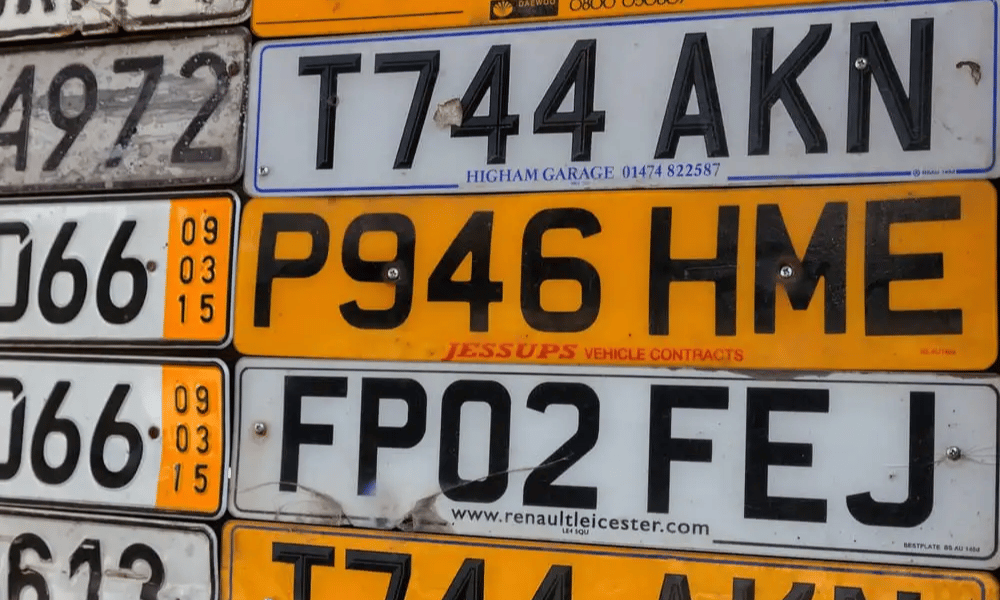
The investigation examined two forms of illegal plate. Cloned plates copy the registration of another legitimate vehicle, so that two cars share one identity. Ghost plates display a vehicle's genuine registration but use reflective or altered materials that make them unreadable to most automatic number plate recognition (ANPR) cameras.
At a test site near the Dartford Crossing, a new camera developed by ANPR provider MAV Systems recorded an average of more than 1,000 ghost plates a day over several months. At a second site near the M25, detections rose from about 1,000 to nearly 2,000 a day over almost two years, while a third site near the Eurotunnel terminal at Folkestone flags more than 400 a day.
Tony Porter, a former senior counter-terrorism officer who has advised government on surveillance cameras, told Panorama that illegal plates undermine police efforts to track organised criminals. He said the UK "tolerates a £10 number plate with no security mechanism on it", despite an ANPR network capturing around 100 million reads a day across 14,000 sites.
Panorama's undercover filming found suppliers willing to sell ghost plates without ID or proof of vehicle ownership, in breach of DVLA rules. Only two of the more than 34,000 registered plate suppliers in the UK have been prosecuted and removed from the DVLA register since 2020. A separate inquiry by the All-Party Parliamentary Group for Transport Safety estimated that as many as one in 15 vehicles could be using plates designed to evade ANPR detection.
Alongside the proposed seizure powers, the government has announced a National Roads Policing Coordination Centre to bring forces together on intelligence, and trials of goggles that let officers spot ghost plates on patrol.
Roads minister Justin Madders described the measures as "a signal to anyone using illegal number plates that their time is up."
Chief Constable Tim Forber, the national policing lead on ANPR, said forces want tighter licensing of who can issue number plates, adding: "not a week goes by where we don't see an example of someone on cloned plates involved in serious and organised crime."
The first exposure falls on innocent, insured drivers whose registrations are cloned. Victims can receive speeding and congestion charge fines for journeys they never made. In more serious cases, they may need to show their insurer that their vehicle was not involved in an incident linked to the cloned plate.
Fleet clients are especially exposed, because fines and enforcement notices go to the registered keeper. For brokers, the practical steps are to encourage clients to notify insurers promptly when cloning is suspected and to keep dashcam or telematics records that can place their vehicles elsewhere.
The second exposure arises when a vehicle on illegal plates is involved in a collision. Where the driver responsible is uninsured, victims are compensated through the Motor Insurers' Bureau (MIB), which is funded by a levy on motor insurers that ultimately feeds into the cost of cover. Cain Byrne, who killed 81-year-old Graham Slinn on a pedestrian crossing after fitting cloned plates to his car, was driving without a licence or insurance.
Illegal plates also weaken a source of evidence that claims teams increasingly use. As ghost and cloned plates spread, ANPR data becomes a less reliable way to establish which vehicle was at the scene of an incident, placing more weight on dashcam footage, telematics and witness evidence.