Silicon Valley has found a new frontier for defence money, and it has four legs.
Warhound, a Texas start-up dreamed up by Anduril co-founder Palmer Luckey and Colossal Biosciences boss Ben Lamm, has raised $200mn to clone and genetically edit working dogs for the US military, as first reported by the Financial Times. A person familiar with the deal put the company's valuation at about $1.2bn.
The backers read like a venture capital roll call: Sequoia Capital, Cathie Wood's Ark Invest, Lux Capital, Franklin Templeton and In-Q-Tel, the investment arm set up by the CIA to back technology for intelligence and national security work.
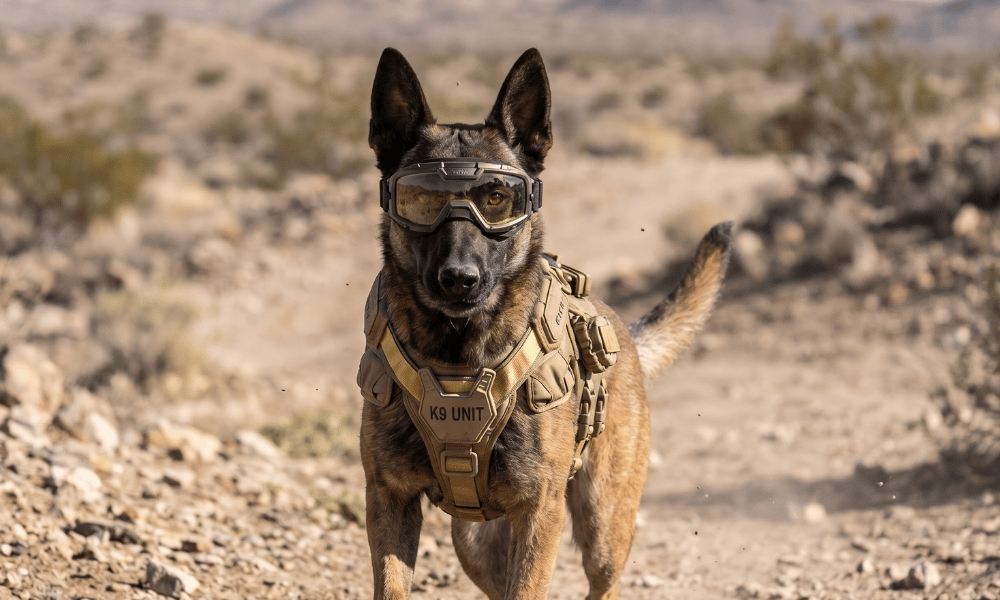
The idea is to take the best-performing dogs, store their genetic material, clone them and then edit their DNA for a longer working life and better performance. Anduril will supply body armour and what the company calls "cybernetics". Luckey's pitch was short: "Man's best friend deserves man's best tech." He will not hold equity or run the business, though. That job goes to David Spirk, a former US Marine who was the Pentagon's first chief data officer and later a senior adviser at Palantir.
Lamm has sold the venture as a welfare project as much as a military one. His argument is that too many dogs drop out of training today, and better genetics would spare the animals and the people who work with them.
The supply problem is a real one for the US. Most US military dogs are bred in Europe. A 2021 study by the US Naval Postgraduate School estimated that around 90% of the working dogs it examined had been bred overseas, and the Pentagon's own breeding programme in Texas has historically covered only a small slice of demand.
Colossal is used to the spotlight. In April 2025 it said it had produced three "dire wolves" by making around 20 edits to grey wolf cells, a claim that thrilled some scientists and irritated others. It was valued at $10.2bn at the start of that year.
Read next: Willis, Equine MediRecord launch embedded bloodstock insurance in UK
Strip away the superhero branding and Warhound is selling something underwriters already know well: a high-value animal with a job to do. The question is whether the usual tools still work once that animal has been engineered.
Start with mortality cover. The specialist market already writes agreed-value policies for racehorses, stallions and other bloodstock and equine risks, much of it through Lloyd's and a handful of specialist carriers. Only a limited number of insurers in the UK and US run equine mortality programmes at all. A cloned, edited and armoured dog would sit in the same bracket: costly to produce, slow to replace and valuable mainly for what it can do.
Pricing it is where things get quite tricky. Animal underwriting leans on breed data, vet records and years of claims history. A gene-edited line has none of that. If an edit designed to extend working life has side effects nobody spotted, the first reliable data will come from claims.
Then there is liability. When an ordinary police dog bites the wrong person, the claim usually lies with the force or the handler. When an engineered dog does it, a claimant's lawyer could fairly ask whether the edit played a part. That points towards product liability for the breeder, the gene-editing firm and perhaps the maker of any kit strapped to the animal. Few animal policies on the market were written with that chain of responsibility in mind.
And because these dogs are built for the battlefield, any cover for deployed animals would run straight into the war exclusions found in most property and specialty wordings. Battlefield risk is likely to stay with the defence buyer rather than the commercial market.
Read next: Russian insurers put a price on drone war risk amid claims fears
Not yet, legally speaking. England's Genetic Technology (Precision Breeding) Act 2023 covers vertebrate animals as well as plants, but the rules needed to switch it on have so far been made only for plants. The government's precision breeding register says that only precision-bred plants can currently be released or marketed in England.
So gene-edited animals remain a policy debate in the UK rather than an underwriting headache. But a $1.2bn valuation shows where the money is heading, and technology built for the military has a habit of drifting into civilian life: police forces, search and rescue teams, private security firms and, eventually, family homes.
The UK pet market is already under pressure. It is worth around £2.2bn this year, according to IBISWorld, and Defaqto data shows that policyholders who claim their full vet-fee limit now contribute roughly 20% more towards the bill than they did a year earlier.
Read next: Pet insurance clients face 20% higher claim costs despite premium falls
Add animals bred for longevity and peak performance and insurers face an old dilemma in a new form: an animal that may look healthier on paper, with no track record to back it up.
There is also still no legal requirement for UK dog owners to carry liability cover, despite repeated calls for one after serious attacks. If engineered working dogs ever arrive on British streets, that gap will be harder to defend.
Read next: Calls for compulsory pet insurance after shocking attack
For now, Warhound is a US defence story. But the market has spent the past decade learning to price drones, driverless cars and AI. Engineered animals may well be next in the queue, and it would be wise to think about the wording before the first claim lands.