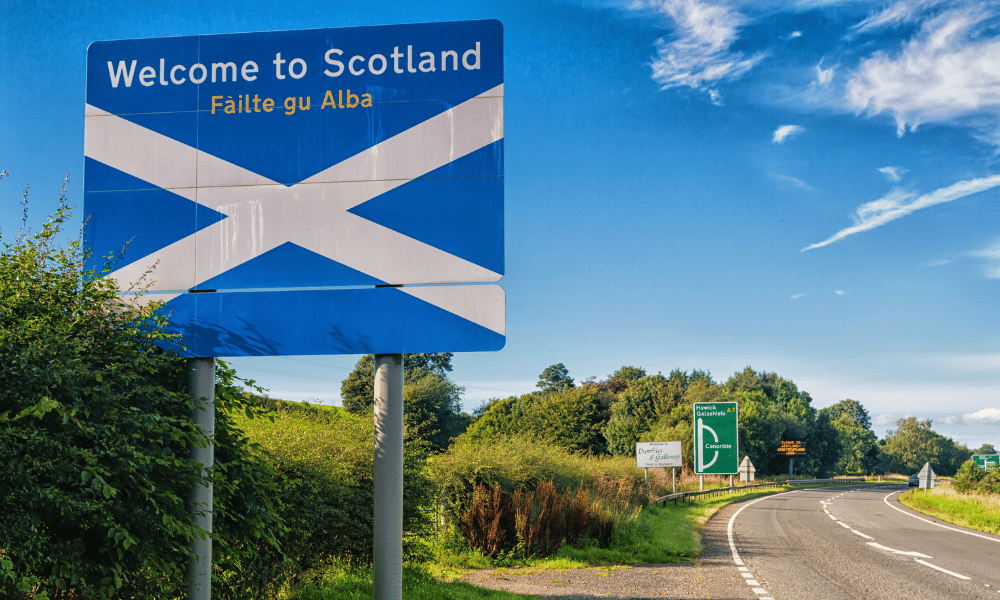
For the first time since devolution began, Wales, Scotland and Northern Ireland all have first ministers who want to leave the UK. Last month all three signed a memorandum declaring that “Westminster’s time is coming to an end”.
No vote is imminent. Andy Burnham has said a second Scottish referendum remains off limits, and Plaid Cymru has ruled out a Welsh vote before 2030.
For insurers and brokers, though, the practical differences already matter. Scotland’s separate legal system shapes claims costs, reserving and settlement strategy today.
Andrew Lothian, partner in DWF’s major injury and casualty team in Scotland, said the biggest difference is in costs on lower-value personal injury work, whether road traffic accidents or employers’ and public liability. Based on recent data, he estimated that roughly £2 goes on claimants’ costs for every £1 of damages in lower-value Scottish personal injury claims.
He contrasted that with England, where fixed recoverable costs apply to low-value whiplash-type motor injuries. Scotland has no equivalent, which he said gives claimant firms a margin on that work that is not available in England.
Fatal claims are the second gap. They are a small share of the total, but Lothian said a widow in Scotland might receive around £120,000 or more, while the statutory bereavement award in England and Wales is £15,120.
A third difference concerns the treatment of dishonest claims. Scotland has qualified one-way costs shifting, which protects claimants who litigate, and that protection can be lost for fraudulent conduct, manifestly unreasonable behaviour or abuse of process. What Scotland lacks is the fundamental dishonesty defence that applies in England and Wales, and efforts to bring it in through test cases have not succeeded.
“It’s likely that it’s going to need legislation rather than somebody trying to persuade a judge that it’s a good idea,” Lothian said.
The rules that introduced qualified one-way costs shifting are due for review after five years, which Lothian said should happen around now. The case for bringing fundamental dishonesty and fixed recoverable costs to Scotland continues to be made, but he said there is little appetite for either at present.
Those differences often feed straight into reserves. Where a fatal claim could be litigated or presented in Scotland, insurers need higher damages reserves, and at the lower-value end, claimant cost reserves run higher than in England and Wales.
The continued accrual of claimant costs gives insurers an incentive to settle early, while reducing the financial incentive for claimant firms to do so. Lothian described many Scottish claimant solicitors as highly skilled at staying within the rules while keeping their businesses highly profitable.
Further divergence is hard to call while Scotland remains part of the UK. Full independence could look like the position in the Republic of Ireland, with policies covering one jurisdiction only.
If cover became restricted to one jurisdiction, brokers placing business for clients on both sides of the border would need to scrutinise territorial limits. The bigger open questions, Lothian said, are structural, including whether a UK-wide single market would cover financial services and who would regulate in Scotland.
Scotland would at least start with the legal infrastructure in place, from its own legislature and courts to its own legal qualifications, which Lothian said leaves it able to be “fairly nimble”. He said Northern Ireland, also its own jurisdiction, is probably the closer comparison, while an independent Wales would likely start with English law and diverge over time.
For now, Lothian said, client questions about independence remain informal, because nobody knows what it would look like in practice. His standing advice to insurers and brokers is simpler.
“If you forget every single thing I’ve said to you, as you probably will, and you only remember one thing, remember that Scotland is a foreign country,” he said. Firms that try to handle Scottish claims “in an English way” are the ones that come unstuck, he said, while those that recognise the difference know to bring in local help.
The structural questions, he said, would need answers ready in advance rather than a decision to “just cut it off and see what happens”. Brexit showed the scale of restructuring a split can force. By early 2019, the ABI estimated UK insurers had moved around 29 million contracts and set up about 40 new EU hubs.
Whatever the constitutional outcome, insurers already need to reflect Scotland’s distinct claims environment in their reserves and settlement strategies.