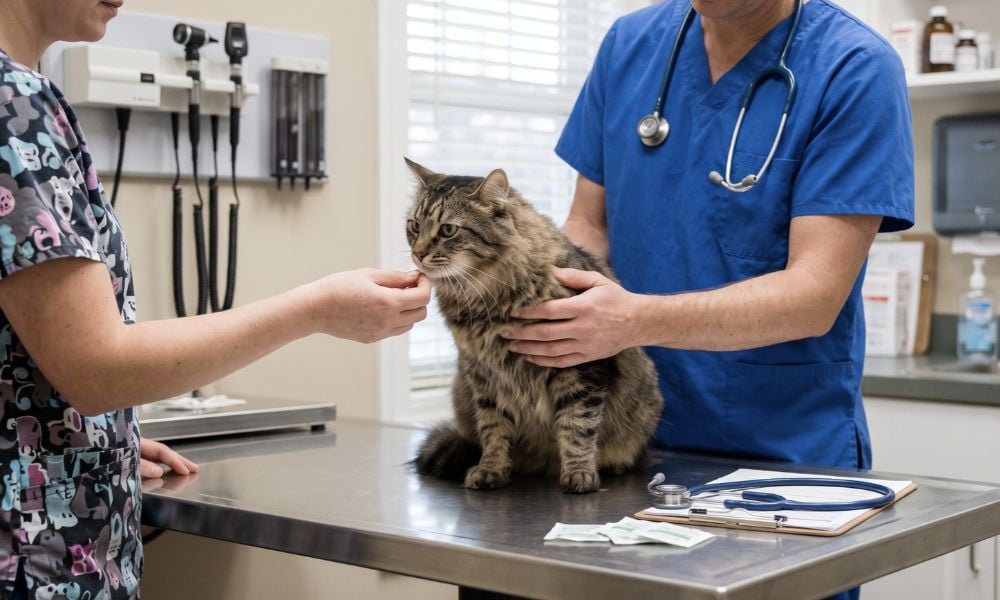
In the US, the case for pet insurance is getting stronger as a dizxzying array of new treatments are coming on line. Vets can now offer chemotherapy, MRI scans and monthly antibody injections for arthritic dogs, treatments that were rare or simply unavailable a decade ago. The bills have followed, and American owners are buying cover in record numbers.
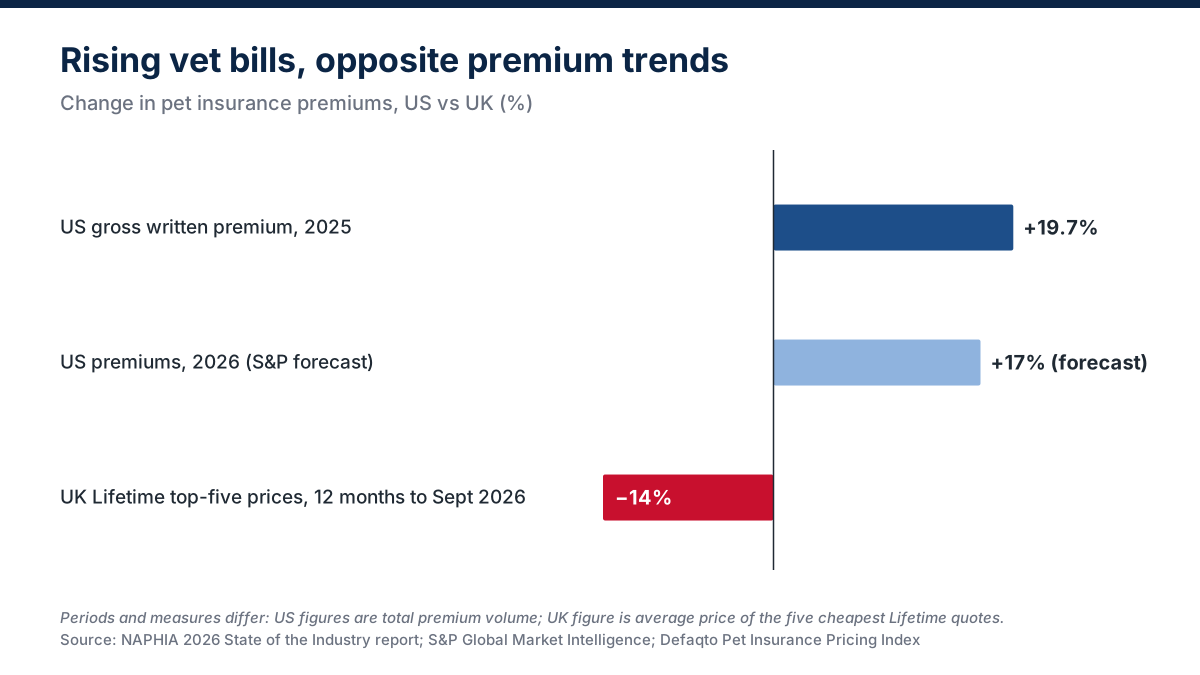
The North American Pet Health Insurance Association's 2026 State of the Industry report counted 6.98 million insured pets in the US at the end of 2025. That is 9% more than a year earlier and around 76% more than five years ago. US gross written premium rose by close to 20% to roughly $5.7bn.
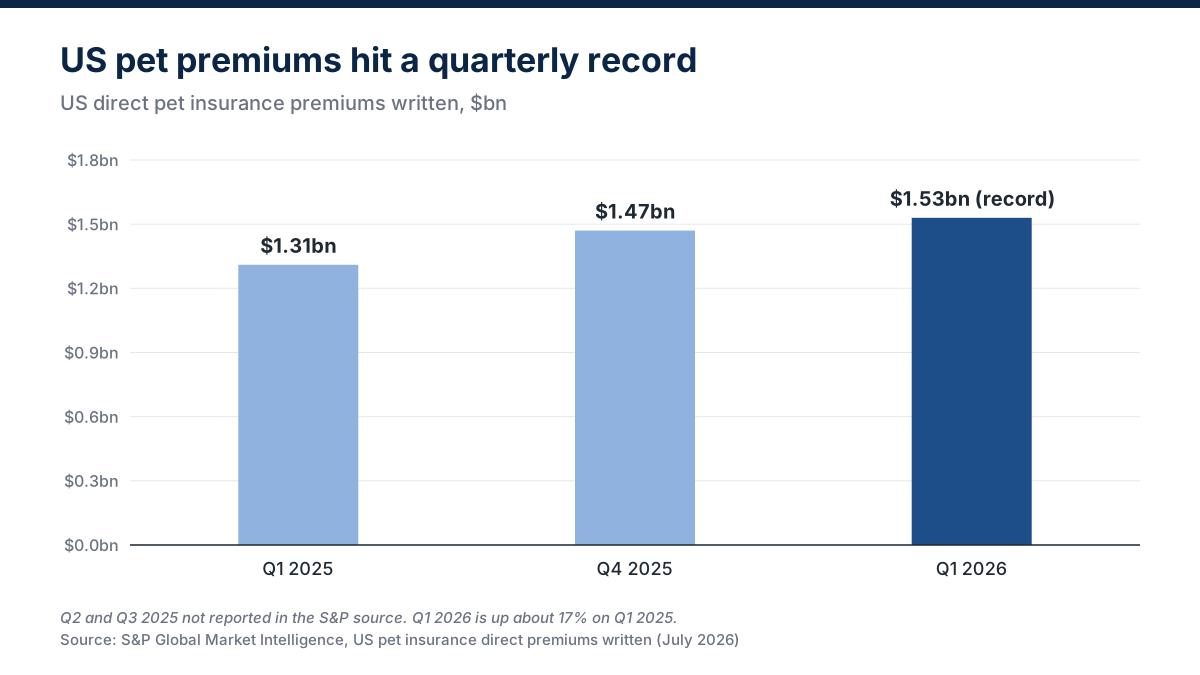
S&P Global Market Intelligence recorded an all-time quarterly high of $1.53bn in direct pet premiums written in the first three months of 2026, about 17% up on a year earlier, and its analysts expect full-year premiums to climb 17% to around $6.4bn. That would make pet the fastest-growing line in American property and casualty. Trupanion remains the biggest underwriter, with $335.5m of first-quarter premiums, while JAB Holdings grew its book by just over 50% to $282.5m.
Even so, the US market is tiny relative to its pet population. Only 4.27% of American pets are insured, leaving more than 95% without cover.
Read next: NAPHIA: Only 4.27% of US pets insured despite decade of double-digit growth
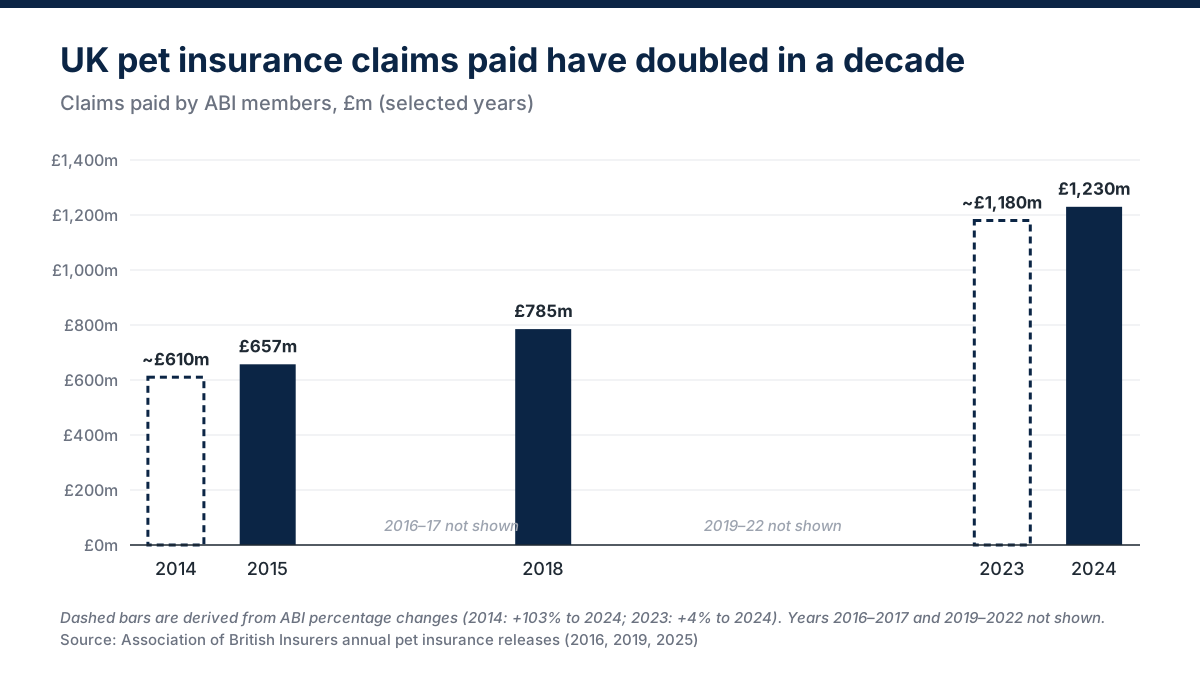
The UK is a different, ahem, animal. Cover is far more widespread here, and ABI members reported a record 4.6 million pet owners with policies in 2024. They paid out £1.23bn in claims that year, the third year running above £1bn and more than double the total of a decade earlier. The average claim reached £685.
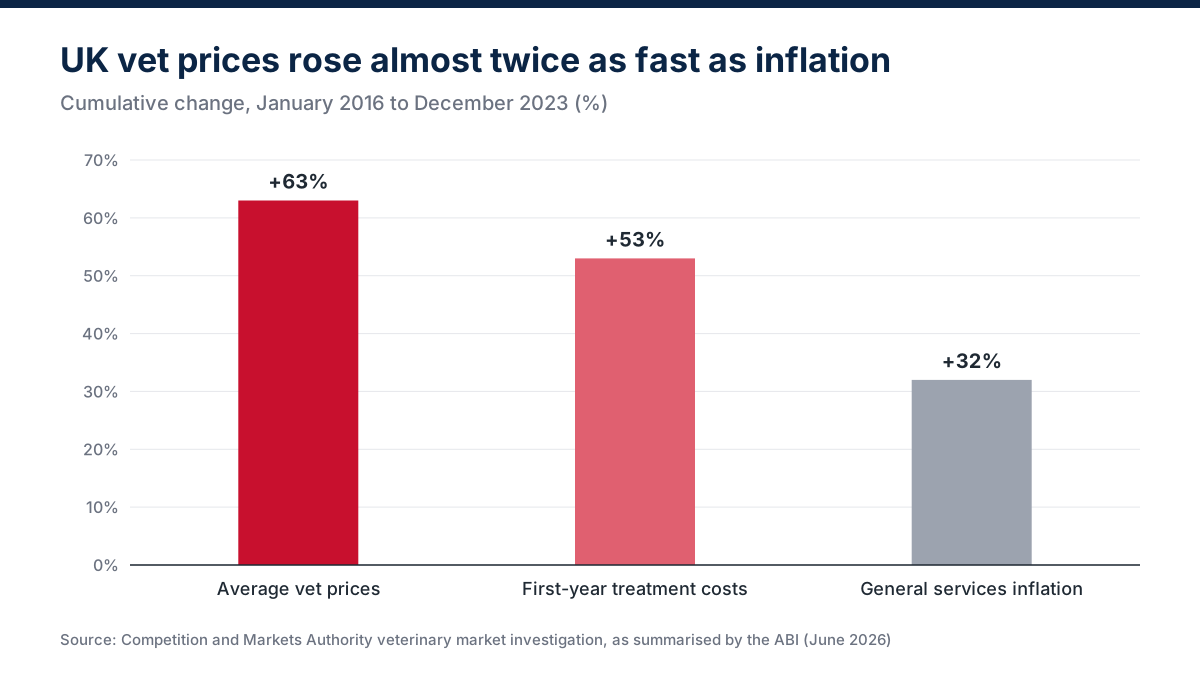
The Competition and Markets Authority found that average vet prices rose by 63% between 2016 and 2023, and first-year treatment costs by 53%, while general services inflation ran at 32%, according to an ABI summary of the findings. Over roughly the same period, large vet groups went from owning about 10% of local practices in 2013 to around 60% today.
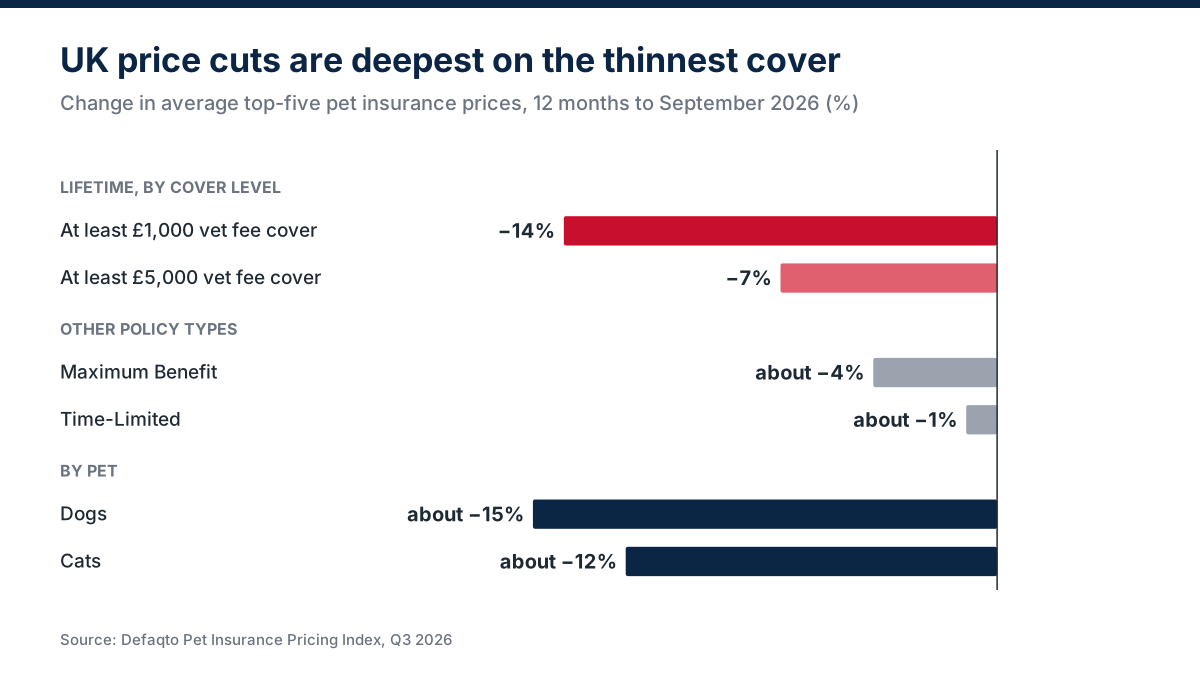
And yet UK premiums are falling. Defaqto's latest pricing index shows average top-five Lifetime prices dropped 14% in the 12 months to September, including a 6.1% fall in the third quarter. The cuts are deepest at the bottom of the market: prices for policies with at least £1,000 of vet fee cover fell 14%, while those with £5,000 or more fell 7%.
Read next: Pet insurers cut prices hardest on lowest-cover policies as Lifetime premiums fall 14%
The price war is being fought on comparison sites, where the number of Lifetime quotes available jumped by 42% to more than 200 on average earlier this year. Insurers are protecting margins through product design however, rather than price. Co-payments now feature in 41% of policies, up from under a third at the start of 2025, alongside higher excesses and inner limits on certain conditions. Defaqto estimates vet inflation has run at about 37% since 2023, well ahead of premiums.
For policyholders, the squeeze bites at the point of claim. One Kent owner saw his malamute's treatment for a rare blood disorder run past a £10,000 annual limit, leaving a shortfall of almost £6,000 that he covered with a loan. The Financial Ombudsman Service upholds around half of the pet insurance complaints it handles, and the Financial Conduct Authority has put the line on its watchlist.
Read next: Vet costs up 60% since 2016, but pet policy limits lag behind
Regulation is now arriving on the vet’s fees side of the equation. The CMA's final report, published on 24 March, was turned into a legally binding Order in September. Practices will have to publish standard price lists, give written estimates for treatment expected to cost £500 or more, and cap written prescription fees at £21 for the first medicine and £12.50 for each additional one. Customers of the large vet groups should see the first changes before Christmas, with smaller practices getting three extra months for most measures.
Martin Coleman, who chaired the CMA's inquiry group, said owners had too often been "left in the dark" about ownership, treatment options and prices.
Insurers (and their clients) shouldn’t expect a quick dividend however. Frances Luery, product manager at Defaqto, said clearer prices and written estimates should help owners make better decisions, but that the effect on vet fee inflation "will take time to emerge". She expects the reforms to start taking effect in 2027.
Read next: Vet reform is coming, but don't expect cheaper pet insurance - Defaqto
The American numbers show what happens when veterinary medicine advances faster than anyone regulates its price: more treatment worth insuring, and bigger claims to pay for it. Britain has the regulation coming but the same medical progress, and claims severity is unlikely to reverse because a price list goes up in reception.
Defaqto has already said the current softening cannot last indefinitely and expects selective price rises as insurers try to restore margin.
For brokers selling pet cover through personal lines or affinity schemes, the risk sits in the cheapest Lifetime quotes. They are falling fastest, and they are also the policies a single serious diagnosis can exhaust. Because higher-cover products have come down in price too, the gap between a £1,000 and a £5,000 limit is narrower than it was a year ago, which makes the case for more cover easier to put at renewal. So does walking clients through co-payments, age-related excesses and annual limits before a claim, not after.
The UK and US markets are already comparing notes. NAPHIA sits alongside BIBA and the Insurance Fraud Bureau as an honorary member of the UK's Pet and Equine Insurance Association, which brought BIBA on board in April. PEIA chief executive Sharon Brown said at the time that brokers bring a perspective "not only in terms of distribution, but also in understanding customer needs".
Read next: Report: Pet insurance premiums fall in Q4 as vet costs soar