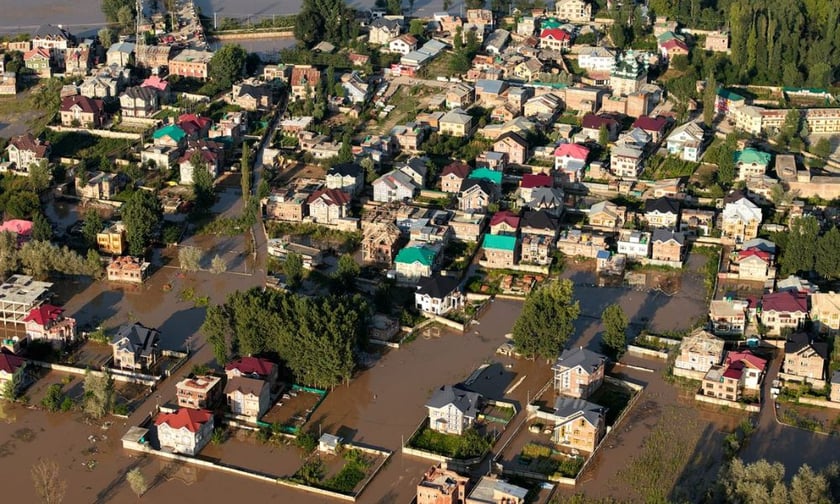
Property insurers worldwide are raising premiums or withdrawing cover from high-risk regions as extreme weather losses climb.
Natural catastrophes generated more than US$220 billion in economic losses globally in 2025, with roughly half uninsured. Secondary perils – including severe convective storms, wildfires, and floods – accounted for a record 92% of total global insured losses that year.
The challenge is no longer just finding affordable cover. It is understanding which assets are exposed before a loss occurs. The gap between climate risk and risk management capability is widening.
Peter Carter, head of climate practice at Willis, said the market needed a more systematic approach to climate risk.
“The volatility and frequency of climate hazards are increasing,” Carter said. “Clients need a built-in scan of the risk against ongoing climate change volatility.”
The problem is acute in the UK. Property insurance claims are forecast to reach £6.1 billion in 2025, the highest annual payout on record. Weather-related losses alone account for an estimated £1.6 billion, more than double the annual levels seen between 2017 and 2021.
A majority of UK properties were underinsured in 2025, widening the gap between rising loss costs and softening rates.
The pressure is not confined to one market. Insurers worldwide are reassessing their exposure to climate-related perils, with some withdrawing capacity from vulnerable regions entirely. The shift makes pre-loss visibility more important than ever.
Willis has responded by updating its Climate Diagnostic model and embedding it into broking workflows and risk engineering surveys. The tool sits within WTW’s Risk IQ platform.
It conducts scenario-based assessments across a portfolio, identifying physical risk exposure to insurable climate-related perils. It also stress tests risk management and finance strategies across short, medium and longer-term horizons.
Risk managers can use the findings to explore physical adaptation measures and alternative risk transfer strategies. The tool also estimates the value of assets exposed to extreme weather and longer-term shifts in climate patterns.
Carter said the goal was to give clients sight of problems before they became losses.
“Early sighting of assets exposed to climate-related perils gives risk managers the chance to build resilience, improving future insurability before disaster strikes,” he said.
Climate Diagnostic is one part of a wider Willis effort on climate risk. Last month, Willis launched site-specific parametric flood cover for UK racecourses that had previously been unable to obtain flood insurance.
A WTW survey found 76% of risk managers were interested in or exploring parametric solutions. Faster claim payouts and the ability to plug protection gaps were the leading drivers.