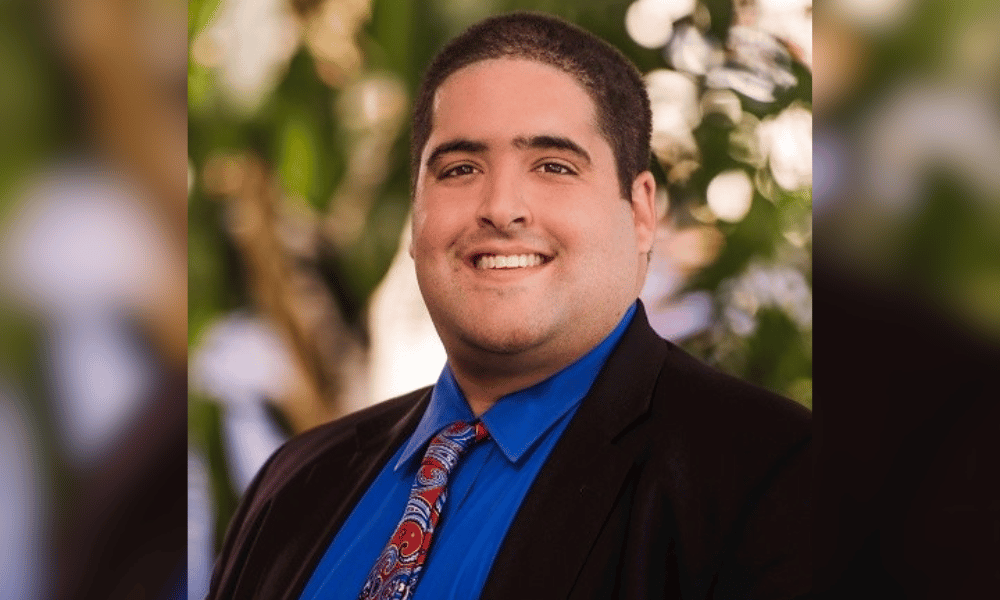
Corgi Insurance has appointed Daniel Hausman as vice president of its trucking program, bringing in a specialist whose career has been built almost entirely on constructing commercial trucking insurance programs from the ground up rather than inheriting established books.
Hausman's background spans three distinct program builds at scale. At Nirvana, where he served as its first non-fleet business development manager, he helped grow the program from zero to $30 million, covering rate and rule design, forms development, go-to-market strategy, distribution buildout and broker-of-record guidelines. At CSMV Underwriters, he contributed to growth from zero to nearly $20 million in a single year. At Transportation Insurance Experts, he negotiated a more favorable capacity agreement on the Knight Specialty binding contract, expanded distribution and contributed to 180% year-over-year profitable growth, also leading underwriting and compliance audits that resulted in updated rules and guidelines.
Earlier in his career, Hausman led the strategic acquisition of Mulligan AI, a Y Combinator-backed insurtech focused on automating the insurance agent experience in the trucking sector.
Emily Yuan, Corgi's COO, said Hausman's experience building trucking programs at scale, from underwriting and capacity to distribution and operations, makes him the right operator to develop Corgi's transportation insurance offering.
Corgi launched its admitted carrier in mid-2026 to expand beyond its original focus on venture-backed technology businesses into broader small commercial classes. The trucking program is a significant step into a line that has historically demanded specialist underwriting expertise, granular fleet and driver data, and capacity relationships that most generalist carriers don't maintain.
For retail and wholesale brokers placing non-fleet and small fleet commercial trucking risk, Hausman's appointment signals Corgi is approaching this class with genuine underwriting depth rather than as a commodity line available through admitted carrier paper.
His specific experience at Nirvana, which runs its own AI-driven trucking underwriting platform, alongside traditional MGA and program roles gives him direct exposure to both sides of the technology-versus-traditional-underwriting divide the trucking market is currently working through. That background is relevant context for brokers evaluating how Corgi intends to compete in a class where data-driven underwriting is increasingly separating the most competitive writers from the rest.
Hausman has indicated the program will reach the trucking segment through multiple distribution channels, retail, wholesale, MGA and embedded, rather than a single route to market. Brokers active in this class should watch for Corgi's appetite and non-fleet underwriting guidelines as the program parameters take shape.