Are you the broker your clients actually need right now?
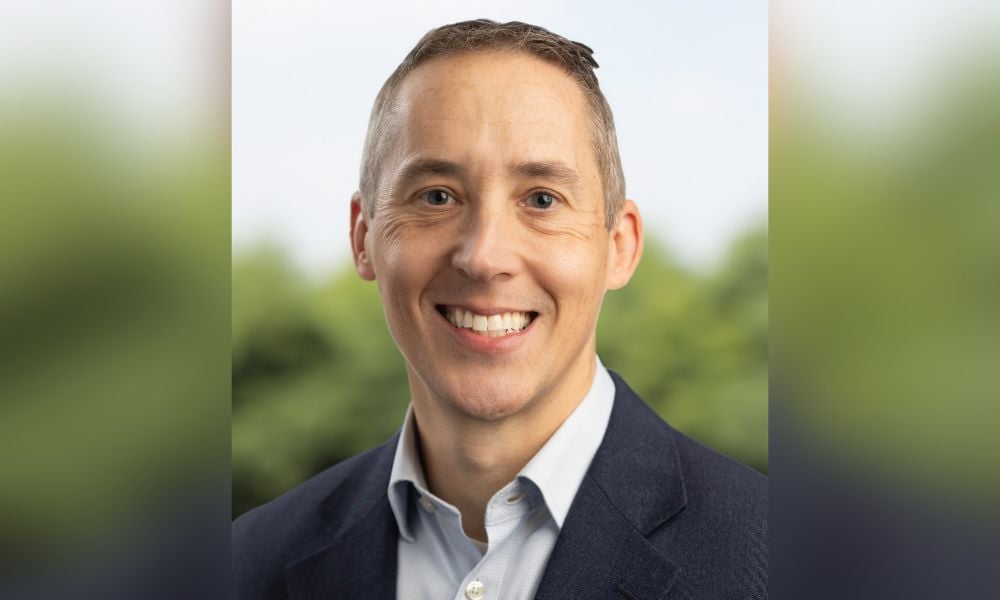
It is a question worth contemplating, according to Bryan Holgerson, president of Cigna Healthcare US in Bloomfield, Connecticut, who says the group benefits market has entered a period where the gap between brokers who genuinely understand their clients' workforce and those who are simply renewing plans on autopilot has never been wider - or more consequential.
Holgerson has spent 26 years at Cigna Healthcare, the last three as president of its US business, in roles spanning sales, implementation, and account management across large, midsize, and small employer markets.
Speaking to Insurance Business Benefits US at the start of open enrollment season, he offered a clear assessment of the forces bearing down on employer-sponsored health plans and what brokers must do to stay ahead of them.
Holgerson said that the foundation of the cost problem is not inflation or consolidation alone; it is the deteriorating health of the working-age population.
He cited 2025 figures from the U.S. Centers for Disease Control and Prevention showing that more than 75 percent of Americans between the ages of 35 and 64 currently have at least one chronic condition. Forty percent carry two.
"Those are wild stats," he said. "And those are individuals that are actively at work, that employers are depending on for productivity - and they're challenged with not only things outside life and all the things that come with having a family, but their own health as well."
To that chronic condition burden, he added three further pressure points: inflation, industry consolidation, and pharmaceutical innovation. On that last point, he was careful to separate the societal benefit from the financial reality.
The same breakthroughs producing what he called "miracle drugs" - personalized treatments designed for an individual's specific biology - carry research and development costs that can detonate a small employer's benefits budget.
"If you think about a small employer with 100 employees who have to either insure or self-insure their population, a million or a $2 million drug is not something that they can just absorb in the normal variation of their benefits budget," he said.
Unlike traditional front-loaded research cycles, the pace of drug innovation means each new wave of treatments restarts the cost spiral. Artificial intelligence may eventually compress development timelines, but it will not eliminate the structural pressure on plan sponsors.
With open enrollment conversations happening across the country, Holgerson highlighted where employers and their brokers are most exposed.
The first blind spot is specialty drug spend. Plan sponsors are largely aware of the cost of individual drugs, he said, but few have a credible plan for what that aggregate trajectory looks like five years from now as a societal burden. Speciality drug costs were recently highlighted by Paul Fronstin, Ph.D., director of health benefits research at the Employee Benefit Research Institute, in an interview with IBB.
The second issue for brokers and their clients, and in Holgerson’s view more systemic, is chronic conditions.
According to data presented by the Cigna Group at its 2026 Investor Day, eight percent of patients with complex care needs account for 55 percent of total healthcare spending and that share compounds as conditions worsen and go unmanaged.
“It’s a snowball that just keeps continuing to go as folks get sicker and sicker,” Holgerson said. “And that’s why the employers that are doing the best right now really have a full population health strategy. They’re not just managing renewal to renewal.”
Holgerson traced a multi-decade pattern in which employers used higher deductibles and out-of-pocket maximums as their primary cost-containment lever. It is a strategy that works mathematically but which, he argued, is fundamentally broken as a long-term approach.
"The one piece that it doesn't solve, especially as folks get sicker, is that what's really important is them actually being on the right path and the right journey for them to get the best outcome," he said. "And we all know that the best outcome from a health standpoint leads to ultimately the lowest cost."
He pointed to a meaningful shift already visible in the conversations Cigna is having with leading employers. Increasingly, plan sponsors tell him they are willing to waive deductibles and out-of-pocket maximums entirely for employees with chronic or complex conditions, provided those individuals follow a defined care path: seeing a high-performing physician, staying compliant with medications, attending follow-up care.
Holgerson cited studies estimating that more than 30 percent of spending in the US healthcare system represents waste, which he sees as the addressable opportunity that justifies investing in navigation and population health rather than further cost-shifting to employees.
Talent retention is reshaping the calculation further. Most employers, he said, now view their employees as one of their biggest assets. That means poor benefits outcomes - absenteeism, medical leave, attrition - carry recruitment and training costs that often wipe out any savings achieved through leaner plan design.
"If you can help an individual that has a chronic disease go on the right path - as long as they're seeing a high-performing physician, getting their follow-up care, staying compliant with their medications - I would be willing to forego deductibles and out-of-pockets," he said. "It's just such a fascinating turn that's been taken."
Cigna's HealthSense platform is designed to address two of the most persistent failure points in the benefits system: the individual's experience navigating their coverage, and the waste generated by a fragmented care journey.
Holgerson used a concrete example to illustrate the problem HealthSense is built to solve. When a patient is discharged from hospital, they face on average four follow-up visits with four different physicians. Without guidance on where to go first - and how to carry relevant information between providers - care becomes siloed, outcomes suffer, and costs rise.
"HealthSense is not trying to diagnose an individual," he said. "But what it's attempting to do is to bring in the information about an individual - both their benefits information and their health information - and give them guidance in terms of the next steps and things they should consider."
He connected the platform's relevance directly to the accelerating shift toward self-funded plan structures.
As employers move from fully insured arrangements toward self-funded, level-funded, or Individual Coverage Health Reimbursement Account (ICHRA) models, the decision-making burden increasingly falls on employees who are unfamiliar with navigating costs and coverage, often while their household budgets are already stretched.
Brokers today are expected to advise across pharmacy benefits, mental health parity compliance under the Mental Health Parity and Addiction Equity Act, plan analytics, and Employee Retirement Income Security Act (ERISA) fiduciary obligations.
This is well beyond traditional placement work but Holgerson said that while the basics are non-negotiable they are no longer sufficient. Understanding fiduciary responsibility, setting sound budgets, and delivering solid plan analytics are what he described as needing "a ticket to the dance."
The real differentiator is something harder to commoditize - understanding each employer's human capital strategy and tailoring benefit design around it.
"There are some employers that would be very turned off with ICHRA if a benefits broker brought it in," he said. "Same thing with the total population health strategy. There are some employers who view that as being really important because of the training costs, because of replacing a worker. Others won't view it that way."
Technology is accelerating that opportunity. Artificial intelligence and analytics tools are enabling brokers to synthesize large data sets into actionable levers far faster than was previously possible - a capability that becomes especially critical as more clients move to self-funded models and gain access to claims data they never had under fully insured arrangements.
Holgerson's closing message was aimed as much at employers as at their brokers.
The answer to the cost crisis is not to spend more money, he said. It is to spend more strategically and to engage more deeply with the advisors and health plans that can help them do it.
"If you were asking me, what would you encourage an employer to do different now versus what they may have done 10 and 15 years ago?" he said. "It's actually making more investments - not from a dollar standpoint, but from a strategy standpoint - and working collaboratively with their broker and their health plan. Because the more that an employer puts into it, the more value that they can get out."
For brokers, that is both a challenge and an opportunity. The employers who understand what is at stake are actively looking for advisors who can help them think differently about their workforce health. The question is whether the broker sitting across from them is ready to have that conversation.