In early September, Wakam’s group CEO Catherine Charrier-Leflaive had something to celebrate. The French insurer had just renewed its loss portfolio transfer with Bermuda-based legacy specialist Compre, and she held it up as proof of “smart capital management, year after year.” Three weeks later, France’s insurance regulator stopped Wakam SA, the group’s French carrier, from writing new business altogether.
This week, New York-based AmTrust confirmed that its international arm had bought the group. The deal covers both Wakam SA and its separately regulated UK arm, Wakam UK, which together employ more than 230 people.
According to French trade press, AmTrust paid a symbolic sum, with a “return to better fortune” clause that lets the old owners share in any recovery. The real money goes into the balance sheet: the same reports put the immediate capital injection at around €100 million (roughly $112 million), the amount the regulator wanted to see before Wakam could trade again. AmTrust hasn’t confirmed either figure, saying only that Wakam is now fully capitalized.
Why should a US audience care about a Paris carrier? Because Wakam was, in effect, Europe’s version of a fronting carrier, and its rapid fall lands just as the US fronting market could head into its own shakeout.
Read next: Conning: fronting sector’s easy growth phase is ending
Wakam built its name as a white-label insurer. It designs products and carries the risk, while digital platforms, retailers, banks and MGAs sell them under their own brands across the 29 European countries where it holds passports. Anyone who has watched the US fronting sector grow will recognize the model.
The pitch is speed. Partners do the selling and often much of the underwriting, with the carrier’s balance sheet behind all of it. When those books perform, growth comes cheaply. When they don’t, the carrier pays for losses it did not price itself, and its capital has to keep up with every partner it signs.
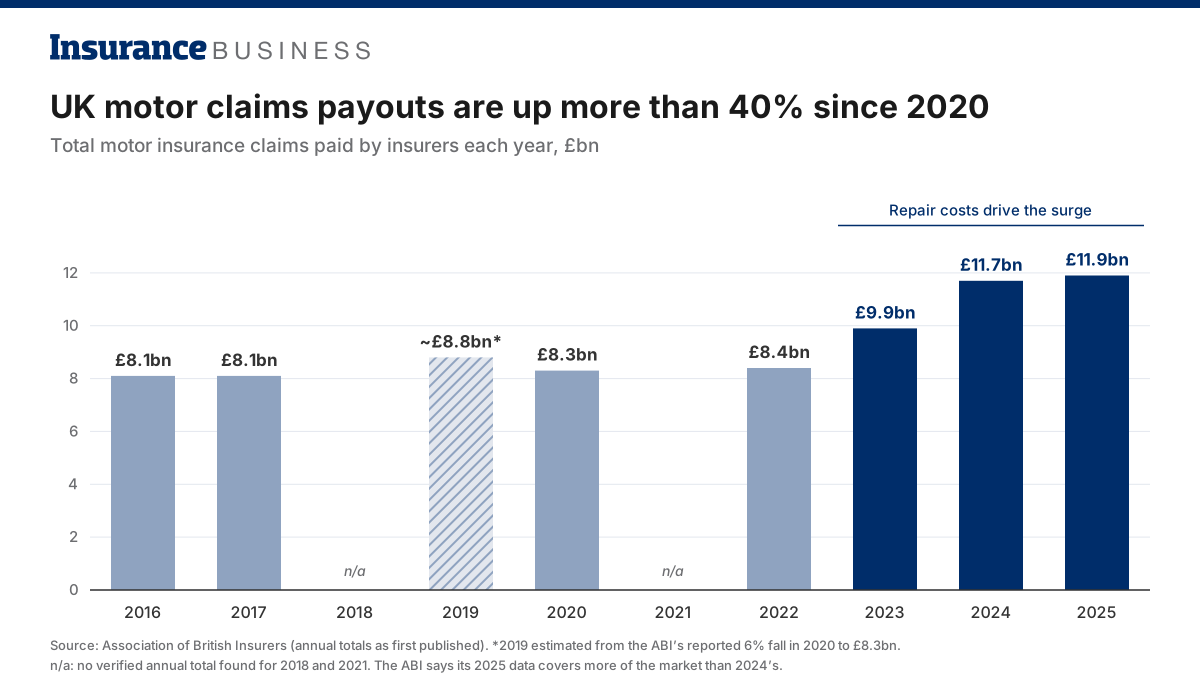
The first of three heavy blows was legacy business, much of it UK auto. French reports point to heavy British motor exposure written just as repair bills soared; the Association of British Insurers says UK motor claims hit £11.9 billion ($15.9 billion) in 2025. Wakam’s fix was to hand old reserves on. Last December it signed a €140 million (about $157 million) loss portfolio transfer with Compre, covering mostly UK and French auto and property liabilities from 2024 and earlier. September’s renewal added another accident year. Offloading two years of claims in under a year eased the strain on capital, but it also showed how much those older books were weighing on it.
The second was a balance sheet clean-up. Wakam’s 2025 solvency report blamed an accounting review and closer scrutiny of receivables, the money owed to it, for opening a capital gap. In a partner-led model, premium is often collected by distributors before it reaches the carrier, so doubts over what is owed feed straight into capital. By year-end 2025, Wakam SA covered just 66% of its required solvency capital, against a 100% regulatory floor.
The third was the owners. Wakam’s holding company was about 86% owned by the family office Opera Finance, with founder Olivier Jaillon holding most of the rest. They put in €85 million (about $95 million) during 2025 and another €34 million (about $38 million) in March 2026. It wasn’t enough. By mid-September, French trade press was reporting that the regulator wanted Wakam to find a stronger backer, with estimates of the capital needed running between €160 million and €200 million ($180 million to $225 million).
Read next: Unrated reinsurers creep into $30-billion US fronting market
On Sept. 25, France’s prudential regulator, the ACPR, barred Wakam SA from writing new business or renewing policies and opened proceedings that could have ended with its license being withdrawn. French trade press called the move extremely rare. In US terms, think of a state insurance department ordering a carrier to stop writing while it decides whether to pull its certificate of authority.
The fallout was immediate. French wholesale broker Synex FMA Group said its motorcycle and microcar business, both written on Wakam SA paper, stopped overnight, and that it signed a replacement carrier within a week.
Once a carrier is below its capital requirement and its owners are tapped out, a regulator’s priority is policyholders, and the cleanest fix is a stronger owner. That also hands the buyer most of the bargaining power. It goes a long way to explaining a token price, with the real money going into the balance sheet rather than to the sellers.
For AmTrust, Wakam fits a strategy it has been building for a while: being the capacity behind other people’s distribution. Last December it completed the spin-off of seven MGA and fee businesses, including Risico, Collegiate and Arc Legal, into ANV Group with Blackstone Credit & Insurance. AmTrust kept a significant stake and signed a 10-year agreement to keep underwriting those books. Wakam is the other side of the same coin: a carrier platform built to back MGAs and embedded programs.
It also buys a foothold. AmTrust gets a licensed French insurer with 29 European passports, a white-label technology platform and a ready-made network of MGA partners. Peter Dewey, head of AmTrust International, said Wakam added “business lines, with delegated authority, that fit well within our appetite.”
Read next: AmTrust and Blackstone launch ANV Group and new MGA platform
The timing suited AmTrust, too. On Oct. 14, less than two weeks before the deal, AM Best moved its outlook on more than 20 AmTrust companies to positive, affirming their A- (Excellent) ratings and assessing the group’s balance sheet strength as very strong. The ratings agency pointed to AmTrust’s position as the third-largest US workers’ comp writer, with about 6% of the market. AmTrust had capital momentum at precisely the moment Wakam had run out of it.
The risk is whatever is left of the old book. The Compre transfers ring-fence much of the legacy auto and property reserves, which probably made the deal easier to underwrite. Integration will show how clean the rest of the balance sheet really is.
The US fronting market is bigger and more concentrated than Europe’s. AM Best estimates upwards of $30 billion in premium ran through fronting arrangements in 2025, and Morningstar DBRS data shows the 10 largest fronts write about 69% of MGA-dedicated premium. Conning says five carriers have already exited or de-emphasized fronting, and US agents have seen the paper under their policies change before: when Federated Mutual bought trucking MGA HDVI, the fronting arrangement behind policies placed by more than 100 agencies changed with it.
Wakam is a sharper version of that risk. Its warning signs were in public filings well before the ban: repeated capital injections, loss portfolio transfers on recent underwriting years and a solvency ratio below the regulatory floor. US MGAs and the agents who place with them have the equivalent tools in statutory annual statements, ratings actions and reinsurance panels. Knowing exactly which entity issues your paper, reading its filings every year and keeping a fallback carrier in mind are basic housekeeping in a market where capacity can disappear in days.
Read next: Pinion hands US reins to Gary Maier as fronting market enters a shakeout
AmTrust says Wakam can write new business and renew policies again immediately. The ACPR declined to comment on the ban at the time, and the outcome of its license proceedings hasn’t been made public. Jaillon, who called the deal “a meaningful new chapter,” is expected to stay on as a shareholder. Wakam UK was never covered by the French ban and kept trading throughout.
The bigger test is commercial. Some partners, like Synex, have already moved business elsewhere, and AmTrust will need to win them back while folding Wakam into an international operation built around six core lines: property, mortgage and credit, warranty, professional lines, legal expenses and medical malpractice.
Read next: Why MGAs are poised to enter a ‘strategic inflection point’ in 2026