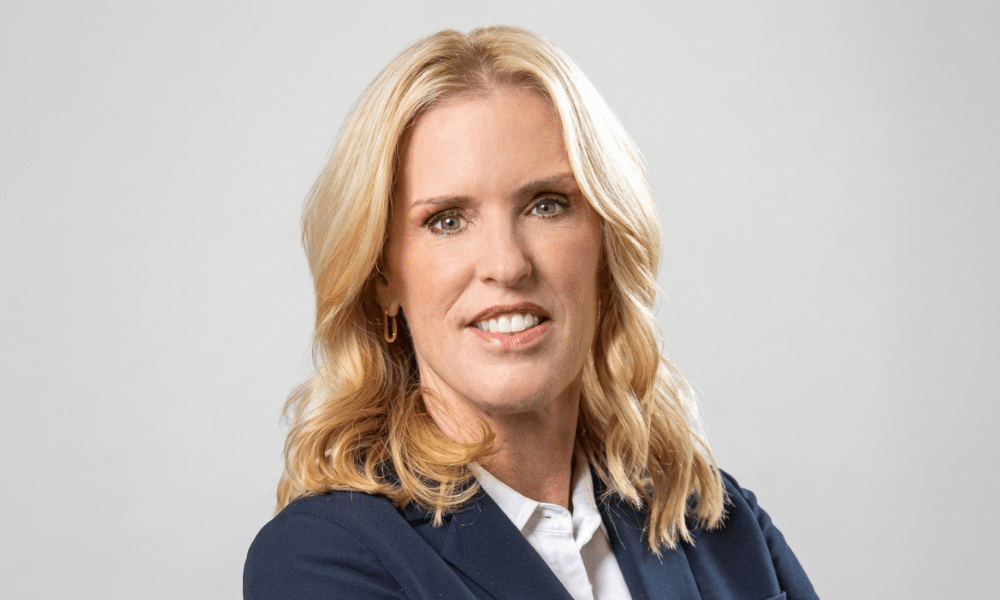
At the US Grand Prix in Austin, Texas, Trindl Reeves (pictured) watched a Formula 1 pit crew change a set of tires in 2.3 seconds during practice.
The Marsh Agency chief revenue officer was walking the pit lane with clients. What interested her as a broker was the work that went into deciding when the car should come in and what tires the crew should put on it.
Race engineers use live data to judge whether a team should stop twice or change its tire strategy. Reeves sees a similar job for brokerage leaders: they have to get the right specialists involved early enough for their analysis to change a client’s decision, whether the client is choosing where to build or deciding how much risk it can take on at renewal.
“Data and analytics are super important in how they decide their strategy. If the brakes aren’t working or the tires are wearing faster, all those are scenario-planned with the race engineer,” she said. “They’ll say Plan A, Plan B, or Plan C. In the risk business, we do the same thing.”
At the US Grand Prix in Austin, Reeves and her clients visited an F1 technology center where staff monitored live data and relayed it to teams. One staffer told her the final minutes of qualifying were the hardest part of the weekend. As drivers chased one last fast lap, he had to decide where to point the cameras.
Reeves sees a parallel in how brokers use data and bring in specialists when a client has a decision to make. Benchmarking can help a client decide how much insurance to buy. A business choosing between two coastal sites, for examepl, might need a meteorologist to compare weather patterns before it commits to a location.
Read more: Marsh has decided it wants to be a racing car. And you know what? Fair play to them
“You’ll have the core service team that delivers the day-to-day, but you’ll have all these different experts depending on what it is,” Reeves said. “It could be a cyber expert, a directors and officers liability person, it could be a trade credit resource.”
Race teams use that expertise to prepare for a change of plan. If the weather turns or tires wear faster than expected, the engineers have already considered what to do.
Reeves said the same thinking is especially relevant for cyber risk. A broker can walk through what a cyber attack might look like, how bad it could get and whether the proposed policy would respond.
AI has added a lot of uncertainty to that last question. Brokers are increasingly navigating questions around whether cyber programs to respond to AI-related losses, with many carriers considering the risk on a “case-by-case basis.”
“It doesn’t give us or the clients clarity for next year,” Reeves said. “For the general business out there, our clients are expecting that AI is going to be covered under cyber. If that changes and they’re taking on a bunch of risk that they weren’t planning on, that’s a problem.”
Reeves also sees a lesson in how early F1 teams start developing talent. Kimi Antonelli joined Mercedes’ junior program at 12. He won in Austin and became F1’s youngest world champion a week later in Mexico City, in his second season in the sport.
For Reeves, the years Mercedes invested in Antonelli before his F1 debut were what made his rise worth paying attention to. She wants graduates entering insurance to see the same potential to build a career over time.
“It takes a lot of effort to grow talent,” she said. “We want people to join the insurance business and have a lifelong career, right out of college. That’s what I did, and I’ve been very blessed to have a career in the business.”