Many families who lost their homes in the Palisades and Eaton fires in January 2025 made a second discovery in the weeks that followed. The dwelling limit on their policy, in some cases paid for over decades, would not cover the cost of rebuilding.
California’s answer is SB 876, which Gov. Gavin Newsom signed on Sept. 27. Among other things, it requires home insurers to offer extended replacement cost coverage of at least 50% above the dwelling limit when they write a policy. Whether that closes the gap is an open question - the state’s claims files show that most destroyed homes already carried some extended coverage and still came up short, because the estimate it was built on was too low.
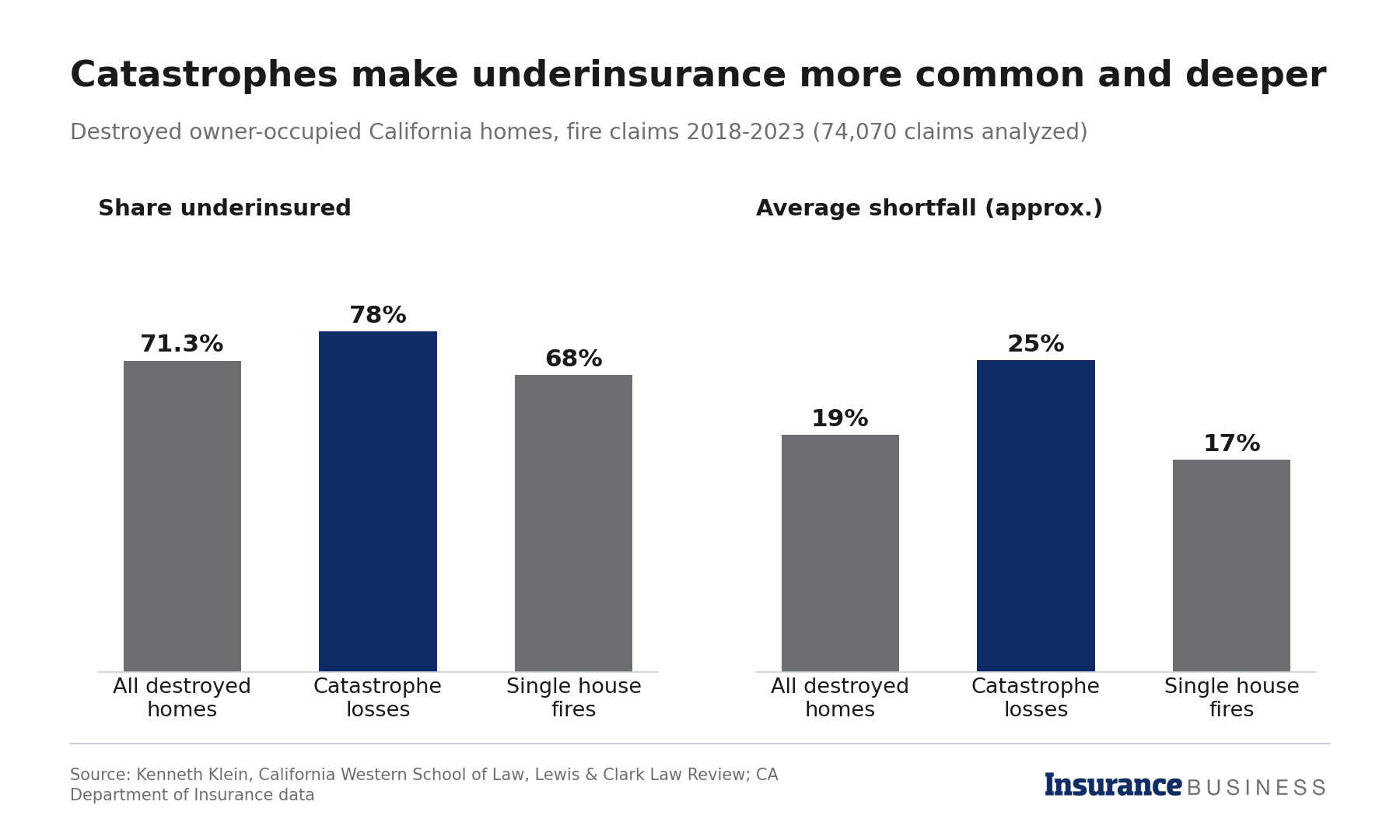
Kenneth Klein, a law professor at California Western School of Law, has studied underinsurance since a 2003 wildfire destroyed his own home. Through public records requests, he obtained Department of Insurance data on 74,070 fire claims on owner-occupied California homes from 2018 to 2023. Of the homes that were destroyed, 71.3% were underinsured, by about 19% on average. He published the analysis in the Lewis & Clark Law Review.
His findings put much of the responsibility on carriers. Klein’s research points to insurers’ own rebuild estimates as the main driver of underinsurance. The point-of-sale reconstruction estimate used to set Coverage A came in below the final incurred loss in 75% to 95% of cases, and the average miss was more than 30%. By his methodology, the large majority of those homeowners thought they were fully covered.
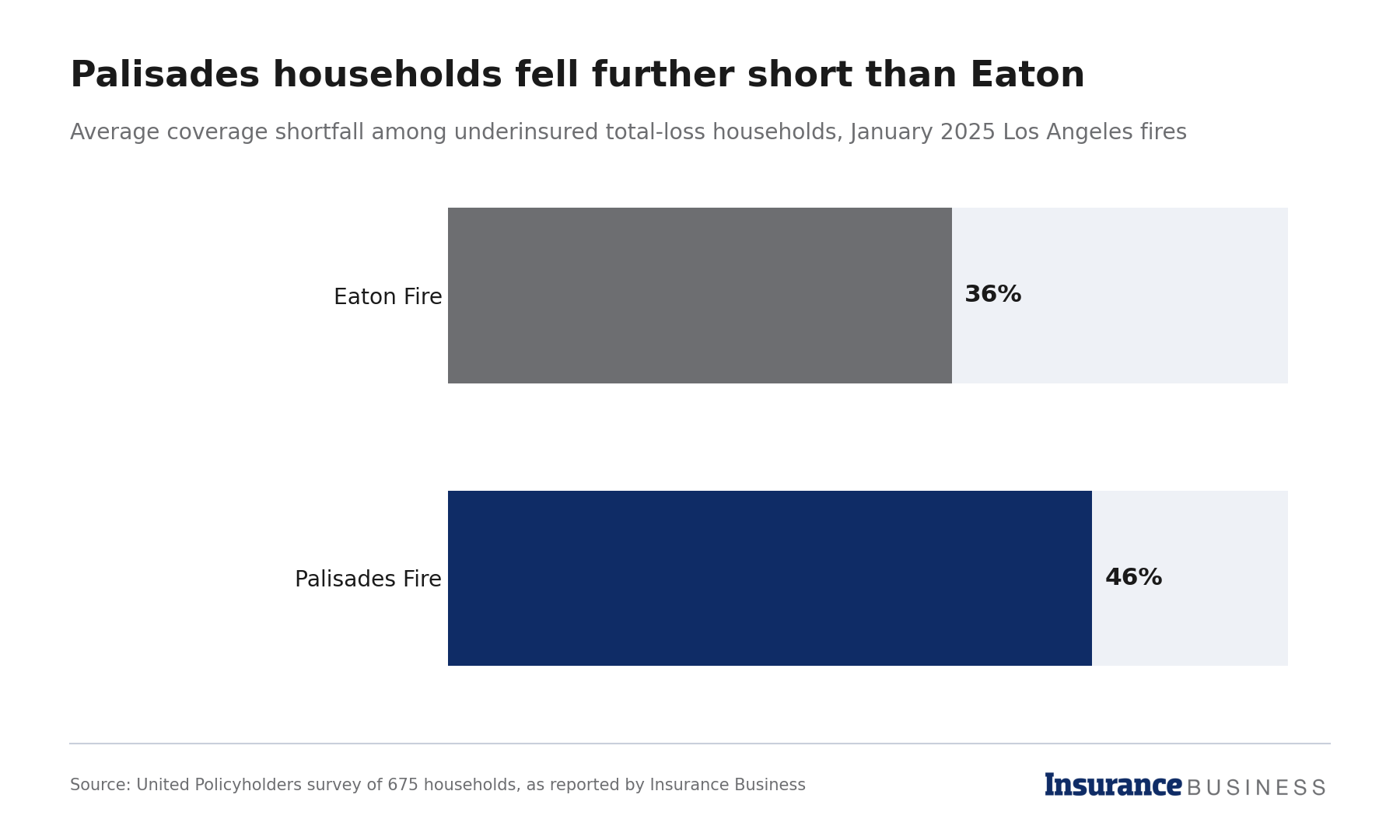
The Los Angeles fires may turn out worse. A year after them, a survey of 675 households by the consumer group United Policyholders found that only 7% of total-loss respondents had enough insurance to rebuild. Households that were short fell an average of 36% below rebuilding costs in the Eaton Fire and 46% in the Palisades Fire.
Read next: Survey shows widespread underinsurance among US homeowners
SB 876, which its backers call the Disaster Recovery Reform Act, was written by Sen. Steve Padilla (D-San Diego), who chairs the Senate Insurance Committee, and sponsored by Insurance Commissioner Ricardo Lara. The California Department of Insurance calls it the most comprehensive update to the state’s claims-handling laws in more than 30 years. The department says the law takes effect Jan. 1, 2027, though some provisions phase in during 2028.
The underinsurance provisions are brief. Insurers must offer extended replacement cost of at least 50%, along with additional living expenses coverage, when a policy is written. They must also give policyholders updated replacement cost estimates at new business and at renewal. Most of the rest of the law deals with claims. Insurers have to file disaster recovery plans, penalties for fair-claims violations double during a declared emergency, the commissioner can order restitution paid straight to policyholders, and carriers must send a status report within 15 days whenever a new adjuster takes over a claim.
Amy Bach, executive director of United Policyholders, has described underinsurance and claim delays as the two biggest obstacles disaster survivors face, and said the new law “attacks both.” It follows a separate measure, also signed by Newsom, that shifts the smoke damage burden to insurers.
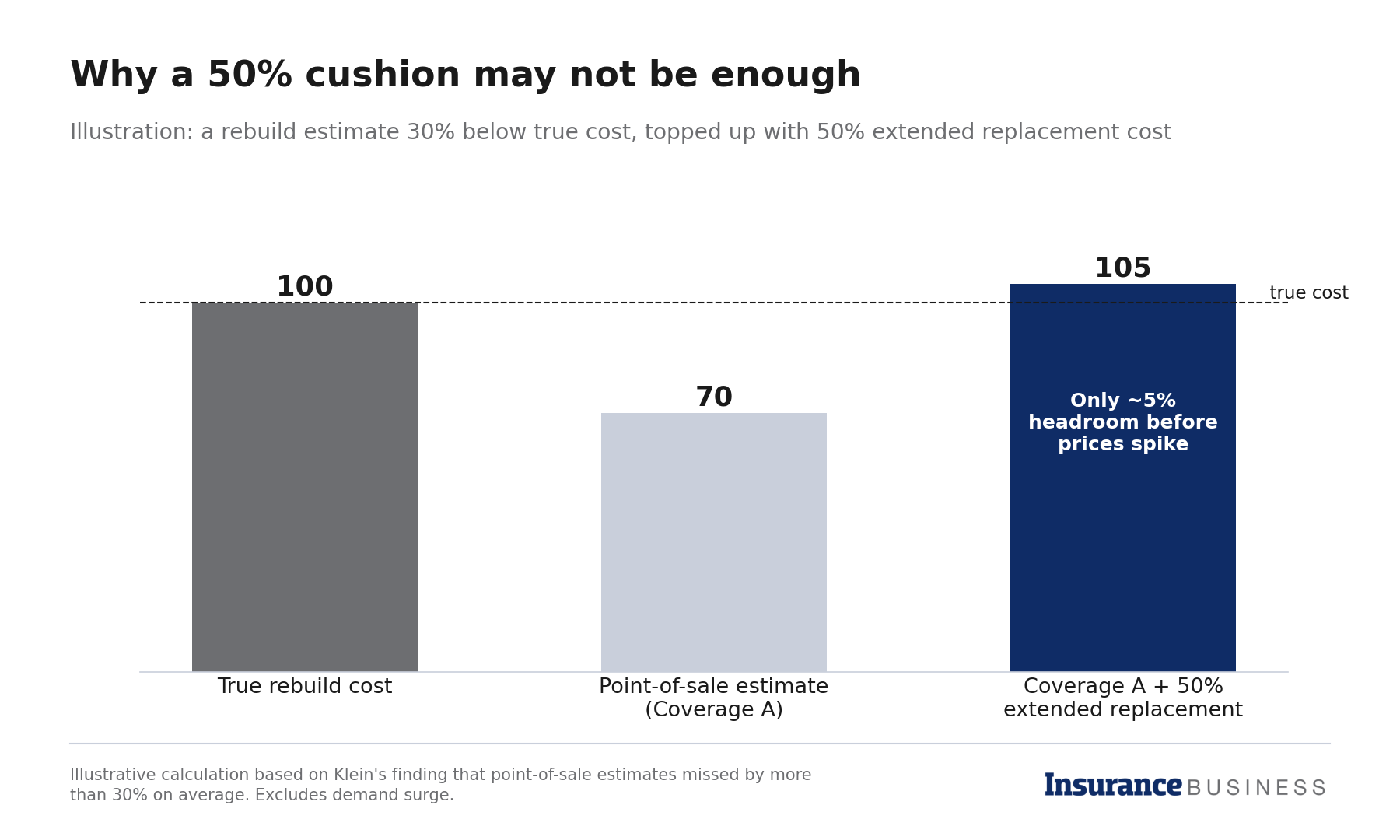
Klein’s data raise a question about how far the offer alone will go. About 90% of the policies he studied already carried extended or guaranteed replacement cost, and 150% of the dwelling limit was the most common extended level. Most homes lost in catastrophes still came up short. The arithmetic explains why. If the starting estimate is 30% too low, a 50% cushion on top of it covers only about 105% of the true rebuilding cost, before any post-disaster jump in labor and material prices. On those numbers, the requirement for regularly updated estimates may end up mattering more than the mandatory offer.
Patrick Wolff, a financial analyst who ran for state insurance commissioner this year, notes that California has tried a lighter touch before. An earlier law made sure consumers were told extended replacement cost was available but did not require carriers to offer it, and he argues it did little. Wolff set out his case in a post for the Pacific Research Institute, republished from his Substack.
Read next: Nine in 10 homeowners worry about protecting their homes but lack insurance knowledge – The Hanover
The most direct would force every carrier to sell guaranteed replacement cost with no cap. Wolff opposes it. An uncapped promise invites inflated claims, he argues, which is why carriers largely stopped selling the product in the 1990s and now write it only under strict underwriting. A mandate, in his view, would shrink capacity and push premiums higher in a market already struggling on both counts.
A second idea targets the estimating software. Wolff points to Verisk’s Xactimate, which he says holds a dominant share of the US and Canadian market, often put at about 80%. He suggests Verisk may have used its wider product range to crowd out competitors, though he presents that as a hypothesis. Klein’s research separately found that newer vendors have made little headway against Verisk and CoreLogic in rebuild-cost estimating. Any antitrust case would fall to the state attorney general, Wolff notes, not the insurance department.
The third is the courtroom. Klein has written for the American Bar Association about how weak disclosures could support lawsuits against insurers. Wolff agrees that litigation helps keep carriers honest, but he calls it a slow and expensive way to fix a market failure, with the bill eventually landing in premiums.
Read next: Only about 4% of US homeowners have flood insurance – despite billions in annual losses
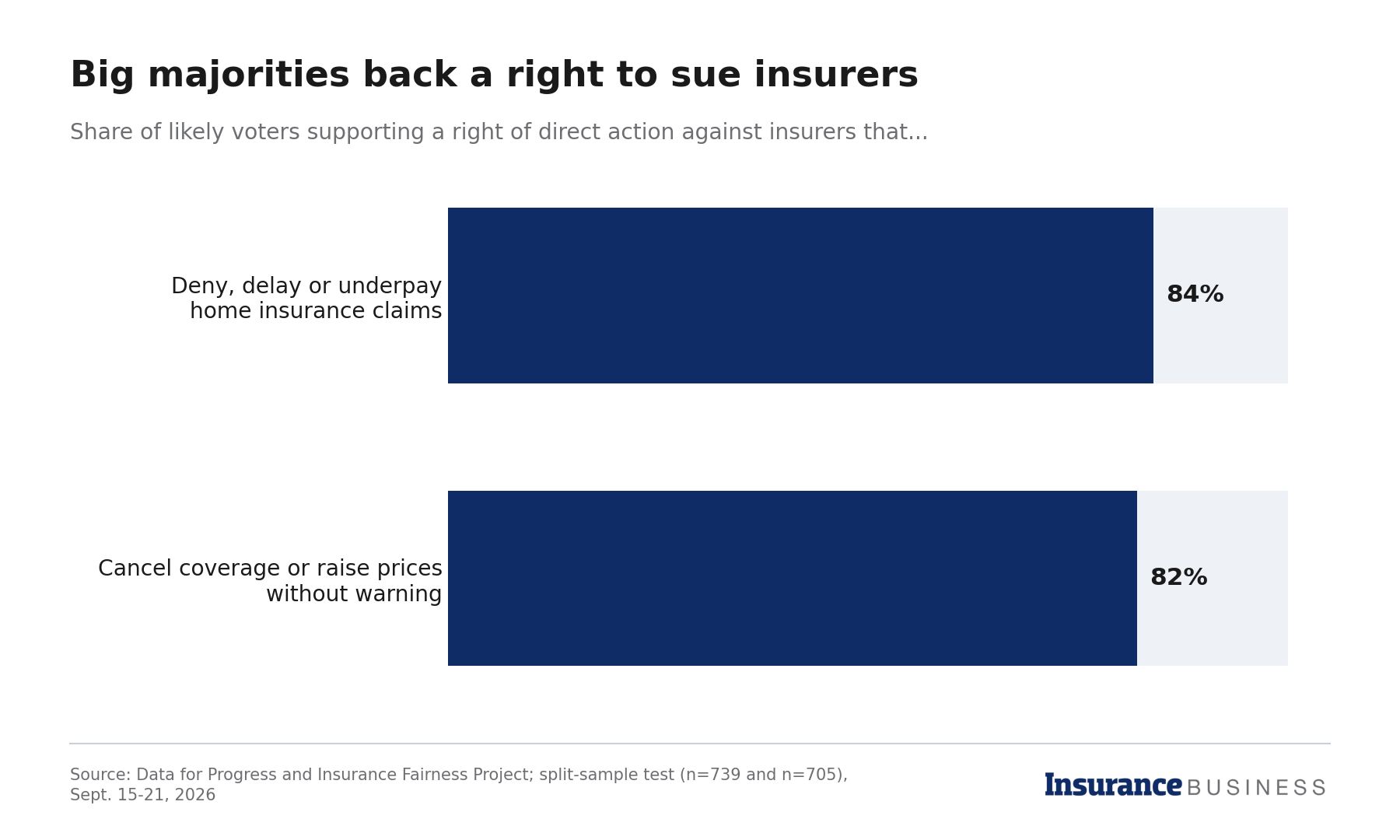
Nationally, voters lean toward the courtroom. A national survey of 1,444 likely voters, conducted Sept. 15–21 by the progressive pollster Data for Progress with the Insurance Fairness Project, found 84% support for letting individuals sue insurers directly when they deny, delay or underpay home insurance claims. The other half of the sample was asked about carriers that cancel coverage or raise prices without warning, and 82% backed the same right. Majorities of Democrats, independents and Republicans supported both.
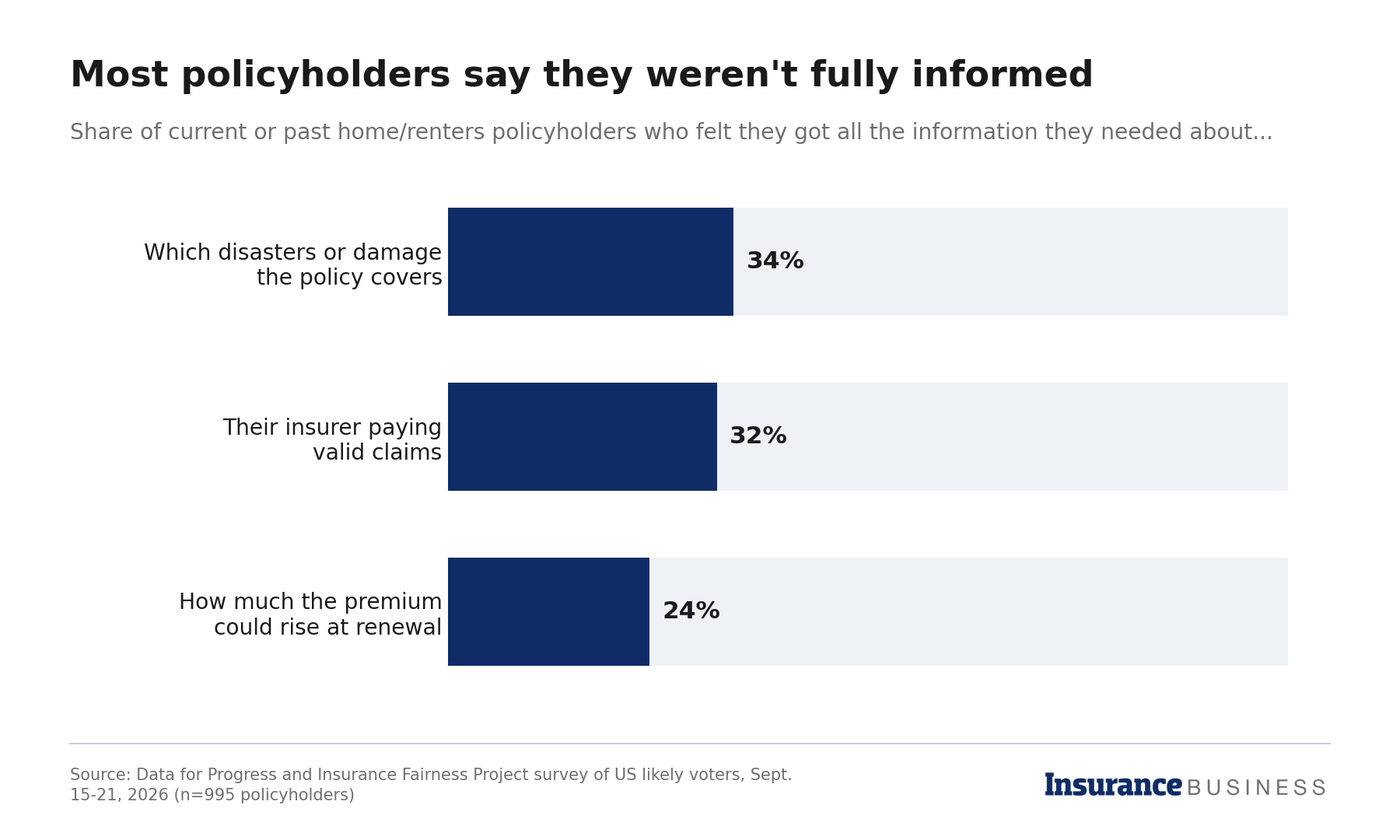
The disclosure findings matter most for producers. Of the 995 respondents who hold or have held a home or renters policy, 34% said they got all the information they needed about which disasters or damage their policy covered. Only 32% said the same about their insurer paying valid claims, and 24% about how much their premium might rise at renewal. Nineteen percent said a policy had become too expensive to keep, and 16% said theirs was changed or reduced partway through the term.
The cost pressure is broad. Nearly half of voters (49%) said they paid more for home or renters insurance over the past year, and 65% said home insurance costs affect their ability to buy or keep a home. In California, 35% called those costs very important, and in Louisiana 38% did. Asked why home and renters insurance costs are rising, 28% blamed general inflation and 20% blamed insurers raising rates to increase profits.
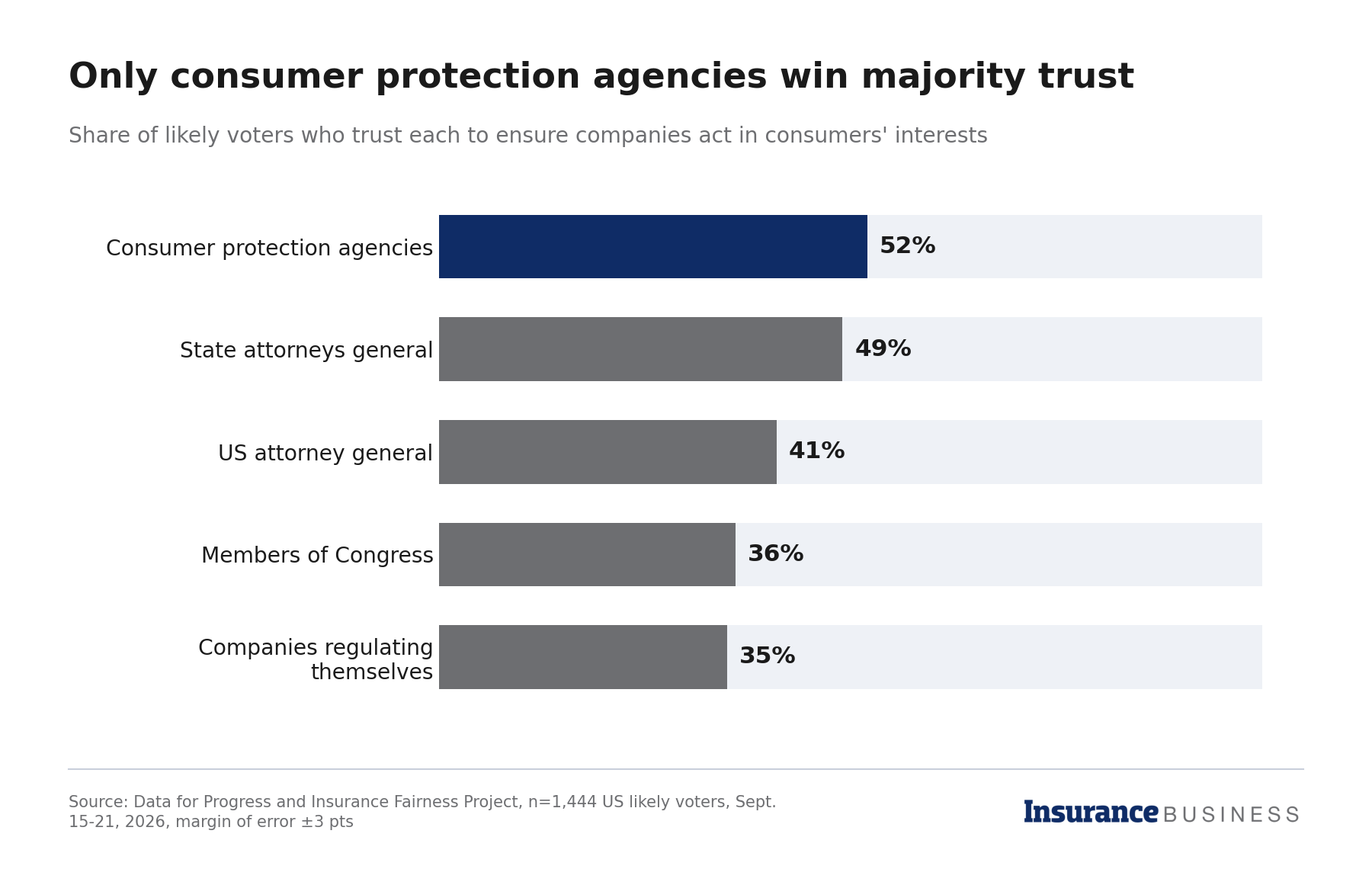
Consumer protection agencies were the only group trusted by a majority of voters (52%) to make companies act in consumers’ interest. State attorneys general came next at 49%, and only 35% trusted companies to regulate themselves. The poll’s margin of error is plus or minus 3 percentage points, and larger for subgroups.
The results arrive less than two weeks after Newsom, on the day he signed SB 876, vetoed two related bills backed by wildfire survivor groups. SB 877 and SB 878 would have expanded claim estimate disclosures and imposed interest on certain delayed payments after a total loss.
Read next: Spokane fires expose underinsurance gaps, leaving homes uncovered
For producers, the mandatory offer adds a step to every new policy. A declined offer still has to be presented, explained and documented, and the polling suggests many policyholders already feel nobody explains much to them.
Wolff expects pricing to be manageable, because the endorsement will be rate-regulated like the rest of the homeowners premium. Uptake is the harder problem: getting clients to buy enough without buying more than they need. He wants the Department of Insurance to test different mandatory disclosure messages, measure which ones best match purchases to need, and publish the results and the data.
Colorado offers an early comparison. Since Jan. 1, 2025, insurers there must offer extended replacement cost of at least 50% and law-and-ordinance coverage equal to 20% of the dwelling limit before writing or renewing a replacement-cost policy, and must explain what each covers and costs. United Policyholders has said it will encourage other states to copy SB 876.
Clients appear to want more contact. In a Hub International survey, 88% of policyholders said they want their provider to tell them when their coverage no longer fits. Yet 56% said they had not heard from their provider proactively in more than a year, or weren’t sure they ever had, according to findings on claimants whose coverage fell short.
That gap is also where errors and omissions exposure is likely to build. After the next major wildfire, a producer who cannot show in writing that the 50% option was offered, explained and turned down may have a hard time defending the file.