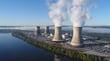
Growing demand for nuclear power, driven partly by AI data centers, is creating prospective construction business for insurance brokers, with projects requiring specialist coordination of coverage and close attention to who bears the risk of delays.
A July analysis by the Breakthrough Institute identified 74 gigawatts of planned or prospective new US reactor capacity. Hyperscale data-center companies accounted for 30 GW, or 41%, compared with 18% linked to utilities and public-power buyers.
The figures point to a changing customer base, although they should not be confused with construction underway. Nearly 60 GW sat in the report’s earliest category of fleet-level demand signals. Many announcements still need to become site-specific projects with financing and licensing pathways.
This emerging pipeline also spans a wider range of technologies, including small modular reactors and designs that differ from the large light-water reactors historically associated with US nuclear construction.
For brokers engaging with prospective owners and contractors, understanding the design and development stage is key to establishing which risks need attention as a project moves toward construction.
Everett Hansen, US nuclear energy leader at Marsh, has noted growing activity across new technology developers and established nuclear operators. Nuclear construction requires conventional construction insurers and specialist nuclear insurers to work together as the project’s exposures change. Hansen said the construction market and nuclear carriers are insuring “different portions of the project at different times depending on whether or not nuclear risk is manifest on site.”
Marsh identified fuel loading as the key milestone triggering nuclear exclusions within the construction program. Those exclusions are incorporated into builders’ risk wording from the outset and align with nuclear treaty reinsurance requirements. Specialist nuclear policies use corresponding definitions to cover the exposures excluded from the construction program.
Read more: Markel, Willis launch nuclear insurance facility amid atomic resurgence
Hansen explained that, once fuel loading begins, construction insurers exclude loss within the reactor’s “hot zone,” comprising the vessel, its contents and shielding. Specified perils are also excluded within the broader nuclear island, generally containment and everything inside it.
“They're exclusions within a framework in which both parties are very comfortable, ultimately providing a program which affords coverage all the way through commercial operations,” Hansen added.
According to Marsh specialists, smaller reactors do not inherently complicate this coordination. However, new designs require project-specific consideration, and a smaller physical footprint may increase the portion of the risk assumed by nuclear insurers.
“The goal is always to place respective nuclear and non-nuclear aspects of the risk where they best fit in the market and maximize efficient and effective coverage for the insured,” said Hansen.
Coverage placement sits alongside a broader discussion about construction costs and schedules, said Mark Falloon, Marsh’s US construction leader.
Falloon identified interconnected pressures around first-of-a-kind engineering, specialist manufacturing capacity and workforce experience. Original designs can require original manufacturing, while a limited supplier pool constrains access to critical components.
Owners and contractors also need to rebuild nuclear construction expertise. Detailed quality documentation and coordination between engineering specifications and practical construction requirements add to the work involved.
Read more: Credit cover alone will not scale emerging-market climate finance, Moody’s says
Brokers need to understand how the owner’s agreement with its engineering, procurement and construction contractor allocates those exposures. In a virtual webinar, Falloon emphasized assigning risks to parties able to manage them, while considering whether a contractor can remain involved and perform throughout a lengthy build.
“Because the duration of these projects is significant, you also need to make sure that the engineering, procurement and construction (EPC) contractor can be there to continue to deliver and perform on the project,” Falloon said.
“We see today that there's some changing of contractors on some significant projects out there and some rebidding going on. That's certainly going to affect some of the ongoing projects.”