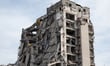
What happened: James River Insurance alleges it has no duty to cover construction defect claims at a 20-unit Chelsea, Massachusetts condominium
Who's involved: James River Insurance Company (insurer), Broadway Capital CDPM Inc. (named insured/property manager), Broadway Capital Construction LLC, 25 Second Street LLC (developer), The Reginald Condominiums Trust
What's at stake: Defense and indemnity obligations in an underlying tort action seeking damages for widespread construction deficiencies
Why it matters: The case tests how a commercial general liability policy responds when related entities share a controlling principal but only one holds the policy
Where it stands: Declaratory judgment complaint filed November 10, 2026, in US District Court for the District of Massachusetts
One person allegedly developed, built, and managed a Chelsea, Massachusetts condominium through three separate companies. The insurer says it covered only one of them.
James River Insurance Company has asked a federal court to confirm it owes no duty to defend or pay out on claims tied to construction defects at The Reginald Condominium, a 20-unit residential building in Chelsea. The complaint, filed November 10, 2026, in the US District Court for the District of Massachusetts, stacks multiple coverage arguments on top of one another - each one independently capable of eliminating the insurer's obligations, according to the filing.
The underlying dispute traces back to September 2024, when the condominium trust sued over what it called "widespread construction and design deficiencies," according to the complaint. The alleged defects include improperly installed roof framing and flashing that led to water leaks, deviations from approved plans and the Massachusetts State Building Code, faulty insulation throughout the building, and "improperly designed and installed stacked decks" that raised structural concerns, the filing states.
Three entities sit at the center of the dispute. Broadway Capital Construction LLC allegedly served as the general contractor. 25 Second Street LLC was the developer. And Broadway Capital CDPM Inc. - the only entity James River actually insured under its commercial general liability policy - acted as the property manager. According to the complaint, a single individual controlled all three, serving as sole manager and member of the developer entity and allegedly causing that entity to appoint itself as the condominium trust's initial trustee.
That corporate structure is the crux of the coverage fight.
James River issued its policy to Broadway Capital CDPM Inc. for the period November 1, 2022, to November 1, 2024. The complaint argues that the construction company and the developer are limited liability companies not listed as named insureds - and the policy is explicit: no person or organization qualifies as an insured "with respect to the conduct of any current or past ... limited liability company that is not shown as a Named Insured in the Declarations," the filing states.
But the insurer does not stop at who is covered. Even for the named insured, James River argues the construction defects do not amount to covered "property damage" - which the policy defines as physical injury to tangible property. And the building's master deed was recorded on August 31, 2022, before the first policy period began on November 1 that year, suggesting the alleged defects existed before James River was even on the risk, according to the filing.
If those arguments fail, the insurer points to a policy provision that bars coverage when property becomes less useful because the insured failed to perform its contractual obligations - and the defects can be fixed by fulfilling those obligations. The underlying tort action alleges that Broadway Capital CDPM Inc. "failed to take sufficient action to correct the defects and/or deficiencies" while serving as property manager, the complaint states.
There is also a policy endorsement that shuts out coverage for work tied to newly built residential condominiums of more than ten units. The Reginald has twenty.
And finally, the policy's fiduciary exclusion bars claims arising from "coercion, conversion or misappropriation of others' funds" or "dishonest, fraudulent, criminal, malicious acts" - relevant because the underlying lawsuit alleges the developer improperly "caused trust funds to be expended" for repairs to its own defective work, the filing states.
No hearing date has been set. The case sits at the earliest possible stage - the insurer has filed, but no defendant has responded.
The stacked-defense approach is standard for coverage counsel looking to exit a habitational construction exposure, but the one-principal-multiple-entities structure makes the insured-status question sharper and more instructive than most.
None of the allegations in the underlying tort action have been tested, and no court has made any determination on the merits.