What happened: Three Taiwanese insurers allege a shipment of Acer laptops worth over $647,000 was lost or damaged on a COSCO vessel and are suing the carrier to recover.
Who's involved: Fubon Insurance, Cathay Century Insurance, and Hotai Insurance (plaintiffs) v. COSCO SHIPPING Lines (defendant); Acer America Corporation was the consignee.
What's at stake: At least $647,099.47 in claimed damages, plus interest and costs.
Why it matters: Three co-insurers are chasing a global carrier through a textbook subrogation claim under federal maritime law.
Where it stands: Complaint filed October 28, 2026, in the Southern District of New York.
A container of Acer notebook computers left Vietnam in September 2025 bound for Chicago. According to three Taiwanese insurers, what arrived - or didn't - has left them chasing one of the world's largest shipping lines for more than $647,000.
Fubon Insurance, Cathay Century Insurance, and Hotai Insurance filed a joint complaint on October 28, 2026, in the US District Court for the Southern District of New York against COSCO SHIPPING Lines. The three insurers say they paid out on a cargo claim for the lost or damaged shipment and are now going after the carrier to get their money back.
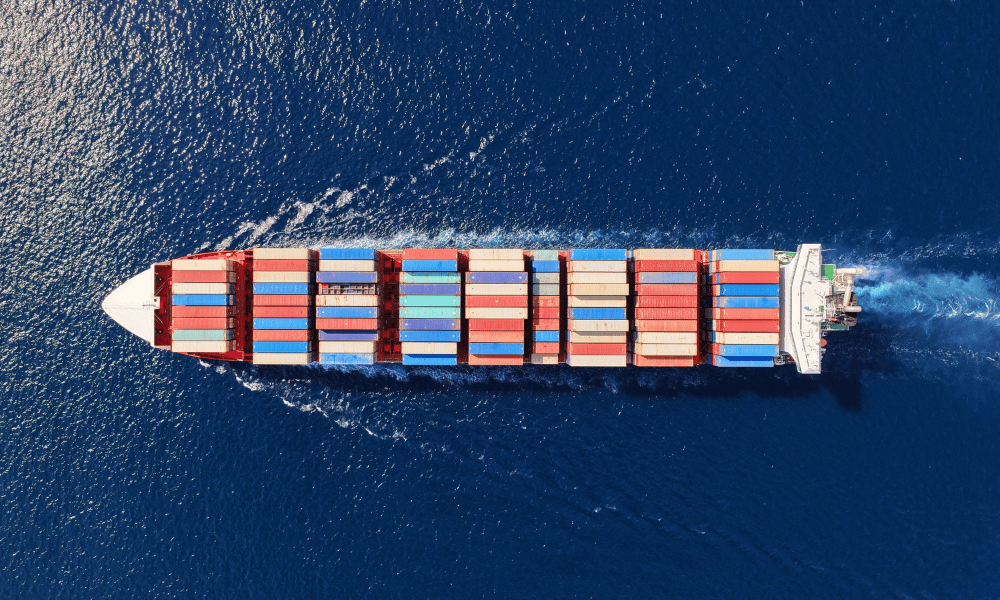
The shipment in question was a container of notebook computers, tendered to COSCO at Hai Phong, Vietnam, on or about September 15, 2025, for delivery to Chicago via the Port of Los Angeles. The complaint states the goods were shipped aboard the CMA CGM TITAN under bill of lading COSU6429322050.
That bill of lading was clean - COSCO's own shipping documents recorded no damage or deficiency at loading. But according to the complaint, the shipment "either was never delivered" at its destination "or was not delivered in good order and condition."
The filing does not describe what went wrong during transit. No storm, no collision, no specific event. Just goods that left in good order and did not arrive that way.
The consignee was Acer America Corporation, the US arm of the Taiwanese electronics manufacturer. The shipper was RQ Technology Electronics. According to the complaint, the cargo owners submitted a claim to the three insurers, who paid it. Having paid, the insurers stepped into the cargo owners' rights - a process known in insurance as subrogation - and filed suit against COSCO to recover what they paid out.
The claimed loss: at least $647,099.47, plus interest and costs. COSCO has not paid any of it, according to the filing.
The insurers are not relying on a single legal theory. The complaint sets out five claims, each framed as an alternative to the others.
The primary claim runs under the Carriage of Goods by Sea Act (COGSA), the federal law that sets the rules for carrier liability when goods move by ocean to or from US ports. If COGSA does not apply, the insurers invoke the Harter Act, an older federal statute covering similar ground. The remaining three claims allege that COSCO broke the shipping contract, failed in its duty as the party entrusted with the cargo, and did not take proper care in loading, handling, stowing, and discharging the goods.
That belt-and-braces approach is standard in maritime cargo recovery. Insurers cast a wide net because the law that applies often depends on which leg of the journey the loss happened on.
The complaint follows a well-worn template for maritime cargo claims, but the specifics give it weight. A clean bill of lading means COSCO's own paperwork said the goods were fine when they were loaded. That matters because under COGSA, once the cargo owner shows the goods were handed over in good condition and arrived damaged or not at all, it falls to the carrier to explain what happened.
For marine cargo claims teams and recovery specialists, the case is a textbook example of the subrogation machinery in motion - cargo policy responds, three co-insurers pay the claim, and the carrier faces a federal suit with its own clean bill of lading front and centre.
The allegations in the complaint have not been tested, and no court has ruled on the merits.