Victoria accounts for 26% of Australia’s national broking workforce – and that workforce is operating in the most claims-intensive market in the country.
New data released September 10 by the Insurance Council of Australia (ICA) shows the state recorded more theft-related insurance claims than any other jurisdiction in 2025-26. Layered on top are a civil liability framework unchanged in nearly 25 years, a stamp duty structure that adds cost to every policy placed, and unresolved questions about how the state handles major disaster recovery.
National Insurance Brokers Association of Australia (NIBA) CEO Richard Klipin said earlier this year that market pressures are already tangible for brokers across Australia. “Climate risk is already putting pressure on affordability, increasing underinsurance, and threatening the ability of too many Australians to protect their home,” he said. In Victoria, crime is compounding that pressure at every renewal.
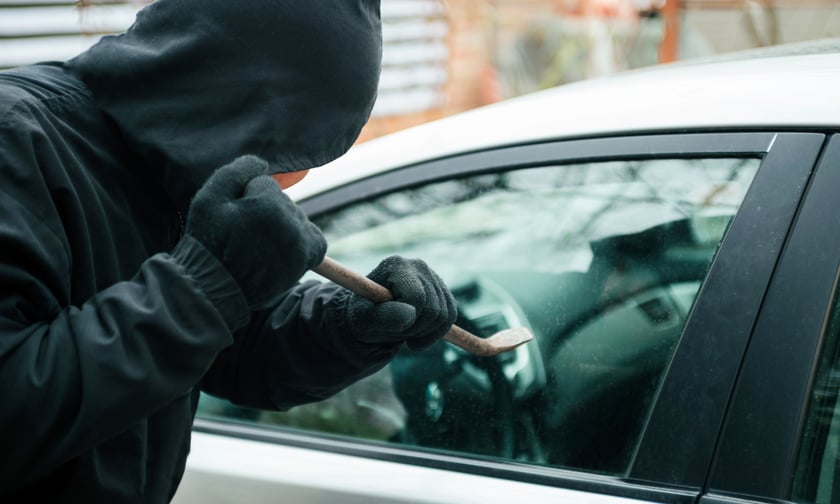
ICA analysis of Insurance Statistics Australia (ISA) data shows Victoria recorded more than 12,300 motor vehicle theft claims in 2025-26, costing insurers $244 million – a 9% increase on the prior year. Every other state and territory recorded a decline over the same period.
The divergence has been building for years. In 2023, Queensland recorded higher vehicle theft losses than Victoria. Since then, Queensland reduced both claims volume and associated costs while Victoria moved in the opposite direction. Over five years, Victorian motor theft claims and costs rose 168% since July 2022.
The non-recovery problem is worsening, too. Insurer Adica – which has a strategic relationship with Toyota Australia – reported that in the first half of 2026, one in four stolen vehicles in Victoria was never recovered, up from one in six in the same period a year earlier – an 88% increase in unrecovered vehicles in 12 months.
Victoria Police data reinforces the broader picture. The force recorded 31,851 stolen vehicles in the year to March 2026 – the highest figure since 2001-02 and double the number from four years earlier, according to the Crime Statistics Agency. Theft from motor vehicles remained the second-most common offence category in the state, with 80,786 offences recorded over the same period.
The commercial consequences are direct. The average collision repair claim in Victoria now sits at $6,980 – the highest in the country. The average comprehensive motor premium is $1,285, the second highest nationally, per ISA data for July 2025 to June 2026.
ICA CEO Andrew Hall said: “In Victoria a car is stolen or broken into every 43 minutes, and a home is broken into every two hours. The insurance data shows Victoria has a crime problem, and it is being felt directly by households, businesses, and communities.”
The ICA also released ISA property theft and burglary claims data publicly for the first time. Victoria led all jurisdictions, with approximately 3,900 property claims costing more than $56 million in the 12 months to June 2026.
The January 2026 Victorian bushfires generated more than $200 million in insured losses across 3,123 claims, with around 30% of property claims assessed as total losses, according to the ICA.
The ICA’s election platform says the state government departed from the coordinated contractor clean-up model used after previous disasters – including the 2019-20 Black Summer fires and the 2022 floods – by limiting government-funded support to uninsured and underinsured households. The ICA says this created inequity between affected residents, reduced support available to insured clients, and left some properties unremediated.
The ICA and the Victorian Department of Treasury and Finance finalised a Memorandum of Understanding with Emergency Recovery Victoria in August 2025, covering data sharing and coordination during emergencies. The ICA says the January 2026 response was not consistent with the consultation aspects of that agreement – a gap that affected how efficiently brokers could progress client claims.
For brokers placing public liability, professional indemnity, and medical indemnity cover, Victoria’s civil liability environment has been deteriorating for years with no legislative response.
The Wrongs Act 1958 has not been substantially reformed since the 2002 Ipp Review. Rising claims costs – particularly around psychological injuries – have eroded the market balance that review created.
Nationally, the average cost of public liability cover has risen by up to 60% since 2019, per the ICA. Some live music venues have seen annual premiums climb from around $15,000 to more than $150,000.
On medical indemnity, the ICA’s analysis of the Australian Prudential Regulation Authority’s (APRA) National Claims and Policies Database shows Victoria’s private medical indemnity market claims costs equalled or exceeded premiums in four of the five years to 2024, averaging 108% against a national average of 85%. The average payment per finalised Victorian claim rose from $29,000 in 2010 to $95,000 in 2024 – well above the national average of $69,000.
The ICA is calling for a comprehensive Wrongs Act review that includes pre-litigation procedures to encourage early resolution, recalibrated thresholds for psychological injury claims, and legislative curbs on claim farming. For brokers placing liability cover, these are the specific reforms to track ahead of November.
Victoria charges 10% stamp duty on general insurance premiums, applied on top of GST. The state collected $2.3 billion through that levy in 2025-26 – the largest of any state, and nearly $600 million more than New South Wales.
Victoria legislated in 2023 to phase out duty on business insurance. The rate on specified classes – including public and product liability, professional indemnity, and employers’ liability – fell to 7% for contracts effected or renewed from July 1, 2026, with full abolition applying from July 1, 2033, per the State Revenue Office. Household policies were excluded entirely.
The result is a disparity brokers are fielding questions about: a business insuring its premises currently pays 7% duty, while the household next door pays the full 10% on top of GST.
The ICA is calling for that phase-out to be extended to household insurance and accelerated ahead of the current abolition date.
The ICA’s election platform, A Safer and Stronger Victoria, covers 10 policy areas. Its headline asks are a statewide motor vehicle theft strategy backed by specialist law enforcement; centrally coordinated, state government-led disaster clean-up; abolition of stamp duty on household and business insurance; and comprehensive reform of the Wrongs Act 1958.
Hall said: “This election is an opportunity for every party to commit to these practical reforms that will make Victoria safer, strengthen disaster recovery, and put downward pressure on insurance costs, and we look forward to working with the next government on exactly that.”
The Victorian state election is scheduled for November 2026.