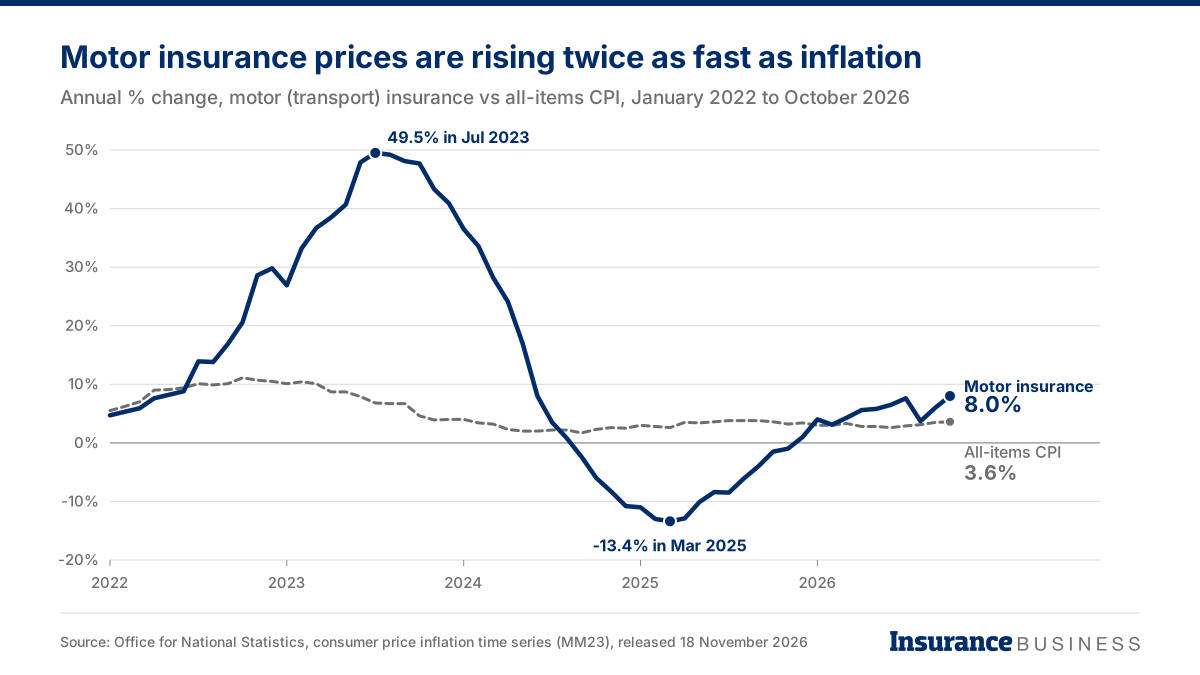
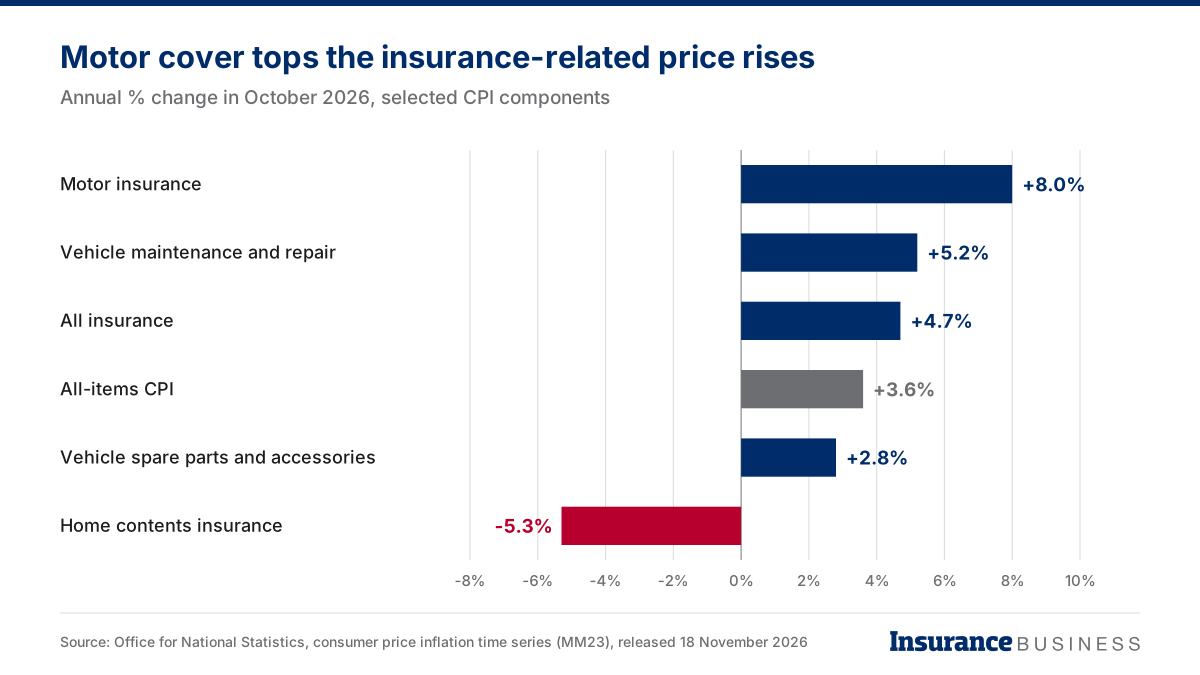
Drivers renewing their car insurance this autumn are paying a premium that the headline inflation figure only half captures. The price of motor insurance rose 8% in the year to October, according to the Office for National Statistics, more than twice the 3.6% rise in the general cost of living.
That is the steepest annual increase in the ONS's transport insurance index, which is largely made up of car cover, since June 2024, and a big jump from 6% in September. Prices rose 1.3% in October alone. In the same month last year, they fell 0.6%.
Headline CPI crept up to 3.6% from 3.5% in September, the ONS's October bulletin shows. It is the fourth monthly rise in a row and the highest reading since September 2025.
Petrol and diesel did most of the damage. Motor fuel prices were up 33.2% on a year earlier, and diesel averaged 199.5p a litre, the highest since the ONS started tracking it in 1996. CPIH, which adds in owner occupiers' housing costs, rose to 3.7%, while RPI hit 4.2%. Core inflation, which strips out energy, food, alcohol and tobacco, held at 2.8%.
Read next: Motor insurance prices rising again after two years of falls
For brokers, the official numbers back up what market pricing data has been hinting at for months. Defaqto's latest index found competitive motor premiums 2.7% higher than a year earlier at the end of September, the first annual rise since 2023. Claims show no sign of easing either. The Association of British Insurers says motor payouts held at a record £3.2bn in the third quarter, 8% up on a year earlier, with the average claim steady at £4,900.
So why does the ABI's own tracker show the average premium paid at £562 in Q3, just 2% higher than a year ago, while the ONS has prices up 8%? The two measure different things. The ABI averages what customers actually paid across millions of policies, so it picks up drivers shopping around, switching to cheaper cover or taking higher excesses. The ONS aims to follow the price of broadly comparable cover over time, which is closer to the rate change a renewing customer feels if nothing else changes.
The speed of the turnaround is striking. Through late 2024 and much of 2025, the ONS measure was falling by double digits, bottoming out at -13.4% in March 2025. It flipped back into positive territory in December 2025 and has stayed there for 11 months running. At 196.5 (2015 = 100), the index now sits about 2% below its February 2024 peak.
Insurers have been clear that prices still have ground to make up. EY has forecast that the private motor market will pay out around £1.08 in claims and costs for every £1 of premium in 2026, and has pencilled in premium rises of 4% this year and 12% in 2027.
Read next: UK car insurance premiums record first quarterly rise in over two years
The cost of putting cars back on the road is not letting up. Vehicle maintenance and repair prices rose 5.2% in the year to October, up from 3.7% a month earlier. Spare parts and accessories offered a little relief, with inflation there easing to 2.8% from 5.1%.
The ONS also flagged roadside recovery as one of the smaller upward pushes within transport this month. None of these consumer price measures maps neatly onto an insurer's claims bill, but they point in the same direction.
Home insurance tells a different story, though the direction of travel is shifting. The ONS's contents insurance index was still 5.3% lower than a year ago in October. That is the smallest annual fall since May 2025, and a marked narrowing from -9.5% in September.
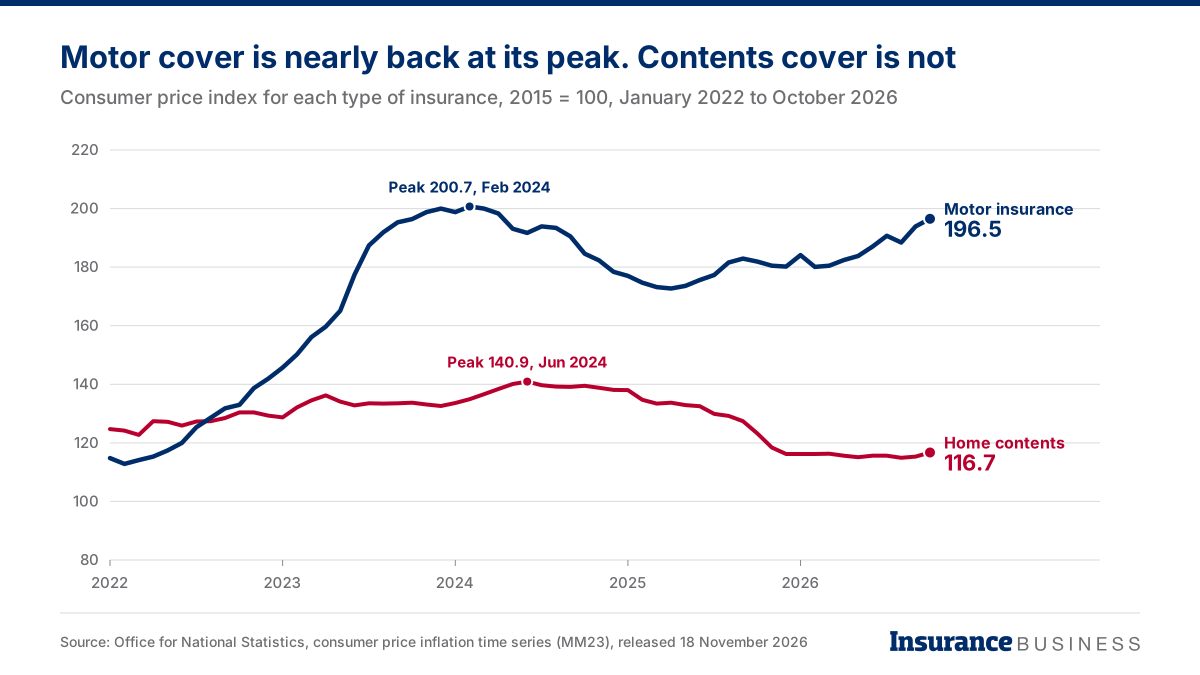
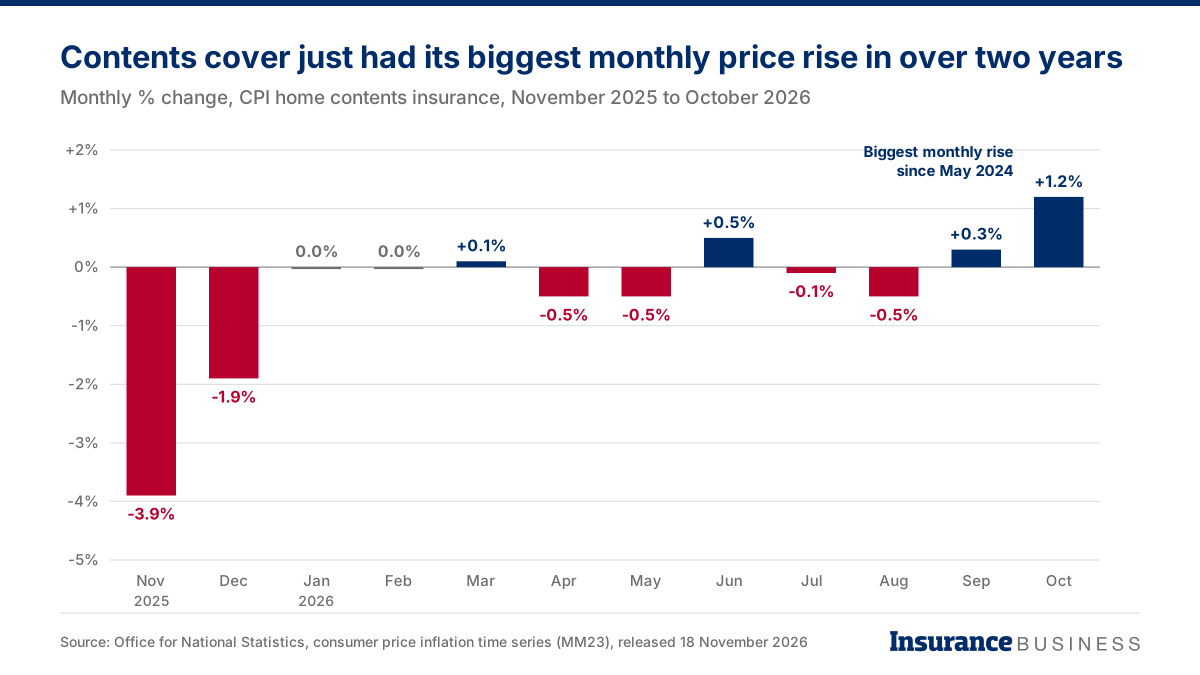
Contents prices rose 1.2% in October, the biggest one-month increase since May 2024. Even so, the index remains roughly 17% below its June 2024 high.
It fits with Defaqto's finding over the summer that most home insurers were quietly nudging rates up, even as headline quoted prices kept edging down.
Read next: Cheaper home insurance masks a market heading toward the red
Taken together, the ONS's overall insurance category, covering motor, home, health and other cover, rose 4.7% in the year to October, down from 5.3% in September. The index itself reached 173.8, its highest level since the series began in 1988.
The backdrop is getting tougher. The Bank of England raised Bank Rate to 4% on 5 November, its first increase since 2023, and expects inflation to reach about 5% by the middle of next year. The Monetary Policy Committee voted 8-1 for the quarter-point rise, with one member pushing for a bigger move.
For insurers, that’s good and bad news. Higher rates lift the return on reserves, but energy-led inflation has a habit of seeping into parts, labour and rebuild costs a few months down the line.
For brokers, the practical upshot is a harder conversation at renewal, particularly on motor. Price movements are also far from uniform, with pricing increasingly diverging by region, age and insurer, so a national average says little about what any single client will be quoted.
The next ONS inflation figures are due on December 16, a day before the Bank's final rate decision of the year.