A weekend of dramatic crashes in Monza and Shanghai put the risks of motorsport firmly back in view. But for James Blair, chief executive of Podium Insurance Brokers, neither incident gets to the heart of the insurance problem facing the sport.
That, he says, is the soaring cost of the cars themselves, and a task force set up to examine rising insurance costs that has yet to engage the brokers and underwriters pricing the risk.
A GT3 car that cost roughly £350,000 in 2016 rose to around £700,000 within three to four years, Blair said, while word in the market is that a new Mercedes GT3 car will carry a price tag of €1.1 million next year. That increase in underlying values, in his view, goes a long way towards explaining rising premiums.
"I don't think it takes a task force to denominate that when you increase sums insured, premiums go up," he said. "It's as simple as that."
That's what makes the FIA's motorsport insurance task force, announced to address rising insurance costs, difficult for Blair to reconcile with what he is hearing from the market.
He said that in conversations with competitors and underwriters, including firms such as Miller, Gallagher and Gullwing, none has been contacted since the announcement.
"Everybody who I talk to, deal with, compete with – no-one has had a message from this FIA task force to ask any of the brokers or underwriters in the market how can we fix this problem," he said.
That raises a fairly basic question: how far can the sport get in tackling insurance affordability without involving the firms that place and price the risk?
Blair's preferred fix looks past pricing and towards structure. He sees manufacturer-run captive insurance as one potential answer, allowing teams to buy cover directly through manufacturers such as Porsche, Mercedes or Ferrari rather than through layers of intermediaries and championship-run parts invoicing.
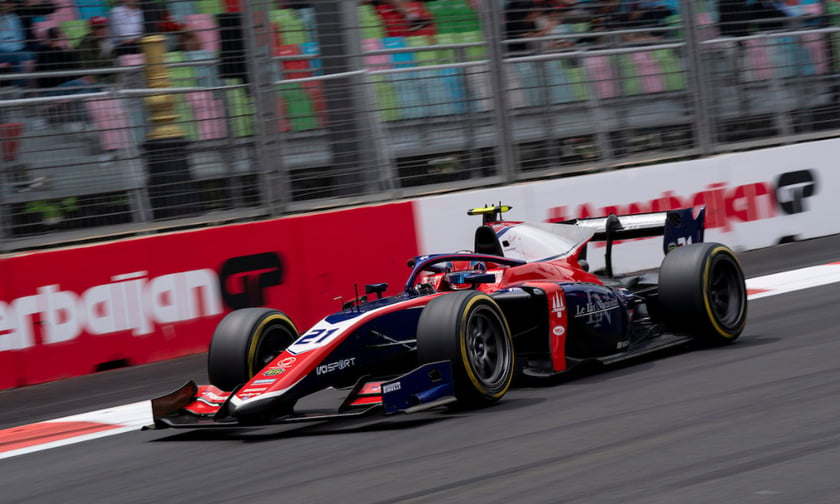
He points to Formula 2, where crash-damage invoices are issued by the championship rather than Dallara, the car's constructor, as an example of a cost structure he believes is difficult to justify.
Whether that consolidation ever happens is, by his own assessment, unlikely. Not because he believes the logic is wrong, but because it would remove revenue from organisations currently positioned between teams and their costs.
The distinction between the value of a racing car and what is actually insurable was on display at Monza this weekend, where Charles Leclerc's Ferrari hit the barrier at Parabolica hard enough to red-flag the Italian Grand Prix.
By Blair's account, however, the damage to the car itself triggered almost nothing in the way of an insurance claim. Formula 1 cars are rebuilt specification by specification for each race weekend, and once a race ends, that bodywork can have little further use to the team.
"Those cars, and more specifically the bodywork on those cars before a specific race weekend, are worth the entire world to that team, to that driver, to that car," Blair said. "The minute the race finishes, the parts on that car are worth almost nothing, because they're not going to use them for the rest of the year."
Insuring that value against crash damage, he argued, would also create precisely the wrong incentive.
"You'd be pretty sure to have a 24-car pileup at the end of every Monaco Grand Prix, just because that would be the best way to get your value back from the parts that you've put the time and money into."
According to Blair, the relevant cover following the crash was instead Leclerc's personal accident policy and Ferrari's third-party and public liability protection, including damage to circuit infrastructure such as barriers, rather than cover for the car itself.
Series with standardised chassis, from Formula 2 and Formula 3's Dallara cars to manufacturer GT3 programmes, present a different proposition because their components retain a more readily identifiable replacement or resale value.
That distinction also helps explain why rising motorsport premiums cannot be separated from what is happening underneath the policy. As car and replacement-part values climb, insurers are being asked to put more capital behind the risk.
For Blair, the unanswered question is why the brokers and underwriters doing exactly that appear, so far, to be missing from the FIA's attempt to find a solution.