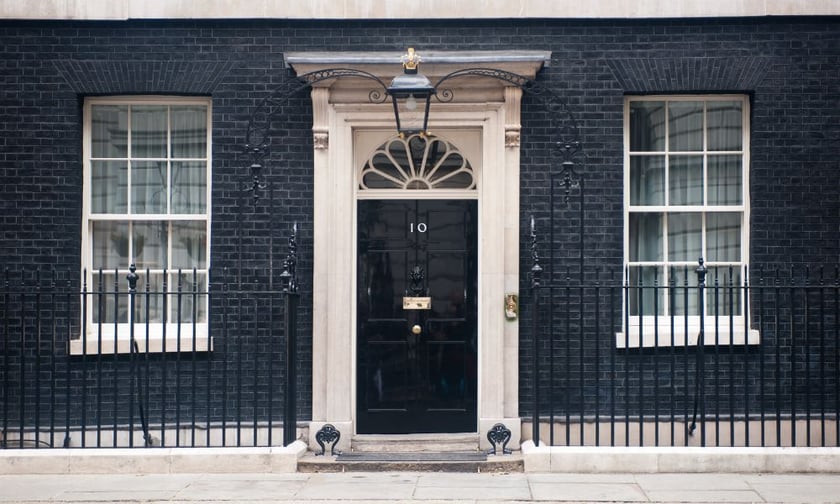
Andy Burnham became the UK's seventh prime minister in a decade on Monday after being invited by King Charles III to form a government following Keir Starmer's resignation. Within hours of his first speech outside 10 Downing Street, insurance leaders were urging the new PM to prioritise economic growth, support the London market and avoid further increases to insurance premium tax (IPT).
Chris Croft, chief executive of the London & International Insurance Brokers' Association (LIIBA), said economic growth should be the government's priority and argued the London market could play a much bigger role.
"The new PM needs to deliver economic growth if he is to have a chance of providing us with 'hope in our hearts'," Croft said. "To do that he needs to recognise that insurance brokers are the engine room of growth. London market is a vital asset to UK PLC, delivering 40% of the City's contribution to GDP. But it has the potential to grow."
Croft argued London remains underrepresented in Latin America, Asia and Africa despite significant growth potential, arguing government trade networks could help brokers expand internationally, a gap LIIBA's 2026 growth agenda had already flagged as a priority for the market.
"Government has the embassy and trade commissioner networks that can be integral to achieving that," he said.
Croft suggested using UK embassies to connect London market firms with brokers and risk managers in priority overseas markets, adding that Burnham should champion the initiative and become Britain's first "Insurance Prime Minister".
Graeme Trudgill, chief executive of the British Insurance Brokers' Association (BIBA), welcomed Burnham's emphasis on regional Britain and said BIBA looked forward to working with the new government.
"BIBA looks forward to working with the new look Government and note the call for a new political and economic model for Britain," Trudgill said. He recalled that Burnham had addressed the BIBA Conference in 2022, adding that the new PM's pledge to "put the care of people at the heart of everything" aligns with how BIBA members approach their customers.
"BIBA's preference on bringing about, or preventing, change is to act in collaboration, which fits well with the new Prime Minister's comments today," Trudgill said.
Around two-thirds of BIBA's 2,000 member offices are based outside London and the south-east, aligning the association with Burnham's regional focus. BIBA wrote to the Chancellor last year making a similar case for regulatory reform ahead of the Mansion House speech.
Away from the trade bodies, reaction from working brokers was more cautious. Simon Rees, director of AE Insurance Brokers, said he did not expect a change of prime minister to bring major regulatory changes for the sector, but suggested insurance premium tax could come under scrutiny if the new government looks to raise revenue.
"I don't see insurance changing," Rees said. "If they're going to raise taxes, insurance premium tax is probably one that might be under scrutiny. But in terms of regulation within the sector, I don't see a great deal changing."
IPT, introduced in 1994 and last increased in 2017, has been raised several times since.
Rees added that, after years of political change, businesses would benefit from greater stability.
"In business, as in life, stability and continuity is a great thing," he said. "Hopefully he's an able politician. We need somebody with a bit of nous."
Across the market, the message was broadly consistent: deliver growth, provide stability and recognise insurance's role in the wider economy.