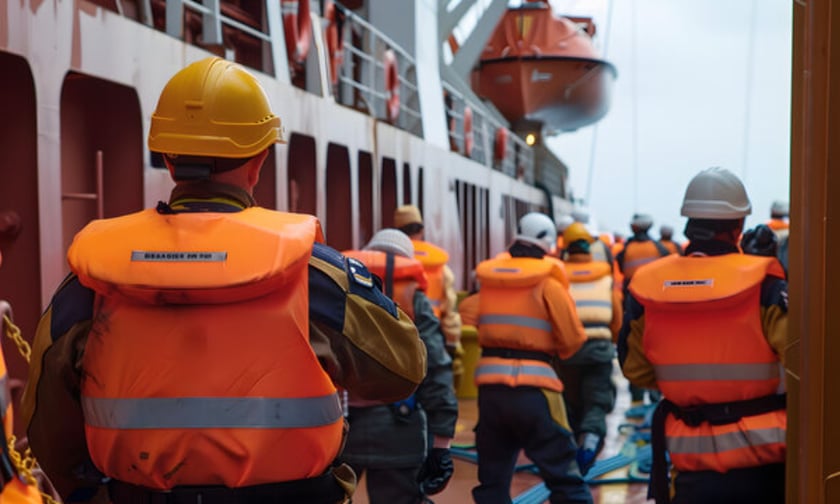
More than four in five crew deaths reported to Britannia P&I Club were caused by illness rather than accidents, according to a new analysis of nearly 3,000 crew-related claims, prompting the Club to call for greater industry focus on preventative health, cardiovascular wellbeing and mental health support.
The Club's Crew Claims Report, developed with maritime medical specialist Katherine Sinclaire of MedSea, found that 81% of crew fatalities were illness-related, against 19% resulting from injury. Cardiovascular conditions alone accounted for 58% of illness-related deaths, making them the single largest cause of crew fatalities in the analysis.
The findings drew on claims reported during the 2023/24 and 2024/25 policy years.
Britannia's figures sit alongside similar findings from other International Group clubs. Gard's own 2024 Crew Claims Report found 74% of registered fatalities were due to illness, a proportion Gard noted correlates closely with World Health Organization data showing that non-communicable diseases, led by cardiovascular disease, cause 74% of all deaths globally.
Lockton's own market-wide analysis of the P&I sector has separately noted that suicide remains the leading single cause of death at sea across the wider International Group, reinforcing that illness and mental health, rather than operational accidents, dominate the crew fatality picture across the sector generally, not just at Britannia specifically.
Britannia's report identified a specific and concerning pattern around mental wellbeing: suicides and incidents of seafarers missing at sea disproportionately affected younger crew members.
While the Club said the number of cases involved remains relatively small, it noted that a similar pattern has emerged across a broader four-year dataset, reinforcing the case for targeted support and intervention specifically aimed at younger seafarers rather than a generic, age-blind approach to mental health provision.
The report drew a clear distinction between the causes of claims overall and the causes of fatalities specifically. Illness accounted for 60% of all crew claims, compared with 36% for injuries and 4% for fatalities, meaning the vast majority of claims involve non-fatal illness that never escalates to a life-threatening outcome.
Among injury claims specifically, hand and finger injuries remained the most common onboard injury type, accounting for 27% of injury claims, illustrating that the most frequent operational risk on board is not the same as the most dangerous one. More than a third of injury-related fatalities specifically involved man overboard incidents, a comparatively rare event type that nonetheless carries a disproportionately high fatality rate once it occurs.
On the illness side, abdominal conditions were the largest category of illness claims overall, with dehydration-linked kidney stones flagged as a notable concern for seafarers working in hot environments, a practical, preventable risk tied directly to onboard hydration practices rather than a generalised health concern.
Jacob Damgaard, head of loss prevention at Britannia P&I Club, said maritime safety is often viewed through the lens of accidents and operational incidents, but the Club's claims analysis reveals a different reality, with the majority of crew fatalities linked to illness, particularly cardiovascular disease, pointing to the need for a broader approach to crew welfare centred on long-term health and prevention. He said the findings on younger seafarers and mental wellbeing are a reminder that protecting crews requires attention to psychological and personal challenges, not just physical safety.
Damgaard said Britannia's focus is on helping members move beyond compliance toward a proactive safety culture where prevention is embedded into everyday operations, adding that sharing lessons from claims data is intended to help shipowners and crews reduce risk and prevent avoidable harm.
The report also emphasised effective risk assessment, safe manual handling, strong communication and consistent personal protective equipment use as practical measures addressing the operational injury risks the data does identify, alongside its broader health and wellbeing recommendations.
What this data does, more than anything, is challenge where the maritime industry's safety attention has traditionally been concentrated.
Decades of onboard safety culture have understandably focused on preventing the kind of accidents, falls, machinery injuries, man overboard incidents, that are visible, sudden and directly tied to operational practice.
Britannia's figures, echoed by Gard's own comparable findings, suggest the bigger fatality risk sits somewhere far less visible. A seafarer's cardiovascular health, built up or eroded over months and years at sea, and a younger crew member's psychological state, both of which require sustained monitoring and support rather than a one-off safety briefing or PPE check.