Marine and energy liability risks have rarely been harder to disaggregate. The Strait of Hormuz closure earlier this year left around 1,150 cargo-carrying vessels stranded in the Persian Gulf, simultaneously triggering hull war, cargo, and energy liability claims across lines that have historically sat in separate underwriting silos. Markel International is not waiting for the next crisis to stress-test that structure.
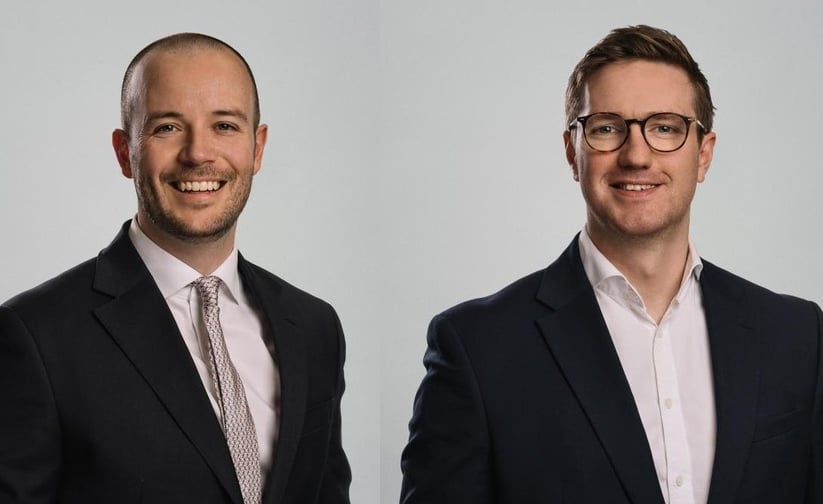
The specialist insurer has appointed Dean Johnson (pictured, left) as head of transport and logistics and Rhys O'Neill (pictured, right) as head of marine liability within its marine transportation business. Both are London-based and report to Grant Smith, who was named director of marine transportation in July.
Both are internal promotions. Johnson joined Markel in 2025 from Travelers, where he spent 14 years in transport and logistics underwriting, product development and broker expansion across the London market and internationally. At Markel, he has been underwriting ports, terminals, marine trades, cargo liability, and marine professional indemnity globally.
O'Neill brings more than 15 years of liability underwriting experience across Lloyd's syndicates and P&I clubs. He joined Markel two years ago as a senior underwriter for marine and energy liability and has since managed the M&E portfolio and become a senior referral point for complex risks.
The marine transportation business was established earlier this year to bring Markel International's hull and hull war, MECO, marine and energy liabilities, and transport and logistics classes under a single leadership structure. The commercial logic is that when a vessel is stranded in a contested waterway, the exposure crosses multiple class boundaries at once, and brokers placing those risks need underwriting decisions across all of them without being passed between teams.
"The marine transportation industry is facing heightened risk exposures, from increasing supply chain disruptions to rising thefts at ports as geopolitical tensions escalate worldwide," said Dan McCarthy, managing director of marine, energy and construction at Markel International. "As these risks become more interconnected, it's increasingly important that brokers and clients can access expertise across the full spectrum of marine and transportation exposures."
The backdrop bears that out. The Hormuz crisis, which began in late February 2026 following US and Israeli strikes on Iran, generated hull war, cargo and energy liability claims simultaneously, with war risk premiums in the Persian Gulf rising roughly tenfold from pre-conflict levels, according to S&P Global data. Marine claims costs per vessel, meanwhile, had already been running 33% above pre-pandemic levels before the conflict began, according to Cefor's 2025 Nordic Marine Insurance Statistics report, with machinery damage and fire the primary drivers.
Smith will oversee both teams as they grow the T&L and M&E portfolios. Johnson said he would focus on strengthening cohesion between underwriting teams and broker partners to provide clarity of coverage for vessel owners and terminal operators. O'Neill said his priority would be ensuring brokers continue to receive a high level of service while delivering more tailored solutions for emerging marine and energy liability exposures.