The Swedish Club has reported a strong first-half 2026 financial performance, with an underwriting result of $3.6 million, up from $2.6 million in the same period last year, and a combined ratio that improved to 96% from 97%.
The mutual marine insurer said the result reflects continued sound technical performance despite an operating environment shaped by geopolitical uncertainty, regulatory change and evolving maritime risks.
The Club's investment portfolio contributed a stable $11.1 million year-to-date return, equivalent to 2%, of which $8.6 million came from equities. Combined with the underwriting result, the overall result before appropriations and tax reached $14.1 million. Free reserves stood at $282 million as of June 30, 2026, which the Club said reinforces its financial position and provides a foundation to absorb volatility.
This result continues a pattern of steadily strengthening combined ratios across recent reporting periods.
The Club's full-year 2025 combined ratio came in at 97%, itself an improvement on 98% the year before, while free reserves climbed from $216 million at the end of 2024 to $270 million by the end of 2025. Prior to that recovery, the Club posted a 102% combined ratio in an earlier reporting period, with managing director Thomas Nordberg at the time describing the business as "quietly pleased" while working to regain its A rating with Standard & Poor's. The current 96% combined ratio and $282 million in free reserves represent the strongest position in that multi-year trajectory.
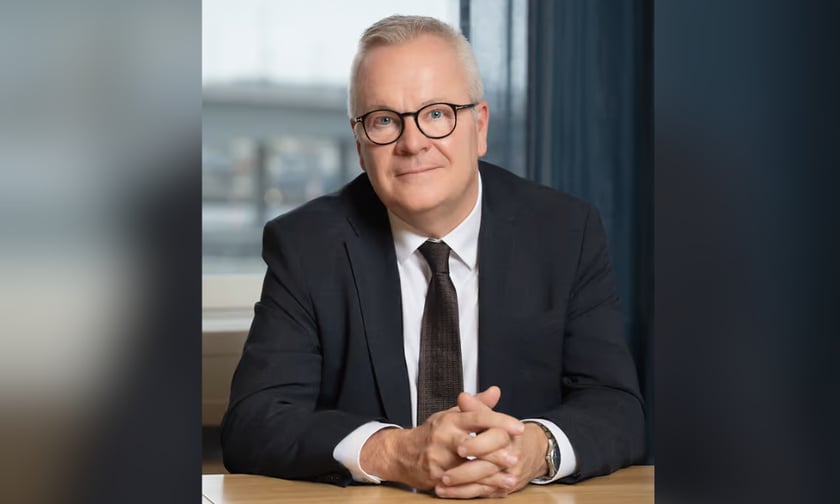
Thomas Nordberg, CEO of The Swedish Club, said the Club's priority is to remain financially strong so it can deliver lasting value to members over the long term, adding that the results reflect continued focus on disciplined underwriting, prudent financial management and maintaining the resilience members rely on.
He said that in today's increasingly complex and uncertain operating environment, that resilience is more important than ever and remains an enduring strength of the mutual model.
Beyond the financial results, the Club highlighted a strategic cooperation launched in June 2026 with DNV Cyber and CyberOwl, giving its roughly 1,000 insured vessels access to quarterly cyber threat insight and risk updates covering emerging threats, vulnerabilities and lessons from past incidents.
Tord Nilsson, the Club's regional director and head of reinsurance, who played a key role in developing its cyber insurance product, said cyber risk is increasingly becoming an operational challenge for shipping rather than a purely technical one, given the industry's growing dependence on digital systems.
The partnership is designed to complement the Club's existing marine cyber insurance offering rather than replace it, combining insurance protection with practical awareness and preparedness support.
Nordberg said financial strength is not an objective in itself, but enables the Club to keep investing in the people, expertise and services that help members manage risk and operate safely, calling that long-term perspective central to everything the Club does as a mutual insurer.
Three consecutive periods of improving combined ratios, alongside a near-tripling of free reserves from the low point around $216 million to the current $282 million, suggests the Club's underwriting discipline has become a sustained pattern rather than a single good year.
That matters more than usual given the Club's own framing of the current environment: geopolitical uncertainty, regulatory change and evolving maritime risk are not generic caveats in the marine mutual sector this year, given active conflict-related war risk exposure and the sharp rise in maritime cyber incidents the Club's own DNV Cyber partnership is designed to address.
A mutual insurer building reserves and improving technical performance during exactly this kind of environment is better positioned to absorb a genuinely bad claims year than one relying on investment returns or premium increases alone to carry it through.