London's insurance market has weathered nearly 340 years of change, from Edward Lloyd's coffee house to today's electronic placement platforms. New research from the London & International Insurance Brokers' Association (LIIBA) treats artificial intelligence as the next chapter in that story.
Drawing on contributions from LIIBA's board and executive committee, as well as four workshops with brokers who have spent fewer than three years in the market, the research envisages trading shaped by "humans augmented by data" rather than technology replacing human judgement.
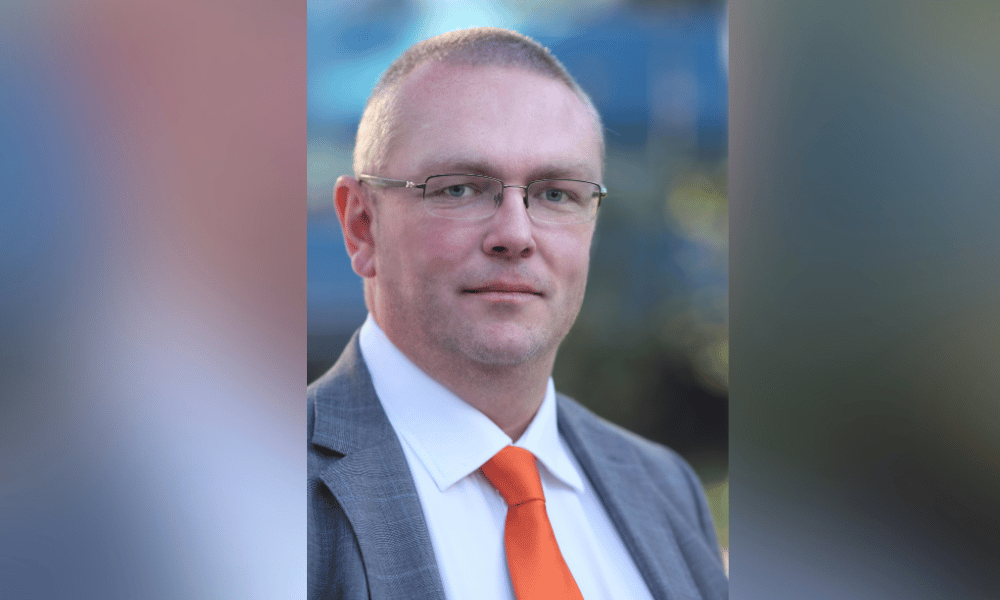
"Digital trading is talked about constantly, but too often the debate starts with the technology rather than the people who actually trade," Christopher Croft, chief executive of LIIBA, said in the report. Speaking to Insurance Business UK ahead of its publication, he set out what that could mean in practice, and where its limits lie.
The clearest illustration is a scenario in which AI commits capital to a deal before a human underwriter has agreed the terms. Some LIIBA members are already piloting AI engines that draw on a prospective client's public data to assemble an insurance portfolio backed by pre-agreed capital before a pitch is made.
One board member told researchers that London's brokers could increasingly become "hunter gatherers", spending less time on daily placement in the office and more time sourcing business abroad. How far the automation itself will go divided LIIBA's contributors.
"There is a school of thought that says lead lines will always, for complex business, be negotiated by human beings. But there is equally a school of thought that thinks there will be some risks that are completely automated," Croft said.
Whichever camp proves right, LIIBA expects execution to become quicker and require less manual intervention, creating time Croft wants redirected towards the market's underinsurance problem rather than treated purely as a cost-saving measure. UK businesses are already being left exposed by gaps in insurance understanding and outdated valuations.
"In a world which is systematically underinsured, the obvious thing to do with more time is to try and persuade people who don't buy insurance currently that they should buy insurance – especially if you're addressing the issues that stop people buying insurance, particularly cost, by bringing the cost down," he said.
That would shift the broker's role away from manual execution and towards helping clients understand increasingly sophisticated placements.
"It really enhances the role of the intermediary because it makes it a much more sophisticated trade and people will need that explaining to them. So more than ever, they'll need the expert support from their broker."
That expert support is precisely what LIIBA's contributors were most protective of. Established members questioned whether firms, trading partners and clients would allow an opaque system to make decisions unsupervised when their reputations were at stake, while other researchers noted that they were more likely to distrust the technology itself.
He attributed the split partly to incentives: executives closer to the profit and loss account are more open to AI operating unsupervised because it could reduce costs, while early-career brokers worry about losing the client interaction they value, or their jobs altogether.
"If we accept that what we sell is not a product, it's a service, and our members sell peace of mind to their clients, then you need people to do that," he said.
That caution is informed by experience. The research describes Blueprint 2 and its predecessors, the Target Operating Model and CSRP, as having been "too grand in their ambition and not rigorous enough in their execution", a history LIIBA cites in arguing that any shift towards index-based, derivative-style trading must be judged by client outcomes rather than technical ambition.
It would also raise new regulatory questions for a market already under closer FCA scrutiny than many brokers may realise. Croft plans to raise the issue with the Financial Conduct Authority following the report's publication, since derivative-style trading could sit under different rules from those governing insurance today.
The vision also rests on an assumption LIIBA acknowledges it has not tested: that trading risk this way would cost next to nothing to operate. Asked what happens if that assumption proves wrong, Croft did not hedge.
"If it turns out to be phenomenally expensive to trade derivatives or to maintain the indices that allow you to, then that really starts to erode the efficiency of it," he said.
If people are to remain central to trading, LIIBA still has to explain how the next generation of brokers will learn the job once AI absorbs more administrative work. Simple endorsements and slip-building have traditionally taught brokers how to structure a risk and helped them build the networks they may trade on for decades. The challenge comes as talent has overtaken AI as UK brokers' leading concern.
"How they developed their careers was to start off doing simple admin-y things, which teaches you things like how to structure a risk. It also exposes you to the network – it's how you develop your network and the people that you grow up with in the market and trade with, and they're still trading with today," Croft said.
LIIBA does not yet have an answer, though Croft argued the profession has reinvented its training model before. "People in 1688 didn't learn how to become brokers by doing simple endorsements. So we've evolved previously. We should trust in our ingenuity that we'll evolve again," he said.
The research is intended to begin that discussion rather than settle it. Its central argument is that faster, more automated trading need not favour only the largest firms, provided brokers of every size can combine technological efficiency with the expertise and trust clients still expect.