A 21-point gap between how employers and employees view the adequacy of workplace benefits is driving talent attrition and leaving money on the table, according to new research.
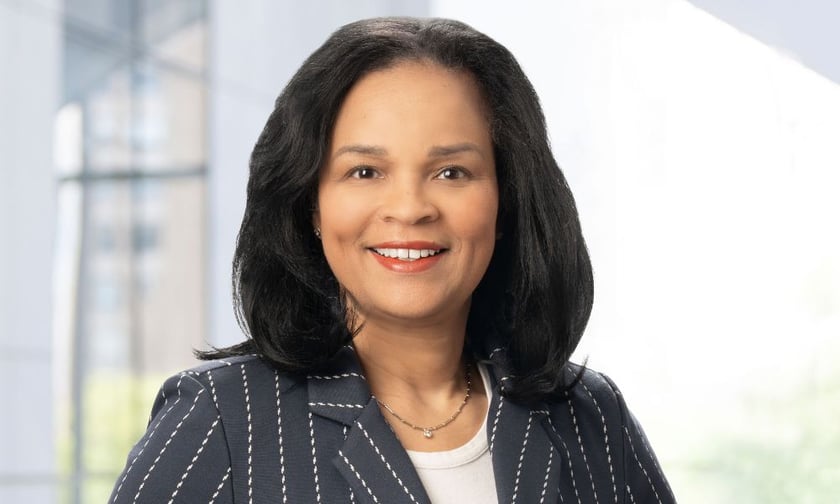
Bianka Douglas, vice president and people business leader for the workplace benefits division at Prudential Financial in Newark, New Jersey, says the fix is not adding more benefits, it is understanding the workforce you already have.
"Employers are now realizing more and more we have to look at things differently," Douglas told Insurance Business Benefits. "Demographics, households look different. You have to almost look at even the whole lifecycle – what I might have needed 10 years ago is very different than what I might need five years from now."
Prudential's annual workplace benefits study, which surveyed thousands of US employers and employees ahead of the 2026 open enrollment season, surfaces a stark disconnect.
While most employers believe their benefits packages are meeting employee needs, barely half of employees agree. It’s a finding Douglas described as "not too surprising" but nonetheless significant.
She attributed the divide to a fundamental mismatch between static, traditional benefits structures and a workforce whose composition and life circumstances have shifted dramatically.
The average American household today looks nothing like the mid-20th century template around which many group benefits packages were originally designed. Single-parent households, dual-income families, multigenerational living arrangements, employees caring for aging parents alongside young children all require a more flexible, lifecycle-sensitive approach.
But the research points to an even more fundamental problem, that employers are simply not asking employees what they need.
That failure to ask, Douglas suggested, is a leadership and culture problem. Benefits conversations can serve as an entry point to a broader cultural shift toward employee empowerment and two-way dialogue.
"That in turn has a direct link to culture," she said. "And tying it to your talent strategy and your recruiting strategy – it goes into the whole lifecycle in terms of what keeps employees."
Cost pressure is the defining tension in US group benefits right now. Healthcare costs for employer-sponsored plans have risen sharply in recent years, and benefits brokers are under increasing pressure from employer clients to contain renewal costs while still attracting and retaining workers in a competitive labor market.
The Kaiser Family Foundation's 2025 Employer Health Benefits Survey found that the average annual premium for employer-sponsored family coverage has risen by more than 50 percent over the past decade.
Douglas's solution is that rather than layering on new options, employers should step back and rationalize what they already offer.
"Not looking at it as an additive, but let's step back and say what meets the needs of our workforce, so that you can manage the cost within there," she said. "If you just add more things to what exists already, then cost will be a challenge."
The Prudential data offers a practical baseline for that rationalizing process. Employees who report that their benefits meet their needs are substantially more likely to have access to employer-paid leave, employee assistance programs (EAPs), disability, and life insurance.
Douglas said those core benefits function as a baseline that employers should protect, and think twice about cutting, when facing renewal pressure.
Even the most thoughtfully designed benefits package fails if employees cannot navigate it at enrollment time. Prudential's research found that more than half of employees say they are very or extremely interested in decision-support tools including artificial intelligence to help them choose the right benefits. Actual adoption, however, lags well behind that expressed interest.
"We need to really look at ways to leverage AI tools, apps, simplification, right? Because the more diversified the benefits become, the more that people want to understand them and make choices," Douglas said. "I think we're in a moment where everyone's learning to warm up to the idea of AI and using technology and tools, and this space is just an additional one."
She noted that AI-assisted decision support in the benefits space ranges from tools that ingest personal identifiable information to generate tailored recommendations, to simpler comparison tools that work from generic inputs and help employees identify which options suit their situation.
But privacy concerns shape how far employees are willing to engage with the more personalized end of that spectrum.
What the research has not yet surfaced, Douglas said, is employers using AI to assess which benefits to offer their workforce in the first place.
For benefits brokers, the enrollment technology gap represents both a challenge and an opportunity. As Douglas put it, educating employer clients and being hands-on in educating the workforce itself is where brokers have a stronger role to play.
"If people aren't enrolling, find out why. Have we explained it? Is it simple enough?" she said. "You can develop all the strategic stuff against the employee population, but if they don't understand it, it's too hard to navigate – they're not enrolling. It's for what end?"
Asked what single insight from the research should prompt benefits advisors to rethink how they design or communicate a client's next renewal strategy, Douglas said “simplification.”
"If we don't keep it simple where it's digestible and people can understand it, all the work done to come up with the benefits options gets lost when it's time to enroll. If people don't understand or it's overwhelming, or we're not leveraging tools for enrollment," she said.
The Prudential data does not point to a magic number of benefits options that should be available to be considered simple or otherwise.
"I think if it does come down to: are they diversified enough and simple to understand?" Douglas said. It is a question of quality and clarity, not quantity.
Looking ahead to the next five years, Douglas said the research signals a clear directional shift away from traditional benefits structures and toward a more dynamic, technology-enabled benefits platform that reflects how the world is evolving.
With Social Security's long-term funding outlook drawing increasing concern – the Social Security Board of Trustees' most recent annual report projects the Old-Age and Survivors Insurance trust fund will be depleted by the mid-2030s without legislative action – brokers and their employer clients have reason to think carefully now about what a more comprehensive, lifecycle-oriented benefits platform will need to look like by the end of the decade.
For benefits brokers preparing client strategies this fall, Douglas advises starting by asking employees what they need, keeping the offer simple enough to use, and make sure enrollment is supported by the tools and education that make choosing (not just offering) possible.