A $5 monthly fee is now buying some American workers the predictable prescription costs their health plan was meant to provide.
Amazon's RxPass launched in January 2023 as a $5-a-month add-on for Prime members. It covers commonly prescribed generics for more than 80 conditions and includes free delivery. Amazon has since opened it to Prime members on Medicare and expanded it to 48 states.
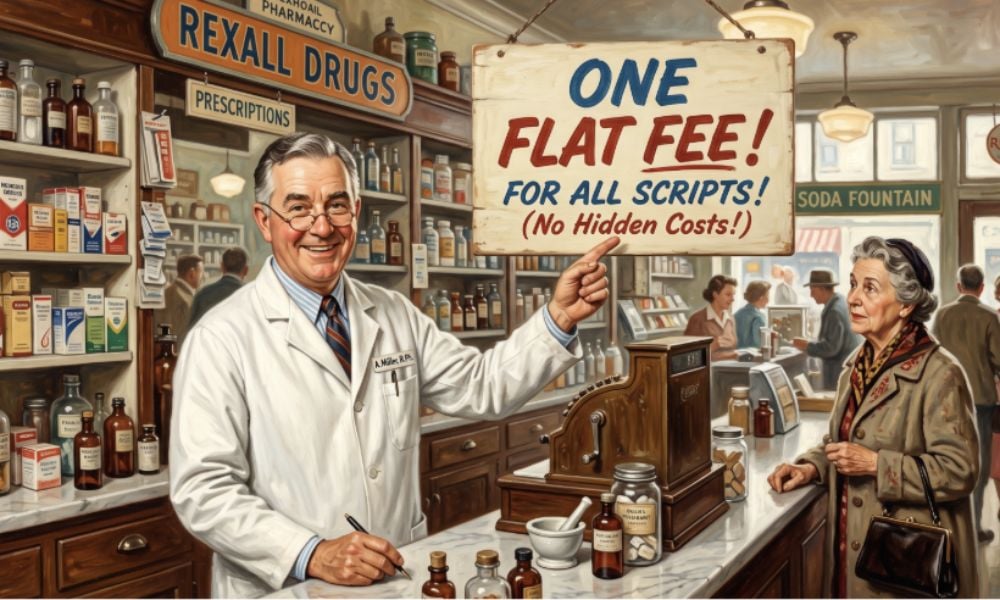
GoodRx launched its $14.99-a-month Companion plan in May. It includes more than 200 common generics at no charge, hundreds more for under $10, $19 telehealth visits, and discounts on dental, vision, lab and imaging services. The company is marketing it to people whose out-of-pocket costs keep rising even though they have insurance. Mark Cuban's Cost Plus Drugs and several smaller companies are competing for the same customers.
The companies describe their products as add-ons to insurance. In practice they compete with the pharmacy benefit on price, and they are growing as employer plans head into an expensive renewal season.
Read next: Health benefit costs to jump 8.2% in 2027, highest since 2003
Marsh projects total health benefit cost per employee will rise an average 8.2% in 2027, the steepest increase since 2003, and 11% if employers make no plan changes. Aon puts the rise at 9.5%, taking average cost per employee above $19,000 before plan changes. WTW's preliminary figure for employers that take no action is 11.1%.
Workers are already paying more. Aon estimates their out-of-pocket costs averaged about $2,167 in 2026, 10% higher than in 2025. That is the cost the subscription companies advertise against.
Drug spending is rising fastest. Segal's annual survey of insurers, PBMs and TPAs projects prescription costs will climb 11.5% in 2027.
Read next: Employer health costs near 15-year high as billing pressures mount
The individual market is under more strain. 2026 is the first year since 2020 without enhanced federal premium tax credits, and every state except New Mexico recorded lower ACA Marketplace enrollment, according to KFF. CMS figures showed nearly 3 million fewer marketplace enrollees in February 2026 than a year earlier. Some of those people will join employer plans as new hires, spouses or dependents, and some will already be used to buying drugs for cash.
GoodRx's subscription business had been shrinking. Subscription revenue fell 3% in 2025, to $83.8 million, as the number of plans declined. It reversed in 2026. According to the company's second-quarter filing, subscription revenue rose 39% to $28.5 million, mainly from condition-specific programs, weight loss in particular. Subscription plans grew 14%.
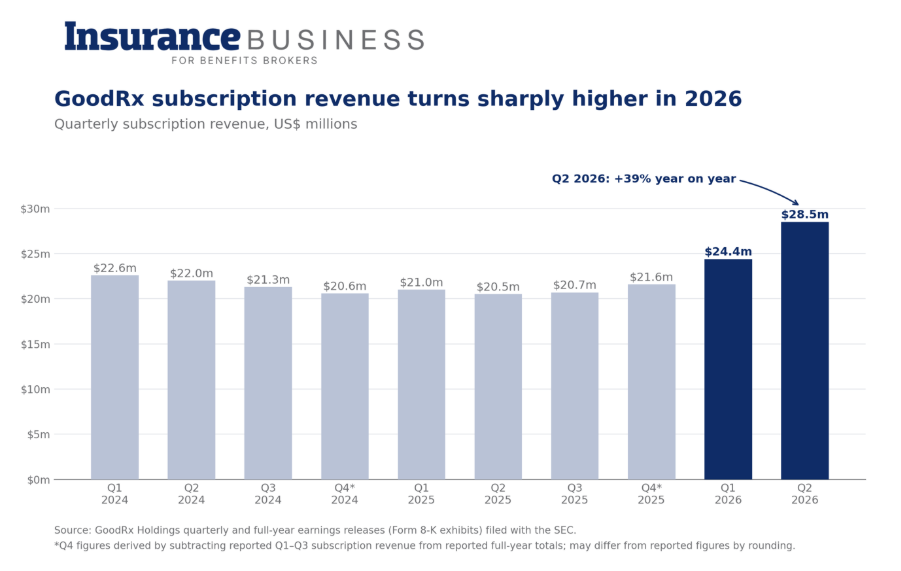
The weight-loss growth is the part brokers should watch. It comes as more employers drop GLP-1 obesity coverage and some employees look for other ways to pay.
Read next: Employers cut GLP-1 coverage as pharmacy costs hit 25% of health spend
Amazon doesn't publish RxPass enrollment. Amazon Pharmacy vice president John Love told Reuters this week that the customer base has nearly tripled since launch and that more than 70% of users fill three or more medications through the program. He also said many users have insurance but choose to pay cash.
The drug lists are still short. RxPass covers about 50 generics. Cost Plus Drugs has no subscription fee; it prices each drug at its acquisition cost plus a 15% markup, plus pharmacy labor and shipping fees.
For many individual employees these plans save money. The concern for brokers and plan sponsors is what happens to the benefit when prescriptions are filled outside it.
Deductibles are the most immediate issue. When the federal TrumpRx cash-pay site was announced, Marsh McLennan Agency noted that such purchases get no tracking or credit toward a member's deductible or out-of-pocket maximum. Subscription fills generally work the same way. An employee on a high-deductible plan can save on generics early in the year and still owe the full deductible when a large medical claim arrives later.
There are exceptions. Cost Plus Drugs says it works with select groups so claims can be submitted to the member's insurance, which may count toward the deductible or out-of-pocket maximum. Brokers should ask whether a client's PBM or carrier has a similar arrangement.
Claims data is the second issue. Prescriptions filled outside the plan do not reach the PBM or the employer's analytics. Adherence programs, disease management and stop-loss underwriting all depend on that data. An employee filling metformin through a subscription can look, in the claims file, like someone who stopped taking it.
Employee behavior also tells brokers something about the plan. Aon has cautioned that patients may buy GLP-1s directly when their plan excludes them or when cost-sharing exceeds the cash price. If a client's employees are doing this, the pharmacy benefit is probably priced or designed in a way they don't value.
Read next: Drug spend now eats a third of employer claims
GoodRx is already selling to employers. In February it launched Employer Direct, which lets employers subsidize manufacturers' discounted cash prices for high-cost brand drugs, including GLP-1s.
The product is built to sit alongside the existing health plan. As an administrator for Eli Lilly's employer program, GoodRx also offers self-insured employers Zepbound KwikPen at a set $449 across all doses, which employers can subsidize further.
Other employers are looking outside the standard supply chain too. According to Business Group on Health data, 17% plan to buy GLP-1s through direct-to-employer arrangements that bypass the PBM.
Federal rules are changing as well. The Consolidated Appropriations Act, 2026, will require PBMs to pass 100% of rebates and related payments through to ERISA group health plans. Most provisions apply to plan years starting on or after January 1, 2029. KFF's summary of the federal PBM reforms is a useful starting point for clients.
Read next: PBM market shift starts with small employers, survey finds
Brokers preparing for renewal meetings can put several questions to carriers and PBMs:
Read next: The PBM conflicts brokers should be talking to clients about
Amazon's plans go beyond generics. Since 2023 it has offered Prime members discounted memberships at its One Medical primary care practices. Analysts see RxPass mainly as a way to bring customers into Amazon Pharmacy and keep them in Prime.
More employees are now comparing cash prices with their plan's cost-sharing, and plans that come out worse on that comparison will lose some of that spending.