What happened: GEICO alleges two DME shell companies billed $1.9 million for medically unnecessary equipment prescribed to fender-bender victims through forged prescriptions
Who's involved: GEICO (plaintiff) against two DME supply companies and their listed owners
What's at stake: More than $666,000 already paid, plus $952,000 in pending claims GEICO wants declared void
Why it matters: The filing maps a playbook for rotating shell DME entities to evade insurer scrutiny under New York No-Fault
Where it stands: Complaint filed September 28, 2026; no response on record
Two durable medical equipment companies, supposedly run by different people in different parts of the New York area, used the same phone number on their delivery receipts.
That detail sits near the middle of a 70-page complaint GEICO filed on September 28, 2026, in the US District Court for the Eastern District of New York - but it is the thread the insurer says unravels the whole operation. The filing alleges Austin Supply Inc. and Mr. DME Inc. were shell companies controlled by an unidentified "secret owner" who used them in rotation to submit more than $1.9 million in what GEICO calls fraudulent No-Fault insurance claims for medical equipment that was either never needed, never properly prescribed, or never worth anything close to what was billed.
According to the complaint, GEICO has already paid more than $666,000 on those claims. Another $952,000 in charges remain pending.
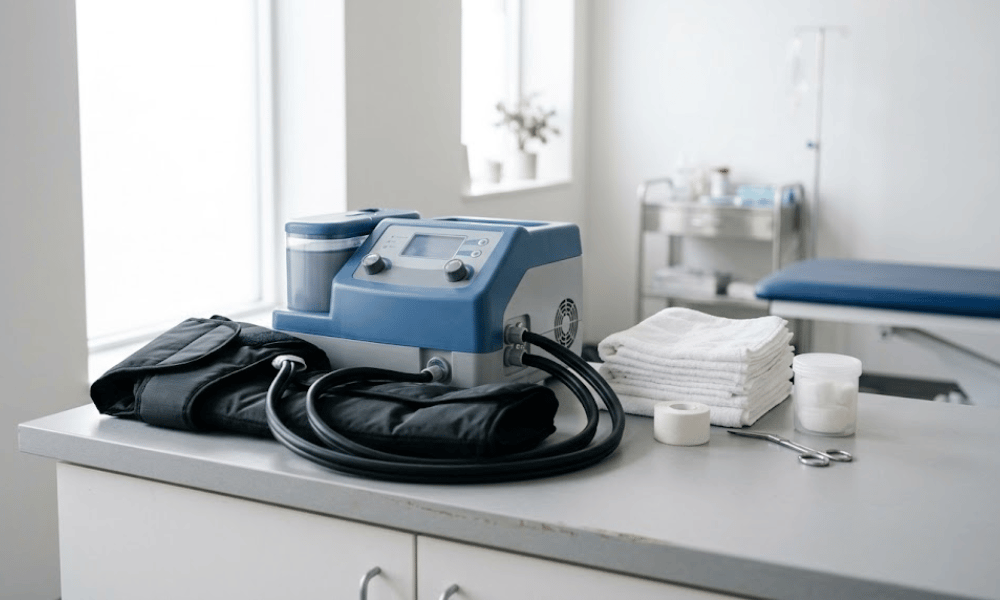
The filing describes a tight pattern. Both companies billed exclusively for two types of equipment - cold compression therapy systems at $3,100 each and laser therapy devices at $3,750 each - using the same catch-all billing code, one designed for items so rarely prescribed that they carry no standard price cap, according to the complaint.
Both companies sent their bills through the same third-party firm - Billing Experts, Inc. in Brooklyn - and both drew the bulk of their prescriptions from providers linked to a single medical practice, the filing states. That practice and its listed physician-owner have been sued by other auto insurers over alleged fraud involving similar billing and treatment patterns, the complaint says, citing three prior federal cases.
The two companies operated in sequence, according to the filing. Austin Supply billed GEICO from May 2024 through November 2025, submitting more than $780,000 in claims and collecting more than $351,000. Mr. DME picked up from September 2025 through February 2026, submitting more than $1.1 million and collecting more than $315,000. The overlap was a transition window, the complaint says - the billing shifted from one entity to the next in what GEICO describes as a "quick hit" strategy designed to keep the volume through any single company under the radar.
The complaint alleges the equipment was prescribed to policyholders involved in minor, low-impact collisions - "fender-bender" accidents, in the filing's words - many of whom never sought hospital treatment or were observed briefly for sprains and strains. Despite this, the filing says, virtually all of them received identical sets of expensive equipment regardless of age, weight, injury type, or physical condition.
The cold compression devices, the complaint alleges, are no more effective than a standard ice pack and bandage. Cold therapy is generally most useful in the first few days after an acute injury, the filing states, yet many of the prescriptions were written weeks after the accident. One was written 49 days after the collision, according to the complaint.
Delivery gaps were even wider. The filing cites examples of equipment arriving 121 to 146 days after the prescription date. That is four to five months.
The laser therapy devices, meanwhile, are classified as low-level laser therapy and considered "investigational and experimental," the complaint states. The filing cites sworn testimony from the owner of the company that manufactures the genuine Pain Away Home Care Laser device, who stated that no New York-based supplier should have been able to obtain the authentic product after July 2024 because his company stopped selling to them. He also stated that one of the brands prescribed - TheraPain Pulsed Laser Therapy - "does not manufacture, distribute, or otherwise provide an FDA-approved laser therapy device," according to the complaint.
GEICO alleges the prescriptions were obtained through collusive arrangements with operators of No-Fault medical clinics across the New York metropolitan area. The filing describes a system in which the DME companies paid "kickbacks and other financial incentives" to obtain pre-printed prescription forms that were never tailored to any patient's condition and in many cases carried photocopied or digitally duplicated signatures, according to the complaint.
Prescriptions from providers linked to one medical practice alone accounted for "more than 60%" of the DME companies' prescription volume and supported more than $1.1 million of the alleged billing, the filing states.
The prescriptions were never given to the patients to fill themselves, the complaint alleges. Instead, they were routed directly from the clinics to the DME companies - bypassing the policyholders entirely.
The complaint brings nine causes of action including two federal racketeering counts alleging a pattern of mail and wire fraud, a request for a court declaration voiding the $952,000 in pending claims, two common law fraud claims, two claims for unjust enrichment, and two counts of aiding and abetting. GEICO is seeking triple damages on the racketeering counts, plus punitive damages, costs, and attorneys' fees.
The case maps a playbook that SIU and claims teams working New York No-Fault will recognise: shell DME entities billing under a catch-all code for equipment with no set price ceiling, rotating corporate identities to stay under the radar, and exploiting the 30-day payment window that auto insurers face under New York's No-Fault rules.
None of the allegations in the complaint have been tested in court, and no judge has ruled on the merits.