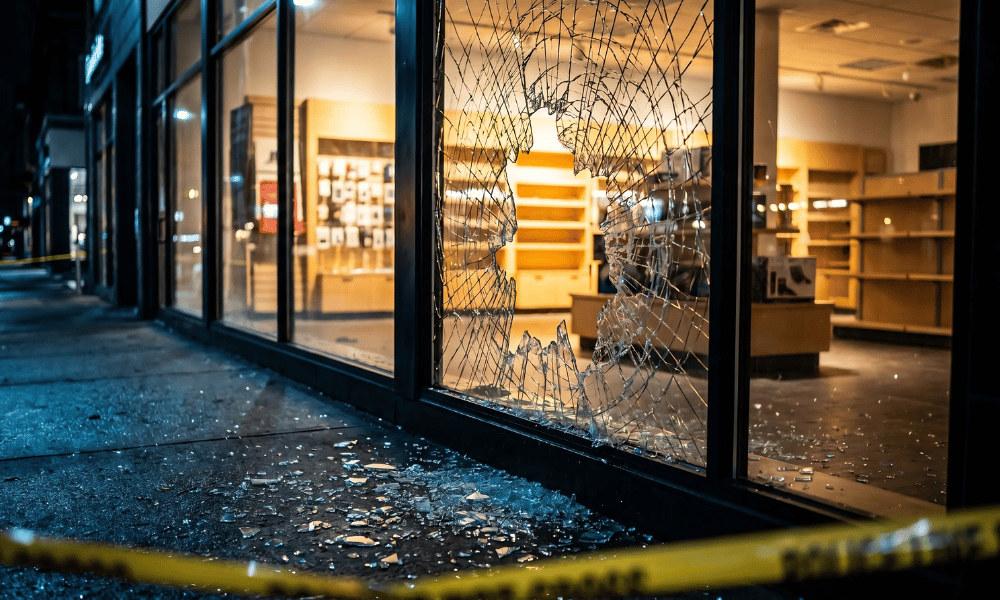
Organized retail crime (ORC) rings treat Thanksgiving weekend as their highest-exposure window of the year – and many US retail accounts are carrying commercial crime and inland marine coverage that was designed for a threat model these groups have long since left behind.
The National Retail Federation (NRF) estimates 182.7 million consumers will shop over Thanksgiving weekend in 2026, with an estimated 126 million participating on Black Friday alone. That density of foot traffic, high-value merchandise on the sales floor, and reduced staffing is precisely the environment that professional theft networks are built to exploit.
Patrick Brosnan, a former NYPD robbery squad detective and founder of Brosnan Risk Consultants in New York, described the dynamic in a November 2025 interview with Fox News Digital: “Black Friday is their Super Bowl. Stores are crowded, very easy to blend in. And unlike most times, the high value goods are out. Staff is stretched and traffic camouflages the escape routes.”
Read more: How strategic cargo theft is driving underwriting pressure across US logistics insurance
The NRF’s Impact of Retail Theft & Violence 2026 report, released July 30 and produced with the Loss Prevention Research Council, complicates what might otherwise look like good news. Shoplifting incidents fell 12.4% in 2025 versus 2024, and retail merchandise theft dropped 8.1%.
Over the same period, ORC-related incidents rose 40%. Phone scams were up 69%, loyalty fraud up 51%, and gift card theft and fraud up 42%. A separate NRF pulse survey of asset protection members, published in November 2026, found 65% of respondents identified ORC as their top holiday theft concern – above internal theft and cybercrime.
ORC groups are not retreating. They are moving into channels that most commercial crime policies were never structured to address.
The tactical shift into supply chains creates a secondary exposure that sits across the inland marine line. Verisk CargoNet’s full-year 2025 analysis, released January 22, 2026, recorded nearly $725 million in cargo theft losses across the US and Canada – a 60% increase from 2024.
A separate Q3 2026 analysis, released November 4, 2026, recorded 547 supply chain crime incidents from July through September – down 33% year-over-year in volume, but up 12% in total estimated losses. The average stolen commodity value rose 72% year-to-date through September, reflecting a deliberate shift by organized groups toward higher-value loads.
“Understanding cargo theft requires looking beyond incident counts and focusing on broader trends, like what is being stolen and where theft is concentrated,” said Keith Lewis, vice president of operations at Verisk CargoNet in New Jersey.
CargoNet has historically recorded increased theft activity in Q4, with extended facility closures and reduced holiday staffing identified as recurring factors criminal networks time their activity around.
Read more: Cyber cargo crime surge exposes coverage blind spots for logistics risks
The structural problem for retail accounts extends beyond ORC’s growing sophistication. Gallagher’s 2026 Corporate Crime and Risk Survey – conducted in September 2026 among 1,150 senior business decision-makers across the UK, North America, Australia, Asia, Latin America, and the Middle East – found that while 81% of organizations believed they had relevant insurance in place, that coverage addressed only an estimated 50% of commercial crime losses among insured organizations that suffered financial harm.
Cassandra Shivers, national claims advocacy leader, management liability policy & cyber at Gallagher in the US, identified the core structural problem in the report: “Crime and cyber are absolutely intertwined – coverage needs to address both the loss suffered and the investigation required to stop the fraud from continuing.”
The report goes further on the physical goods exposure directly relevant to retail accounts. It notes that crime insurance has historically focused on financial assets – cash, funds, and securities – while property insurance addressed accidental loss or damage. As the fraudulent diversion of physical goods becomes more common, organizations may wrongly assume similar protections apply to diverted inventory when that is not always the case. It identifies growing demand for broader policy wordings and sub-limits that reflect how the risk has evolved.
A March 2026 retail risk analysis published by CBIZ makes the same point in direct terms: it is essential to review crime policies to ensure that definitions and sub-limits align with modern theft patterns and organized crime strategies, with coverage outcomes varying significantly depending on how a policy defines robbery, burglary, and third-party theft. The analysis, written by Jamie Pruett, senior VP, market leader, consumer & industrial practice at CBIZ in the US, also flags inland marine, stock throughput, motor truck cargo, and contingent business interruption policies as lines where gaps tied to cargo crime risk should be evaluated. A 2025 NRF study cited in that analysis found 67% of retailers reported the involvement of a transnational ORC group in thefts during the prior year.
For brokers reviewing retail accounts ahead of renewal, the practical question is specific: does the commercial crime policy wording cover third-party theft by organized groups, or does it default to employee dishonesty and robbery definitions that leave ORC losses unaddressed? Do inland marine limits reflect what a cargo theft event actually costs today – not what it cost when the policy was last benchmarked? And are there sub-limits on gift card fraud or supply chain theft that cap recovery well below actual exposure?
The Combating Organized Retail Crime Act (CORCA) passed the US House by a 348-60 bipartisan majority in May 2026. The NRF is pressing the Senate to follow. Until federal coordination improves, the gap between how ORC rings operate and what enforcement can do about it stays open – and so does the coverage gap sitting underneath it.