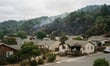
A major storm system struck the US on Thanksgiving Day, November 27, 2026, triggering emergency declarations across multiple states, cutting power to nearly one million households, and driving coastal flooding from New Jersey to California – in markets where flood insurance penetration remains at or near historic lows.
New Jersey Governor Mikie Sherrill and New York Governor Kathy Hochul each declared states of emergency as the storm moved up the East Coast, according to the BBC. Hochul’s declaration covered New York City, Long Island, and Westchester County. Along the Jersey Shore, widespread flooding closed Brigantine Boulevard in both directions, and winds of up to 70 mph brought down trees and downed power lines across Pennsylvania, Maryland, and Virginia.
Washington, DC, recorded its wettest Thanksgiving on record, with tidal surges briefly inundating runways at Reagan Washington National Airport, per the National Water Prediction Service. New York City’s Macy’s Thanksgiving Day Parade was postponed to Saturday, November 28.
Read more: Flood awareness rises, but coverage slips in Sandy-hit states
The storm hit markets that were already flagged for thin flood insurance penetration before it arrived. New Jersey held approximately 194,918 National Flood Insurance Program (NFIP) policies as of April 2026 – ranking it fourth nationally – while California carried just 171,082 NFIP policies across the entire state, according to data published by the National Association of Insurance Commissioners (NAIC) in May 2026.
Nationally, the number of NFIP policies in force fell from 5.5 million in 2010 to 4.5 million in 2026, while private flood policies accounted for just 14% of all flood coverage as of 2025, according to a Government Accountability Office (GAO) report.
Under a baseline 1-in-100-year flood scenario, aggregate uninsured residential flood loss exposure exceeds $375 billion nationwide, with an estimated insurance protection gap of approximately 65%, according to Moody’s.
Standard homeowners policies do not cover surface water or storm surge. Those losses require a separate flood policy – NFIP or private market – and the NFIP’s standard 30-day waiting period means that coverage cannot be arranged once a storm is on the forecast.
“Start the flood conversation early and make it routine, not reactive. Every home quote should include a flood insurance quote,” said Trevor Burgess, CEO of Neptune Flood. Burgess made the remark in a 2026 interview with IA Magazine, adding that agents who do not offer flood alongside a property quote face real errors and omissions exposure.
The New York metropolitan area carries the highest residential storm surge exposure in the country. According to Cotality’s 2026 Hurricane Risk Report, 631,619 homes in the region face storm surge risk, representing $329 billion in reconstruction cost value. A further $405.5 billion in residential property sits in areas where flood insurance is not mandatory, yet those properties face high risk from wind- and surge-driven events.
New York and New Jersey have collectively logged nearly 50,000 fewer NFIP policies than when Superstorm Sandy struck in 2012, according to a Moody’s analysis from October 2026. Only about 18% of at-risk properties in New York currently carry flood insurance, with 87% of all state flood policies concentrated in the downstate New York City area, according to Spectrum News.
Read more: Flood coverage gap resurfaces as storms close in on both coasts
The storm extended to the Pacific Coast, where the National Weather Service (NWS) warned of Pacific storm systems bringing rain, mountain snow, and strong winds. Water levels along California’s coastline exceeded 8 feet in some areas due to king tides, the BBC reported. Amtrak suspended multiple Pacific Surfliner services between Los Angeles and San Diego due to washout conditions.
California’s flood insurance exposure is comparable in scale. The NAIC data shows only 171,082 NFIP policies across the state as of April 2026. Neptune Flood research published in April 2026 found only 1.4% of California homes carry any flood policy at all. Standard homeowners policies and California’s FAIR Plan both exclude storm surge and flood damage unless a separate policy is purchased.
US insurers absorbed at least $43 billion in severe convective storm losses through September 2026 – the fourth consecutive year the annual total exceeded $40 billion – according to Gallagher Re’s Q3 2026 Natural Catastrophe and Climate Report. No insured loss estimates specific to the Thanksgiving event had been published at the time of writing.
Aon noted in its mid-year 2026 outlook that reinsurance competition was expected to remain favorable heading into the January 1, 2027, renewals, provided no significant Q4 catastrophe emerged. This storm arrives directly in that window.
For brokers with clients in New Jersey, New York, Pennsylvania, Maryland, Virginia, and coastal California, checking flood policy status and documenting pre-loss conditions is now a time-sensitive task.