
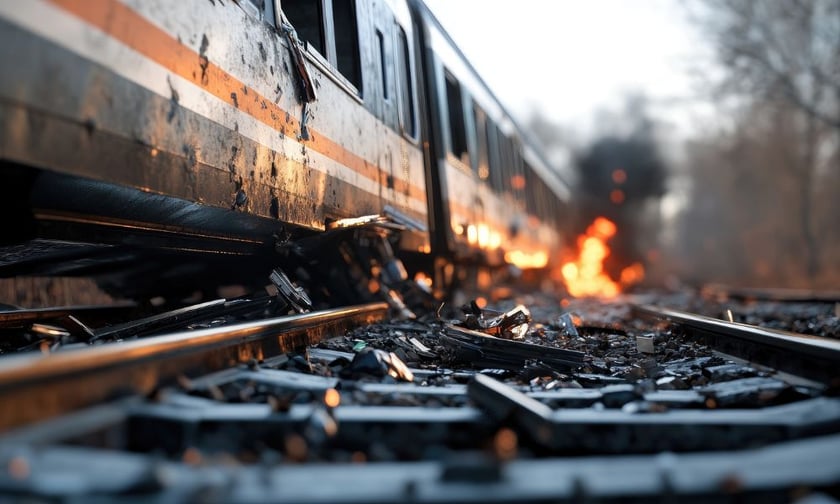
Polish authorities have opened a sweeping investigation after an explosive device damaged a major east–west rail artery over the weekend, prompting renewed concern about the resilience of Europe’s logistics network as the war in Ukraine grinds on. Warsaw has treated the incident as a deliberate attempt to disrupt a line that has become a strategic lifeline for material moving toward the Ukrainian frontier.
The blast, discovered late Saturday near the village of Mika, tore through a section of track positioned roughly halfway between Warsaw and Lublin - a corridor whose freight volumes have surged since 2022. The uneven rail surface was first detected by a train driver early Sunday, triggering a shutdown and forensic sweep of the area. Officials later confirmed that an “explosive device” had been used and that no injuries had occurred.
Investigators have since identified further damage on a separate stretch of the same route closer to Lublin, heightening concerns that the attack may have consisted of coordinated attempts to disable critical infrastructure. Two other disruptions reported over the weekend - one involving an overhead cable failure that halted a passenger service carrying 475 people, and another involving metal lodged on the track - are also being reviewed, though no formal link has been declared.
The government has ordered a military inspection of approximately 75 miles of track leading toward Poland’s southeastern border. Defense officials say the sweep is intended to identify any additional tampering and reassure both domestic and international partners that the network remains operationally safe.
The incident arrives during a period of escalating alert across NATO’s eastern flank. In recent months, alliance aircraft have intercepted Russian drones in Polish airspace, and allied states have confronted airspace breaches over Romania and Estonia. Though no state actor has been officially implicated in the rail attack, the timing has intensified existing unease about hybrid operations designed to disrupt logistics, sow doubt, and stretch national security resources.
For insurers, the episode underscores the mounting exposure around transport corridors that have taken on quasi-military significance. The concentration of high-value cargo, increased geopolitical risk, and the potential for follow-on copycat disruption amplify underwriting challenges across property, infrastructure, cyber–physical, and political risk lines. Carriers may face heightened claims volatility should further sabotage trigger derailments, environmental losses, or supply-chain interruptions.
Risk managers are already warning that rail operators, logistics firms, and their insurers may need to revisit their modeling assumptions. Enhanced surveillance, route hardening, and coordinated military–civilian monitoring are now likely to feature more prominently in risk-mitigation programs.
As Poland fortifies its rail corridors, insurers will be watching closely - not only for the outcome of the investigation but for signs that Europe’s transport backbone is becoming a more frequent target in a long-running contest waged far beyond the battlefield.



