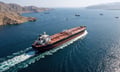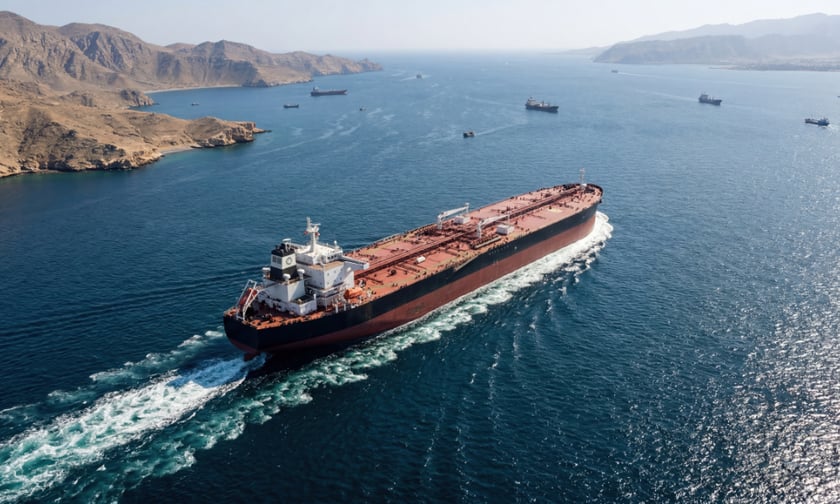
Geopolitical disruption has overtaken every traditional hazard to become the number one risk facing shipowners and cargo operators, with the closure of the Strait of Hormuz leaving roughly US$125 billion of vessels and cargo stranded in the Persian Gulf, according to Allianz Commercial's Safety and Shipping Review 2026. For US brokers placing marine and cargo cover, this strongly suggests the era of predictable, efficiency-driven shipping is over and resilience can carry a high price.
As of June 15 2026, Allianz Research calculated that around 1,150 cargo-carrying vessels – a combined 29 million gross tonnes, carrying as many as 20,000 seafarers – were waiting in Gulf waters to resume operations after the strait was paralysed by conflict between the United States, Israel and Iran. The insurer frames the episode as the latest jolt in a shift toward what it calls a "new maritime order" of escalating security risks, disrupted trade routes and higher risk premiums.
"The Middle East conflict and Strait of Hormuz closure is just the latest in a series of severe interruptions to hit shipowners and cargo operators," said Thomas Lillelund, chief executive of Allianz Commercial. "Resilience, geopolitics, and efficiency must be balanced in an increasingly unpredictable world, where the cost of uncertainty is reshaping the shipping industry."
The review names navigating the matrix of geopolitical issues – tariffs, regional conflict and regulation – as the single biggest concern for shipowners and cargo operators going forward. The fallout is a wholesale rethink of how supply chains are designed, with cost and convenience giving way to reliability and political alignment.
Captain Rahul Khanna, global head of marine risk consulting at Allianz Commercial, said the lesson of recent years is the need to keep addressing resilience. "What is becoming clear is that we have to pay a price for uncertainty, shifting from 'just-in-time' to 'just-in-case' supply chains, and prioritising resilience over cost efficiency," he said.
That recalibration matters because of what the strait carries. The 34-kilometre-wide passage normally handles 20 to 25 per cent of the world's oil trade, and during the blockade daily transits collapsed from between 100 and 140 vessels to as few as two to four. Insurance Business has reported on why Hormuz has become the world's most expensive waterway for brokers and Allianz argues the closure shatters a long-standing assumption of open passage. "This is the first time in history that the Strait of Hormuz has been closed – even in the Iran-Iraq war during the 1980s, the Strait remained open," Khanna said.
Marine insurers kept cover in place throughout the conflict, albeit at sharply higher hull and cargo premiums – but the report stresses that the binding constraint for shipowners has been the risk to crew and vessels in a live conflict zone, not the availability of insurance. According to the International Maritime Organization (IMO), 46 merchant vessels had been damaged as of June 11 2026, and 14 seafarers had lost their lives as of June 12 2026.
The claims tail may prove to be long. Even before the conflict, the International Union of Marine Insurance (IUMI) projected average hull claim costs rising 7 to 22% over five years, while Nordic insurer association Cefor reported in April 2026 that claims cost per vessel sat 33% above pre-pandemic levels. Régis Broudin, global head of marine claims at Allianz Commercial, said the insurer had already received claims notifications from the conflict, "some of which are significant" and potential total losses, with further claims anticipated as cargo deteriorates aboard trapped ships. Those vessels have also faced disrupted maintenance and biofouling, while the growing size of ships is pushing up general average claims – contributions can reach 50% of cargo value, which Allianz notes could exceed US$100 million for a carrier loaded with a few thousand electric vehicles.
"Insurance markets react quickly to crises, but the real challenge for companies is understanding how risks are interconnected," said Justus Heinrich, global product leader for marine hull at Allianz Commercial. "That's why resilience and risk management are becoming just as important as insurance coverage." Even with a US-Iran agreement signed in mid-June 2026, brokers should not bank on a swift return to normal pricing, a point underlined by reporting that the Hormuz reopening may not bring immediate relief for marine insurers.
The paradox running through the review is that shipping has never looked safer on paper. Reported incidents fell about 16% to 2,818 in 2025 from 3,353 a year earlier, and total losses dropped to 350 in the five years to 2025 from 555 in the previous period – a 37% improvement – with just 43 recorded in 2025. The Australasia region logged 66 incidents, down 13 on the year.
Yet familiar hazards still bite. Machinery damage or failure caused more than half of all incidents (1,505), and fires remained the second-worst on record for the decade, with more than 200 reported on large vessels and lithium-ion batteries a recurring factor. An ageing global fleet – now averaging 23 years – compounds the exposure. For brokers, that mix of falling frequency and rising severity is exactly what makes programme adequacy hard to judge, a dynamic explored in coverage of how the Strait of Hormuz shock laid bare insurance weak spots.
The takeaway for the US market is less about a single waterway than a structural reset. As clients reroute supply chains and revisit war and cargo wordings, the brokers who can translate Allianz's "new equilibrium" into concrete advice on sums insured and resilience will be the ones clients keep closest.