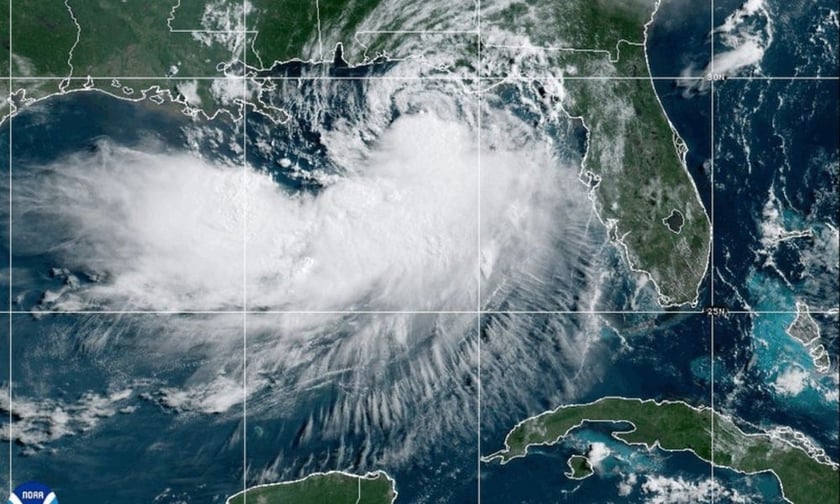
Image from NOAA via AP
Florida’s insurer of last resort has suspended new policies and coverage changes statewide as Tropical Storm Bertha strengthens in the Gulf of Mexico, creating an early operational test for a property insurance market that has spent the past two years reducing its exposure.
Citizens Property Insurance Corporation said no new policies or changes providing additional coverage could be written after 11 a.m. on July 19. The restriction applies whenever the National Hurricane Center issues a tropical storm or hurricane watch or warning for any part of Florida, preventing property owners from purchasing or increasing coverage once a storm is approaching.
Bertha had maximum sustained winds of 50mph on Tuesday morning and was moving northwest at 5mph. The storm was positioned around 110 miles south of Panama City, Florida, and 170 miles southeast of Mobile, Alabama, according to the National Hurricane Center.
A tropical storm warning extended from the Florida-Alabama border to the Jefferson and Plaquemines parish line in Louisiana. Bertha was forecast to move near or along the northern Gulf Coast before turning westward, potentially carrying heavy rainfall across Florida, Alabama, Mississippi, Louisiana and eventually parts of Texas.
Although Bertha was not expected to become a major hurricane, its slow movement and proximity to the coastline could generate a complicated mixture of wind, storm surge and inland flooding claims.
The National Hurricane Center projected storm surge of two to four feet between the mouth of the Mississippi River and the Mississippi-Alabama border. Other sections of the Louisiana, Alabama and Florida coast could experience one to three feet of inundation, with the greatest water levels expected close to and east of the storm’s center.
Rainfall totals of two to four inches were forecast from western Florida through southern Louisiana, with isolated amounts of around six inches. Flash flooding was considered particularly possible in urban areas, while hazardous surf and rip currents were expected to spread westward along the Gulf Coast.
The balance between wind and water damage will be closely watched by insurers and claims teams. Wind damage is ordinarily addressed through homeowners or commercial property insurance, subject to policy terms and hurricane or named-storm deductibles. Damage caused by rising water or storm surge, however, generally requires separate flood insurance.
Standard homeowners, renters and condominium policies do not cover flood damage, including storm surge, according to the Insurance Information Institute. Coverage is instead available through the National Flood Insurance Program or the private flood insurance market.
That division can become significant when a property sustains damage from multiple causes. Roof or exterior damage caused by wind may allow rainwater to enter a building, while water entering from the ground or coastline may be classified as flooding. Detailed documentation of water lines, structural damage, debris patterns and the timing of each cause can influence how claims are allocated between property and flood insurers.
Commercial insureds could also face business interruption losses from power failures, road closures and restricted access even where physical damage is limited. Marine, cargo, hospitality and construction risks along the coast may be exposed to high water, halted operations and damage to equipment left at temporary sites.
Bertha is the second named storm of the Atlantic season. NOAA has forecast a 55% probability of below-normal activity in 2026, with eight to 14 named storms, three to six hurricanes and one to three major hurricanes.
Even a quieter season, however, can produce damaging landfalls, particularly when slow-moving systems concentrate rainfall and storm surge along heavily insured coastlines.