Southern California Edison cannot escape a jury trial over its equipment’s alleged role in the Eaton Fire, the most destructive blaze in Los Angeles area history, after a Superior Court judge rejected the utility’s attempt to have a key liability claim dismissed before trial.
Superior Court Judge Laura Seigle denied Edison’s request to rule out the application of inverse condemnation - the California legal doctrine that holds utilities automatically liable for all property damage caused by their equipment, regardless of negligence. An initial trial on that question is set for late January.
Attorneys for insurance companies that have paid out damage claims had sought to have the inverse condemnation issue decided without trial in order to accelerate subrogation recovery from Edison. That effort also failed. If inverse condemnation is found to apply at trial, Edison would face strict liability for the full scope of insured property losses without plaintiffs needing to establish negligence - a threshold that matters significantly for carriers pursuing recovery.
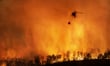
The Eaton Fire burned in January 2025, killing 19 people, destroying or damaging more than 9,000 homes and businesses, and burning 14,000 acres near Pasadena. A report by the Los Angeles County Fire Department, released in early August, concluded the fire was caused by electrical arcing events on an out-of-service transmission tower on a dry hillside.
Lawyers suing Edison allege that a power surge on a nearby active line on January 7 created a magnetic field that briefly reenergized the dormant cable, triggering the sparks that ignited the blaze. Edison Chief Executive Officer Pedro Pizarro told investors in late July that “no other viable alternatives have appeared” aside from the company’s equipment that would explain how the wildfire erupted.
Edison had argued that the transmission tower where the fire allegedly started had been idle since 1971 - long enough, in its view, to remove it from the category of public infrastructure that triggers California’s strict liability rule. Seigle rejected that reasoning directly.
“Edison did not cite any legal authority that a transmission line originally built to serve the public cannot be a public improvement because it was idle and not transmitting electricity at the time of the harm,” she wrote.
David Eisenhauer, a spokesperson for Southern California Edison, said the utility disagrees with the ruling. “We will continue through the court process and encourage those directly impacted by the Eaton Fire to file claims through the Wildfire Recovery Compensation Program rather than pursuing lengthy and uncertain litigation,” he said.
The case is being closely watched as a marker for how California courts treat aging utility infrastructure under the state’s wildfire liability framework - and what it means for the long-term subrogation calculus on large-scale wildfire losses.