The hackers who cooked supermarket stock across Europe this fall worked through two families of refrigeration controllers spread across dozens of countries. That is exactly the kind of correlated exposure that keeps aggregation risk front of mind for insurers writing cyber-physical coverage.
The first wave hit on the night of October 11, when attackers took remote control of refrigeration controllers at about 700 retail locations in France, according to the Paris prosecutor’s office, which said the attack caused significant food spoilage and roughly 20 fires. Similar attacks followed at supermarkets elsewhere in Europe and at French blood banks.
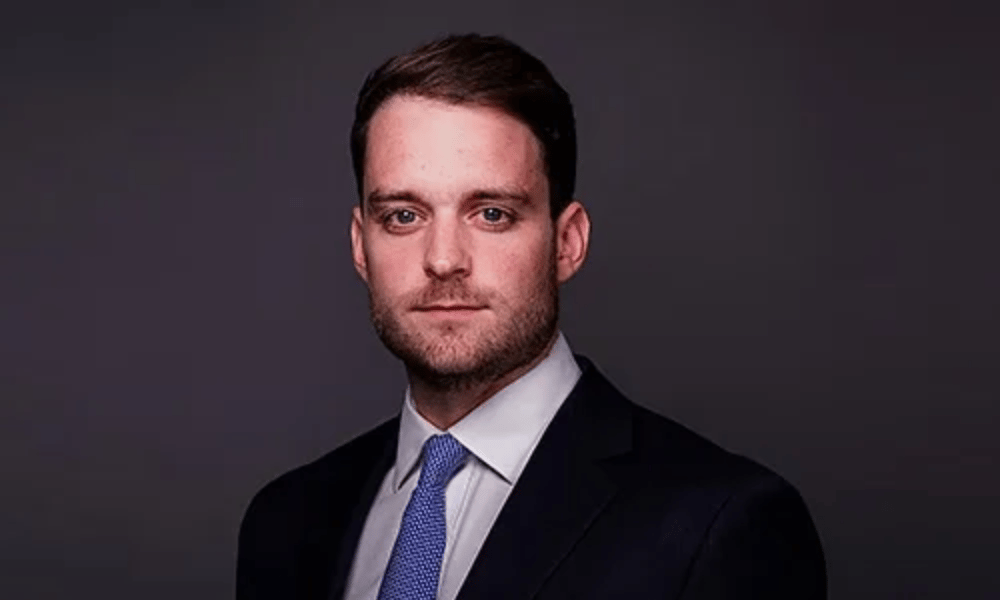
Tom Dryden (pictured), head of cyber – Europe at McGill and Partners, said the speed of the spread confirmed the market’s long-held fear. “A systemic, widespread event like that is exactly what the insurance market’s been slightly nervous of, quite rightly,” he told Insurance Business.
“There have been various mechanisms they’ve put in place to control that over the years. The softening, very competitive market maybe hasn’t helped the implementation of some of those tools, but there is still an element of control with how the wordings are scoped.”
Read more: Fires as hundreds of French supermarkets hacked – US grocers on notice
The footprint splits largely by brand. France, Portugal and Sweden are almost entirely Danfoss, while Copeland dominates in Italy, the US, Canada and several other countries. France had the most exposed hosts at 909, followed by Italy at 412 and the US at 278. Coalition cautioned that raw counts do not necessarily correlate with the likelihood of attack.
For Monica Tigleanu, lead cyber underwriter at MS Amlin, the correlation runs across sectors. “Although supermarkets were targeted in this case, the implications extend far beyond the freezer aisle,” she said. “The same combination of remotely managed equipment, long equipment lifespans and contractor access can be found across many industries. Hospitals, hotels, pharmaceutical and vaccine cold chains, and food manufacturers could all face comparable exposures.”
Operational technology remains a blind spot for businesses and insurers, Tigleanu noted. When cyber underwriters assess their portfolios at the company level, they can miss details about the systems each business relies on. Underwriters need better visibility into those systems to gauge the potential for physical losses.
Underwriting scrutiny of operational technology has historically centered on critical infrastructure, according to Dryden, which is why the use of something as routine as supermarket refrigeration took some in the market by surprise.
Read more: France blames Iran for fridge hacks as brokers confront cyber-physical exposures
Dryden has seen more capacity for cyber-physical damage come into the market over the past two years, with Lloyd’s leading the way and global insurers starting to offer cover case by case. Larger buyers can still struggle to secure the limits they want.
Where brokers seek limit depends on the exposure. That means checking which wording addresses spoiled stock, which covers damage to equipment and whether either picks up lost trading income. A buyer with temperature-sensitive goods in transit can ask how its cyber and cargo policies would each treat stock spoiled by a cyber incident.
Dryden also said he has found appetite for aligning cyber cover with marine terms, and the limit a buyer needs can influence which market is the better fit.
At renewal, brokers may need to bring in the people who maintain the equipment. Underwriters want to know whether the control systems are segmented from the corporate network, how remote access is secured and what safeguards are in place when older equipment can no longer be patched. A retailer can also show whether staff can still receive temperature alerts and move stock if a contractor’s remote monitoring system is compromised.
“From the client’s perspective, available capacity and limits have been a constraint, particularly for larger clients,” Dryden said. “That’s gradually changing, but it’s a bit of cat-and-mouse.
“Insurers are only going to offer higher limits as their books mature. That might take time, but we’ve already seen more capacity for cyber-physical damage cover over the past couple of years, and we expect that to continue as demand picks up.”