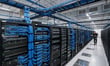
US data centers are running out of grid to plug into, and the alternative is making many of them operators of their own power plants.
US data center power demand has grown 19% a year since 2000, ten times the 2% annual expansion of the electricity grid, according to new analysis from broker Howden accompanying its report “Insuring the data center supercycle”, published on November 11. Data centers’ share of total US grid capacity has risen 50-fold over that period, from 0.1% in 2000 to 5% in 2025, Howden found, based on Energy Information Administration and S&P Global 451 Research data.
The squeeze is delaying projects. Howden said power constraints are adding 24 to 72 months to build times for the most constrained data center developments. Among the facilities it tracks, the largest earn close to US$400 million a year, which implies US$800 million to US$2.4 billion in lost revenue for the largest, most power-constrained builds, according to Howden’s estimates.
To get around long waits for grid connections, new hyperscale facilities are increasingly building their own behind-the-meter (BTM) generation, including natural gas, renewables, battery storage and, in the longer term, nuclear. Howden calculated that for data centers to keep their 5% share of grid capacity at current growth rates, they would need up to 58% of their power, or 110 gigawatts, from BTM sources by 2030. Howden acknowledged that level is unlikely to be achievable, and expects data centers to rely on a mix of a larger grid share, slower growth at power-constrained sites and BTM generation.
“While on-site generation can help accelerate development and improve energy security, it also introduces new operational and financial exposures,” said Stuart Adam, head of natural resources at Howden US.
Outages are a second pressure. Half of data center facilities have reported an impactful incident in the past three years, Howden said, at an estimated cost of US$500,000 to US$1 million each, or about US$2 billion a year globally. Power and backup failures, mainly involving uninterruptible power supply (UPS) systems, cause most major outages, followed by cooling, network and IT failures.
Many of those outages involve no insured physical damage, so the losses can fall outside traditional property and business interruption policies, a gap IB has reported on repeatedly this year. Howden pointed to parametric cover tied to service-level agreements and, where available, non-damage business interruption insurance as ways to close it.
Deborah Duss, Howden’s global head of advisory and client solutions for global specialty, said a data center, its power source and the grid connection between them “are three interdependent parts of the same ecosystem”.
For brokers, the move to on-site power changes what a data center program has to cover. A client generating its own electricity carries energy and construction exposures as well as property risk. Brokers should also check whether business interruption cover would respond to a power or UPS failure that causes no physical damage.