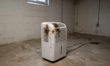
What happened: Allstate alleges a Haier dehumidifier overheated and caught fire in a New York basement, causing significant property damage.
Who's involved: Allstate Vehicle and Property Insurance Company (plaintiff/subrogee) and Haier America Trading / Haier Smart Home (defendants/manufacturer).
What's at stake: More than $200,000 in claimed damages, plus interest and costs.
Why it matters: The complaint maps a detailed alleged defect chain in a common household appliance - the kind of technical narrative that shapes how subrogation teams evaluate product liability fire claims.
Where it stands: Complaint filed November 24, 2026. Jury trial demanded.
A dehumidifier allegedly melted its own safety switch.
That is the central claim in a federal product liability suit filed by Allstate Vehicle and Property Insurance Company against Haier America Trading and its Chinese parent, Haier Smart Home - the company formerly known as Qingdao Haier, which acquired GE's appliance business in 2016.
The complaint, lodged in the US District Court for the Western District of New York on November 24, 2026, alleges that a Haier-brand dehumidifier overheated and caught fire in the basement of a home in Niagara, New York, on April 9, 2024. Allstate says it paid its insured more than $200,000 for fire, smoke and water damage and is now chasing the manufacturer to recover that money.
What makes the filing stand out is the level of technical detail it uses to explain how the fire allegedly started.
According to the complaint, the dehumidifier's compressor is fitted with a thermal safety device called an overload protector. In a properly working unit, this device is supposed to cut power to the compressor before temperatures become dangerous.
The filing describes a chain reaction. Normal use causes the dehumidifier to vibrate, and that vibration can crack the refrigeration tubing over time. Once the refrigerant starts leaking, the compressor runs hotter. That is exactly the kind of overheating the safety device is designed to catch.
But the complaint alleges the plastic components sitting on top of the compressor - including the cover over the safety device and the insulation around the power wires - begin to break down at those higher temperatures. The filing says the heated PVC releases chlorine-containing substances that corrode the safety device's metal parts. Worse, the decomposing plastic allegedly produces "a gel-like substance" that seeps into the device itself.
That gel, according to the complaint, can either trigger an electrical arc directly or harden inside the switch and physically stop it from opening.
The result, as the filing describes it: the one component designed to prevent a fire was allegedly disabled by the very conditions it was supposed to stop.
Meanwhile, the complaint alleges, the heat also cracks the plastic insulation around the compressor's power wires, exposing bare copper. When two or more bare wires touch each other - or contact a grounded metal surface - the resulting electrical arc is hot enough to ignite the surrounding plastic. That, the filing says, is what happened on April 9, 2024.
A professional fire investigator determined the fire started inside the dehumidifier, the complaint states. That finding was based on burn patterns around the unit, plastic melt patterns on the dehumidifier itself, and the ruling out of other ignition sources nearby.
According to the filing, the insured bought the dehumidifier at a New York retail store, set it up in the basement with a garden hose attached to the condensate port as the manual instructed, and left it running on automatic. Nobody opened up the unit between purchase and the fire, the complaint states.
The filing also makes a broader industry point. It alleges that starting no later than 2010, major dehumidifier manufacturers - including GE, before Haier bought the brand - began making design changes to cut fire risk. Those changes included swapping out PVC-based electrical components and upgrading to plastics rated to resist flames under UL Standard 94.
The complaint also alleges Haier told Underwriters Laboratories that its dehumidifiers' plastics met UL 94 fire ratings in order to earn UL certification - effectively a ticket to the US retail market, since the filing states US retailers will not stock dehumidifiers without it.
Allstate brings a strict products liability claim against both defendants, alleging manufacturing and design defects. In plain terms, the insurer says the product was dangerously flawed when it left the factory. It is seeking more than $200,000, plus interest and costs, and has demanded a jury trial.
The complaint's detailed mapping of the alleged defect chain - from routine vibration through to safety-device failure - is the kind of technical narrative that can shape how appliance-origin fire claims are investigated, valued and pursued in subrogation.
The allegations in the complaint have not been tested in court, and no court has ruled on the merits.