What happened: Selective Insurance alleges it owes no duty to defend or pay claims from a fatal crash involving its policyholder's unlisted truck and a driver it says was not an employee.
Who's involved: Selective Insurance Company of South Carolina and Kinly Signs Corporation dba Rivercities Signarama, an Ohio-based Signarama franchise.
What's at stake: A $1,000,000 commercial auto policy and two lawsuits arising from a fatal crash in West Virginia.
Why it matters: The case tests whether a commercial auto insurer must cover a crash when the vehicle was never listed on the policy and the driver's employment status is disputed.
Where it stands: Complaint filed November 24, 2026. No court ruling yet.
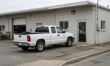
A 2010 Ford F-150 that was never listed on a commercial auto policy. A driver the insurer says was not on the payroll. And a fatal crash in West Virginia that has already produced two lawsuits.
Selective Insurance Company of South Carolina has gone to federal court asking a judge to confirm it has no duty to defend or pay out on behalf of Kinly Signs Corporation, an Ohio-based Signarama franchise. The complaint, filed November 24, 2026, in the US District Court for the Southern District of Ohio, lays out what Selective says is a coverage gap: the pickup involved in an August 27, 2025 motor vehicle accident was never on the Selective policy, and the person behind the wheel was not an employee of Kinly Signs at the time of the crash.
The policy - Commercial Policy No. S2703955, covering April 30, 2025 to November 17, 2025 - carried $1,000,000 in per-accident commercial auto liability limits, according to the filing.
Selective Insurance Company of South Carolina is part of Selective Insurance Group, Inc. (NASDAQ: SIGI), a publicly traded property and casualty group headquartered in Branchville, New Jersey. Signarama is an international sign franchise with roughly 700 locations worldwide.
Selective's argument runs along a simple chain.
The policy's standard insured definition covers the named insured - Kinly Signs - for any covered auto. It also covers anyone else using a covered auto the insured owns, hires, or borrows. But there is an exception: if the auto is owned by an employee or a member of that employee's household, that employee does not count as an insured under the standard wording.
The policy also includes an endorsement - called the Elite Pac Commercial Auto Extension - that can extend coverage to employee-owned vehicles. The catch is that the vehicle must be "specifically described on the Declarations Page or on file with" the insurer, according to the policy language quoted in the filing. The F-150 was not, the complaint states.
Then there is the driver. The complaint states the individual operating the vehicle "is not an employee of Selective's insured, Kinly Signs, at the time of the motor vehicle accident."
No listed vehicle. No employment relationship. No coverage, Selective argues.
The crash has already generated serious litigation. Two separate lawsuits were filed in the Circuit Court of Wayne County, West Virginia. One was brought by the administrator of the estate of a person who died in the accident. The other was filed on behalf of a minor.
Both suits name the driver, several individuals connected to the sign company, and Kinly Signs itself. According to the Selective filing, each suit contains nine causes of action: negligence, violation of West Virginia traffic safety laws, negligent entrustment - meaning letting someone drive a vehicle when you know or should know they are unfit - vicarious liability, negligent hiring and supervision, negligent maintenance, joint enterprise, piercing the corporate veil, and punitive damages.
Several of those claims allege the driver was "acting within the course and scope of employment/agency" for the sign company "in furtherance of the business interests at the time of the crash," according to the complaint. That is exactly the point Selective disputes.
The F-150, Selective states, was separately insured under two State Farm policies. The driver information listed on those policies names two of the individual defendants, the complaint says.
Selective has already asked State Farm to pick up the defense of Kinly Signs under both of those policies.
Even if a court were to find that Selective's policy does apply, the insurer argues its coverage would sit behind State Farm's. The policy's other-insurance clause says that for any covered auto the insured does not own, coverage is excess - meaning it only kicks in after other available insurance is exhausted. Since Kinly did not own the F-150, the complaint reasons, the Selective policy would pay only after State Farm's limits are spent.
Selective's third claim targets the punitive damages sought in the underlying lawsuits. The filing argues punitive damages do not qualify as covered "damages" under the policy, and separately, that Ohio public policy prohibits insuring against punitive damages.
The underlying suits allege conduct that was "willful, wanton, reckless, malicious or demonstrated a conscious, utter indifference to the health, safety and welfare of others," according to the Selective filing. Even if coverage applies on other counts, Selective says, punitive damages are excluded either way.
Selective is currently defending the underlying lawsuits under a reservation of rights - meaning it is providing a defense while preserving its argument that it may not actually owe one. The complaint seeks three alternative outcomes: no coverage at all, excess-only coverage behind State Farm, or at minimum, an exclusion of punitive damages. A jury trial has been demanded.
For commercial auto underwriters and claims teams, the case turns on a gap that opens when an employee-owned vehicle never makes it onto a commercial policy and the driver's employment status is contested - a scenario that is far from unusual in small-business fleets.
The allegations in the complaint have not been tested, and no court has ruled on the merits.