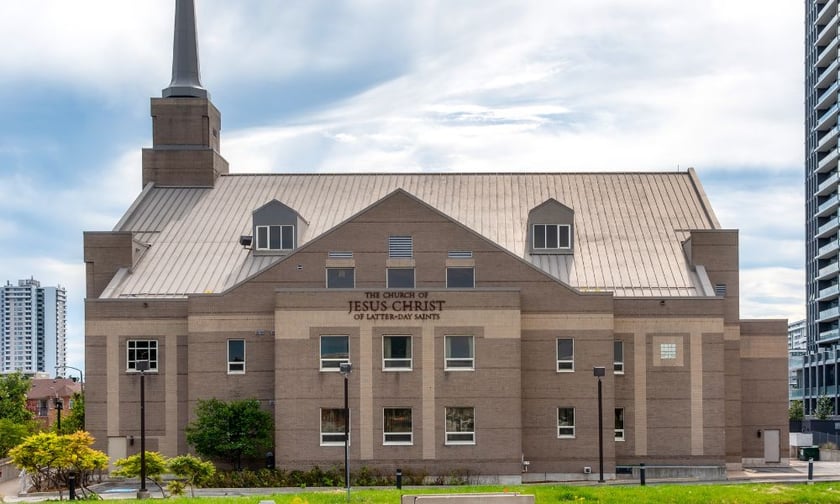
A federal appeals court has revived the LDS Church's fight to make two insurers help pay for its child sexual-abuse settlements.
On July 28, 2026, the Tenth Circuit Court of Appeals reversed a Utah federal court and sent the coverage dispute between the Church of Jesus Christ of Latter-day Saints and its insurers back for another round.
The case traces to a man who sexually abused children in Martinsburg, West Virginia between 2007 and 2011 and was convicted of sexual assault and sexual abuse in 2013. Some of his victims sued the church, saying it failed to take precautions that could have stopped him. The church settled before the case reached a verdict.
The church then asked two of its insurers - National Union Fire Insurance Company of Pittsburgh, PA (National Union) and ACE Property and Casualty Insurance Company (ACE) - to cover its defense and settlement costs. Both refused. The church sued in federal court in Utah, and the trial judge granted the insurers summary judgment.
It all turned on one word: "occurrence." The policies pay only when the church's liability for an occurrence tops a "retained limit" - the amount the church covers itself first. No single victim's settlement cleared that limit. Added together, they did. So the church argued its alleged negligence was one occurrence, while the insurers argued it was many - one per victim. If several, the insurers owed nothing.
Both policies defined "occurrence" to include "continuous or repeated exposure to substantially the same general harmful conditions." National Union's version added that all such exposure "will be deemed to arise out of one Occurrence." ACE's went further, treating repeated exposure as one occurrence "regardless of the frequency or repetition thereof, or the number of claimants."
The district court read that to mean each child abused at a separate time and place was a separate occurrence. The Tenth Circuit disagreed - not by choosing a winner, but by finding the wording ambiguous. Under Utah law, it noted, any ambiguity in an insurance policy "must be resolved in favor of coverage." The church's reading was plausible, so it prevailed at this stage.
The panel had a pointed message for drafters: "Ambiguous provisions thus carry a high price. To avoid that high price, insurance-policy drafters can clarify those provisions - to the benefit of the insurer, the insured, and the courts."
The court declined to consider the insurers' backup arguments, leaving those for the district court on remand.