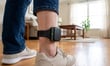
What happened: California’s Fourth Appellate District affirmed a $50,000 bail bond forfeiture against United States Fire Insurance Company after the surety’s agent released a theft defendant without a court-ordered GPS monitor.
Who’s involved: United States Fire Insurance Company and its bail agent AJH Bail Inc.
What’s at stake: $50,000 in forfeited bail.
Why it matters: Sureties bear responsibility for enforcing court-ordered bail conditions - not the jail.
Where it stands: Affirmed on October 6, 2026; certified for publication.
Sixty-four theft charges, a court-ordered ankle monitor that was never fitted, and a defendant who walked out of jail and never came back.
It cost United States Fire Insurance Company $50,000. California’s Fourth Appellate District affirmed the forfeiture on October 6, 2026, ruling the surety could not escape a bond it signed by blaming the jail for its own agent’s failure.
The case started in August 2023. At the arraignment, defense counsel told the court there was a deal: $50,000 bail, and upon posting, the defendant would “be placed on GPS through the bail bond company.”
The judge was direct. “That means that GPS has to be placed on you,” the court told the defendant. “Usually it’s an ankle monitor.”
Nine days later, U.S. Fire posted the $50,000 bond through its agent, AJH Bail Inc. The defendant walked out. No monitor was fitted.
By September 2023, the defendant had failed to appear. The court forfeited the bond, issued a bench warrant, and increased bail to $100,000. AJH Bail never brought the defendant back. The statutory 180-day window lapsed, and the court entered summary judgment against U.S. Fire for $50,000.
U.S. Fire moved to set aside the judgment. Its argument: the Orange County Sheriff’s Department released the defendant without GPS monitoring - a unilateral change to the bail contract that voided the bond. The trial court rejected that, finding GPS was the bond company’s job, not the jail’s.
On appeal, U.S. Fire cited People v. Lexington National Ins. Corp., a 2015 case where a court voided a $20,000 bond after increasing bail to $100,000 without requiring the higher amount be posted. The appeals court was unpersuaded. Nobody changed the bail terms after the bond was executed. The surety’s own agent simply failed to arrange the monitoring.
U.S. Fire also argued the jail should have held the defendant until GPS was confirmed. The court found no evidence the jail had any obligation under the bond contract.
“It would be unjust as a matter of public policy to reward [U.S. Fire] for its own failure to ensure that [the defendant] was placed on GPS monitoring,” the court wrote.
AJH Bail is now out of business.
Sureties writing conditioned bail bonds may want to take note: the obligation to enforce release conditions sits with the bond company, and failing to meet them will not undo a forfeiture.
The findings discussed in this article reflect the court’s published decision, which affirmed the trial court’s order.